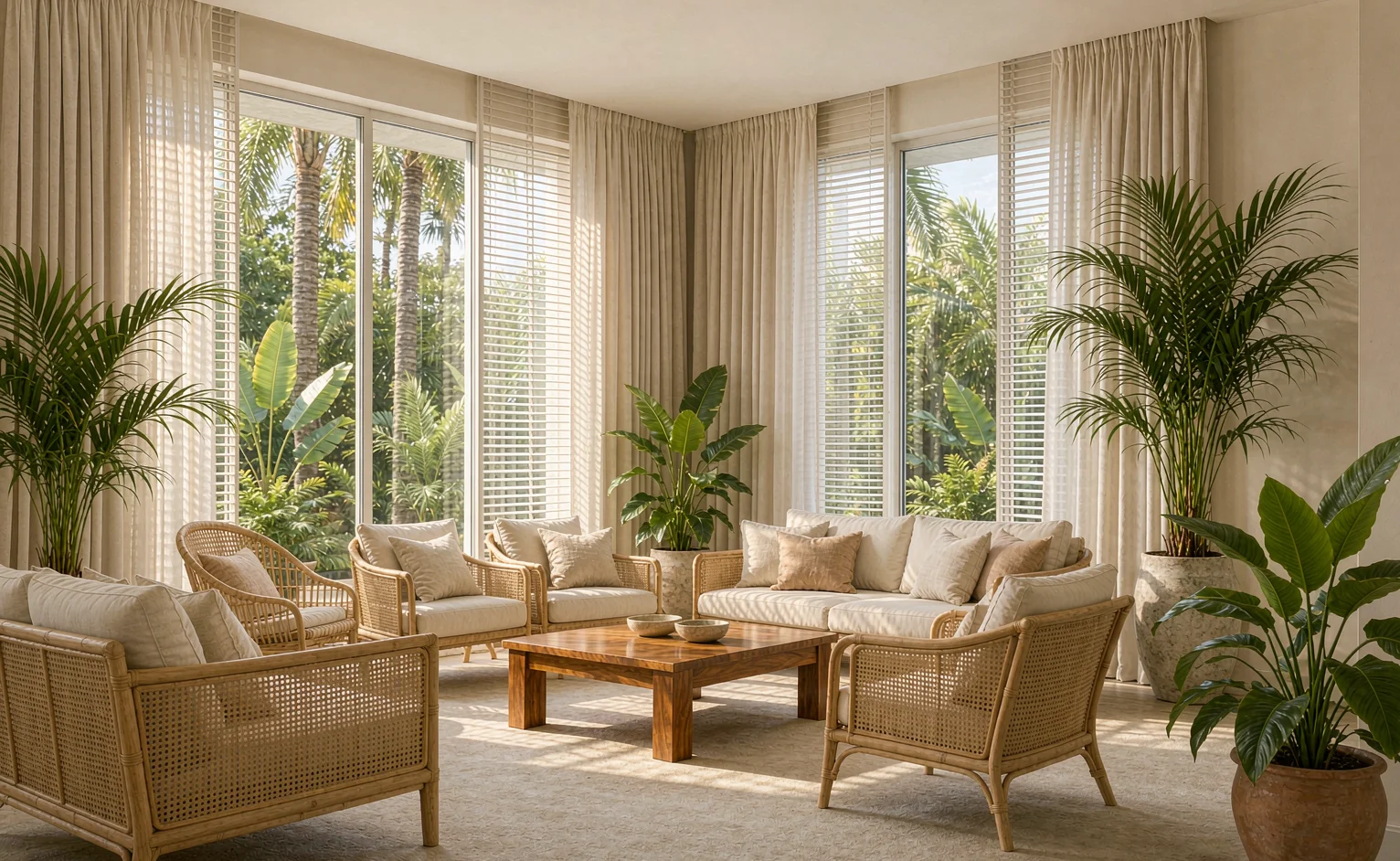
Soft Furnishings for Hot Climates: Blinds & Carpet
Published: October 12, 2026
The last layer of a tropical build decides whether the room is bearable at three in the afternoon. Blinds, curtains, carpet and wallpaper, specified by light-fastness, pile density, backing and roll size.
Tile, stone and aluminium are the visible half of a tropical building. The half that decides whether people enjoy living in it is soft: what covers the glass, what lies on the floor, what lines the wall. In our catalogue of 102,491 files across 74 categories, the soft-decor line holds 2,730 files — curtains, venetian, roller and zebra blinds, aluminium shutters, wall-to-wall and custom carpet, and plain PVC wallpaper at 0.53 metre width. This guide covers what those specifications actually mean in equatorial heat, Gulf humidity and coastal salt air — and pairs with Specifying Aluminum Windows & Doors for Hot Climates, because a blind is only as good as the glazing it sits on.
1. Blinds: aluminium, timber, fabric — and where each one fails
Blinds are the only element in the room that does two jobs at once: they cut glare and they are the first thing to disintegrate. In a coastal or humid climate, the failure is predictable. Timber venetian slats take up moisture, bow, and eventually split at the ladder-tape line; bamboo splits in low humidity and moulds in high. Both are fine for a shaded, inland, short-cycle room and wrong for a six-year hold in a Gulf-facing or sea-facing opening.
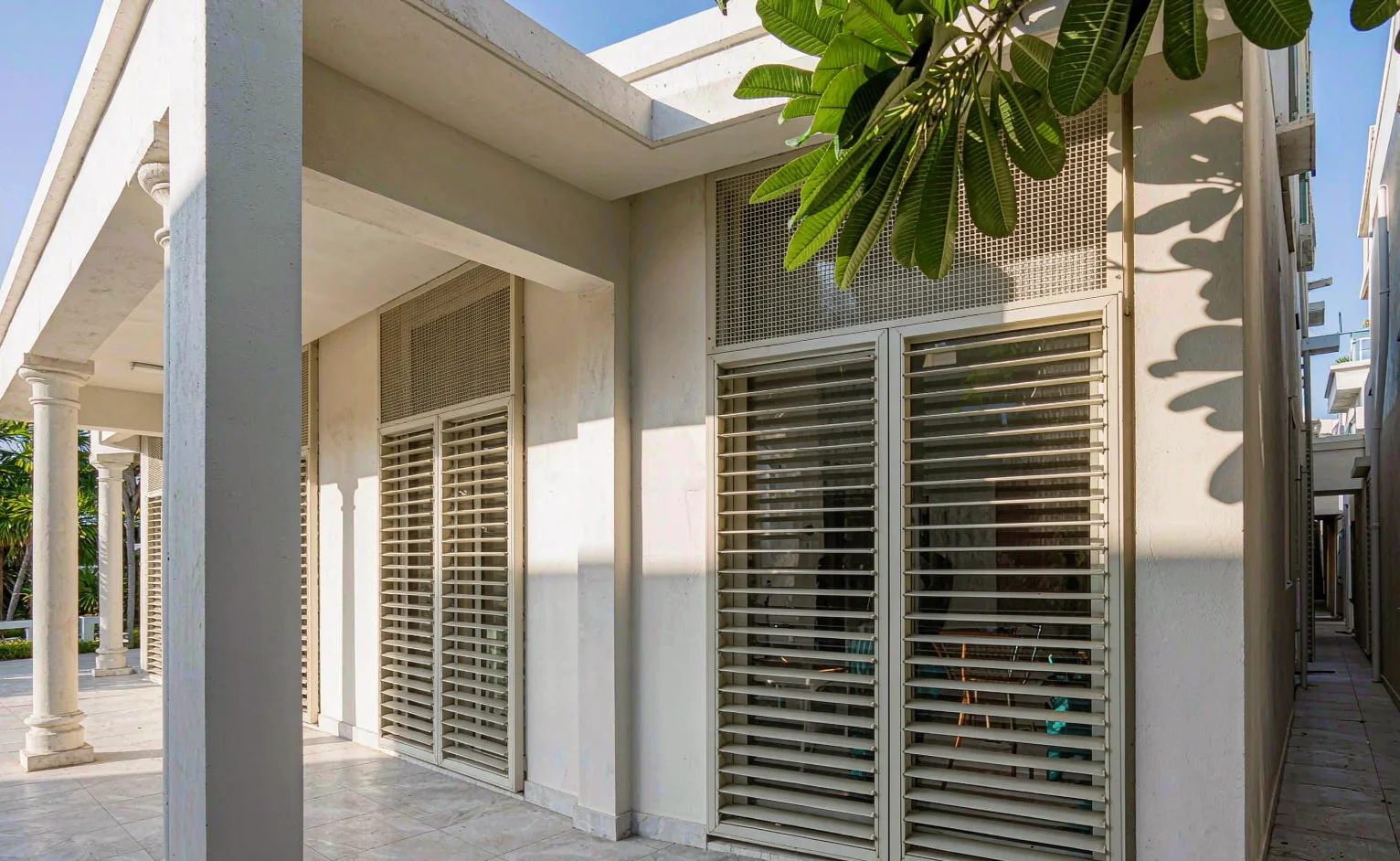
Aluminium venetian on a powder-coated frame is the default we specify. The slat is the only part exposed to weather, and it will not swell, warp or rot. Specify 25 to 50 millimetre slats with a minimum thickness of 0.18 millimetres, a polyester-tape ladder, and a powder coat rated for salt spray rather than a standard indoor paint. Fabric options — roller, zebra, blackout and dim-out — belong on the glass that faces the room, because no fabric is weather-proof. Aluminium shutters are the external answer: they cut solar gain before it reaches the glass and work as storm protection, which is why we pair them with the glazing systems in Specifying Aluminum Windows & Doors for Hot Climates and hand them over with the same fixing schedule.
| Covering | Key spec | Best position | Durability in humid/salt air |
|---|---|---|---|
| Aluminium venetian | 25–50 mm slat, ≥0.18 mm thick, powder coat | Inboard of the glass | 8–12 yrs |
| Aluminium shutter | Extruded or folded louvre, external fix | Outside the reveal | 10–15 yrs |
| Zebra / day-night fabric | Light-fastness 5+, polyester or acrylic | Inboard, controlled light | 4–6 yrs |
| Blackout curtain | 3-pass, 220–260 g/m², solution-dyed | Bedrooms, media rooms | 4–6 yrs |
| Timber venetian | Treated basswood, sealed | Shaded inland rooms only | 2–4 yrs |
| Roller blind | Fabric tube, light-blocking coating | Service and utility rooms | 3–5 yrs |
2. Fabric: light-fastness is the only number that matters
Everything else about a curtain is aesthetic. One number decides whether it still looks new in year five: light-fastness, tested to ISO 105-B02. The scale runs 1 to 8; 4 is “noticeable fading”, 6 is “very good”. For a west-facing or unshaded equatorial opening, specify 5 or better, and 6 to 7 where the fabric is exposed to full sun through glass all day. Below 3, a coloured drape in direct sun fades visibly within two to three years — we have taken enough replacement orders to treat 3 as a defect, not a choice.
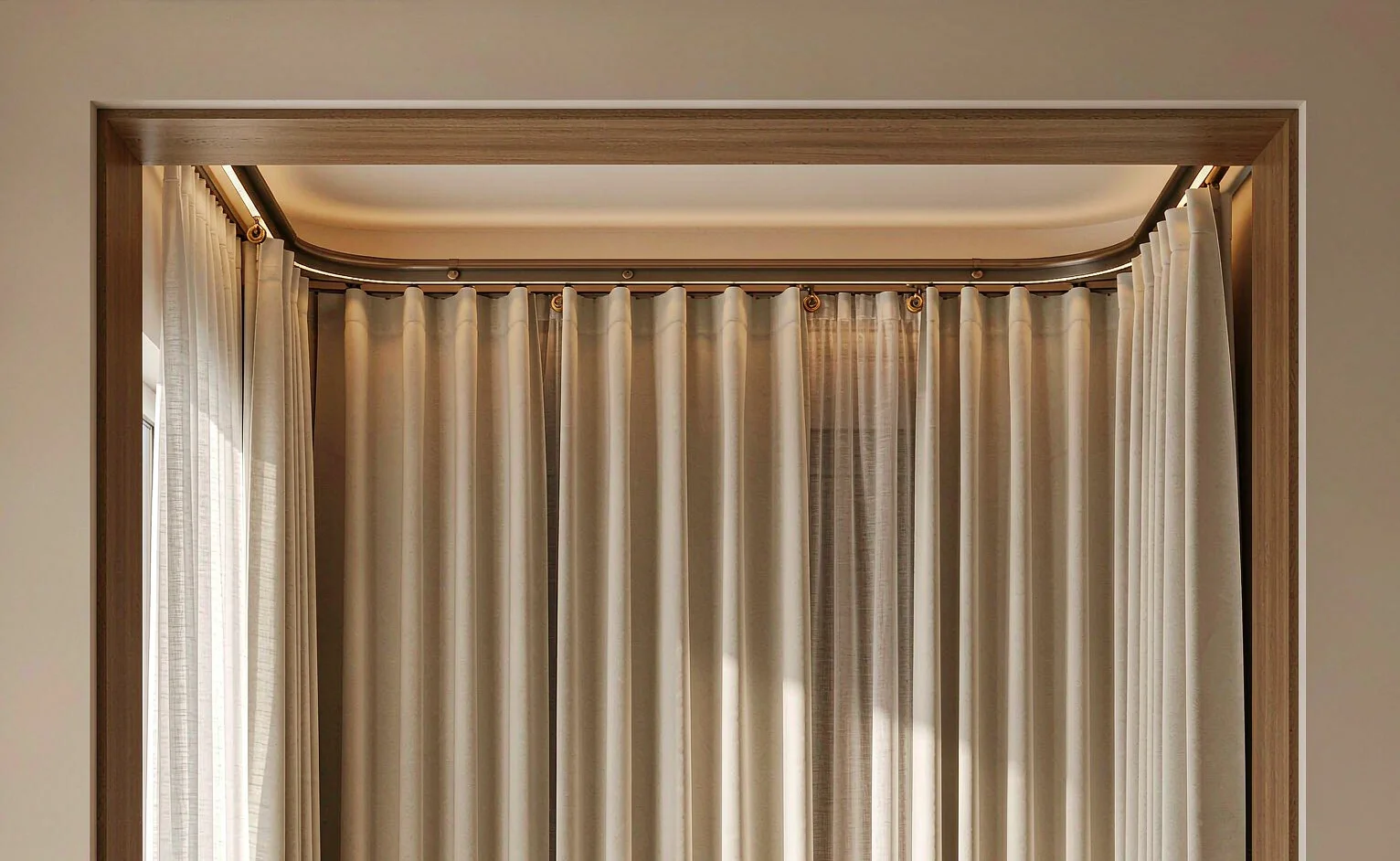
Above 3, two further tests separate a decorative drape from a specification. ISO 105-B04 rates fastness to water, and matters anywhere sea spray or pool splash reaches the fabric. Fabric weight sets the drape and the blackout performance: 180 to 220 g/m² for sheer voile, 220 to 260 g/m² for a dim-out, and 260 g/m² and above for a three-pass blackout that will darken a bedroom through the afternoon. Colour fastness comes from the dye route, not the weight: solution-dyed acrylic and solution-dyed polyester hold colour better than piece-dyed fabric of the same grams. The track assembly below is the one we fit where a curtain meets a ceiling recess, coordinated with Ceiling Materials for Hot & Humid Climates: Spec Guide.
3. Carpet: pile construction, backing and the humid-room question
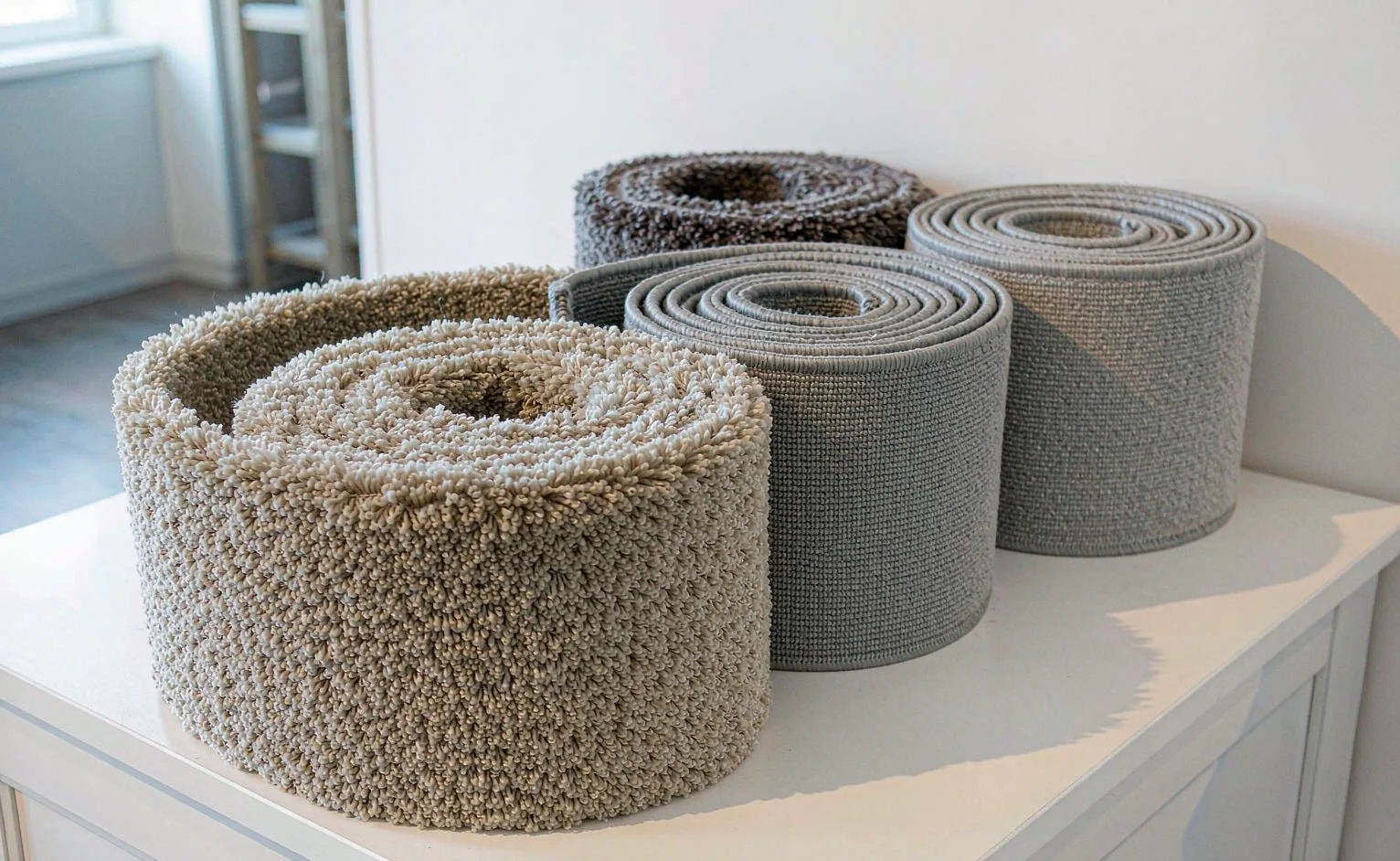
Carpet fails in tropical buildings for three reasons, in this order: loose pile that sheds, backing that lets the slab breathe into the room, and edges that lift. The specification that fixes all three is a cut-and-loop or dense loop construction at a low pile height, with a waterproof backing and a perimeter gap. Cut pile feels better but shows every footmark and every seam; a tight loop pile of 8 to 12 millimetres sheds far less and reads as deliberate.
In a villa, we specify wall-to-wall broadloom rather than carpet tiles. Tiles are the right answer in a commercial fit-out that must be lifted and relaid, but in a tiled residential building the substrate moves every wet season, and tile edges lift first — usually at the doorways. Broadloom is cut around the room and stretched, and it takes that movement. Leave a 10 to 12 millimetre expansion gap at every perimeter and set the sheet into tack strip; without it, the carpet buckles into ridges along the longest wall in the first humid month. Backing matters as much as pile: polypropylene or vinyl backing over a slab that has been sealed is what keeps the slab from wicking salts up into the fibre. Where the carpet meets wet areas, run a rigid threshold rather than butting soft material against a wet zone — the same wet-area discipline we apply to sanitary ware in Specifying Sanitary Ware & Bathroom Fittings for Hot, Humid Climates.
| Item | Specification | Why in hot / humid climates |
|---|---|---|
| Construction | Cut-and-loop or dense loop, pile 8–12 mm | Low pile sheds less and holds shape |
| Backing | Polypropylene or vinyl, waterproof | Stops slab wicking salts into fibre |
| Perimeter gap | 10–12 mm, tack strip fixing | Allows seasonal movement, no buckling |
| Broadloom width | 3.5–4 m, pile facing inward on the roll | Fewer seams, protected in transit |
| Roll weight | 45–80 kg per roll | Decides handling crew and loading plan |
| Fabric light-fastness | ISO 105-B02 ≥5 (6–7 unshaded) | Colour holds past year five |
| Fabric weight | 180–220 g/m² voile, 260+ g/m² blackout | Sets drape and light blocking |
| Wallpaper | 0.53 m plain PVC, vinyl-backed | Washable, no paper liner to bubble |
4. Ordering, packing and shipping soft goods
Soft materials are light and bulky, so they cost more per kilo and less per container than anything else we ship. That makes them a good consolidation passenger with the hard lines. Carpets ride as a floor layer with the flooring order — the mechanics of which we set out in Choosing Flooring for Tropical Climates — and curtains travel either made up, with the track and hardware boxed and numbered to the room, or as fabric rolls plus hardware for a local workroom. Vinyl-backed PVC wallpaper at 0.53 metre width rolls in 10 metre lengths and stacks flat; it is the lightest item in the soft-decor line and the easiest to send ahead of a fit-out.
Inspection before shipment is mostly about flatness and labels. Carpet goes out as full-width rolls and should be checked for a straight selvedge; a bow in the roll shows up as a diagonal ripple that no amount of stretching will remove. Blinds and curtains are checked against the room schedule rather than the order, because the failure mode here is not the material — it is the missing room. In the same villa package, soft decor closes out the interior alongside Sintered Stone Surfaces: Specifying for Hot Climates at the worktops and Specifying Durable Furniture Materials for Hot-Climate Interiors in the rooms themselves.
- Blinds: aluminium venetian or shutter on the sun-exposed openings, 25–50 mm slats at ≥0.18 mm, salt-spray powder coat if within 5 km of the coast.
- Fabrics: ISO 105-B02 light-fastness ≥5, rising to 6–7 on unshoped glazing; confirm ISO 105-B04 where spray or splash reaches the fabric.
- Carpet: dense loop or cut-and-loop at 8–12 mm pile, waterproof backing, 10–12 mm perimeter gap, broadloom over tiles.
- Wallpaper: 0.53 m plain PVC with vinyl backing — washable, and no paper liner to bubble in humid months.
- Shipping: carpet rolls 4 m wide, pile inward, 45–80 kg per roll; curtains made up with tracks numbered to the room.
- Consolidate soft decor with the flooring and wet-area lines so the interior closes in one phase.
Planning soft furnishings for a hot-climate project?
Send the drawings, the room schedule and the orientation of each opening. You will get a covering type per window, fabric weights and light-fastness per exposure, carpet construction and roll quantities per room, and the whole soft-decor line consolidated with the rest of your order.
Request a Soft Furnishings Quotation →Frequently asked questions
Which blinds hold up best in equatorial heat and humidity?
Aluminium venetian blinds on a powder-coated frame, with 25 to 50 millimetre slats and a minimum slat thickness of 0.18 millimetres, are the default we specify. The slat is the only component that touches the weather, and aluminium will not swell, warp or rot the way timber does in 80 percent humidity. Timber venetian and bamboo blinds are attractive but should be treated and retired on a shorter cycle. For bedrooms and media rooms, pair the blind with a blackout curtain on a recessed track, the assembly documented in Ceiling Materials for Hot & Humid Climates: Spec Guide.
What light-fastness rating should fabric curtains have for African or Gulf projects?
Specify ISO 105-B02 light-fastness of 5 or better, and for west-facing or unshaded glazing specify 6 to 7. Below 3, a coloured fabric in direct equatorial sun fades visibly within two to three years. Keep to solution-dyed acrylic or polyester for colour fastness, and ask for an ISO 105-B04 fastness-to-water test result if the fabric is exposed to sea spray or pool splash. A plain, unlined fabric in a purely shaded interior is the one case where 4 is acceptable.
Which carpet construction works in humid, hot climates?
Specify a loop or a cut-and-loop carpet with a dense pile and a low, tight loop, because loose loops trap dust and shed in humid conditions. Wall-to-wall broadloom is better than carpet tiles in a villa: tiles lift at the edges when the substrate moves, and in a tiled building that movement happens every wet season. Put a waterproof polypropylene or vinyl backing under the carpet and keep the perimeter expansion gap at 10 to 12 millimetres, so the sheet can move with humidity without buckling.
How are soft furnishings packed and shipped to East Africa?
Carpets roll to 4 metres in width on a core of 7 to 10 centimetres, so a 30 by 30 metre villa floor is roughly 7 rolls, each rolled outward with the pile facing in and protected by kraft wrap. Roll weight runs 45 to 80 kilograms depending on pile height and backing, so carpet goes as a floor layer of the same container as the flooring and sanitary-ware lines. Curtains and blinds ship as either made-up panels with the tracks boxed separately, or as fabric rolls plus hardware for local workrooms, the consolidation pattern described in Whole-House Material Packages: What 63 Enquiries Ask For.