Doors for Hot & Humid Climates: WPC, Aluminium or Steel?
Published: October 3, 2026
Humidity, termites and coastal salt air decide the door package before design does — here is how we specify leaves, frames and hardware for Africa and the Gulf.
Doors are the most-handled component in any building, and the first to fail in a tropical or coastal climate. Across the enquiries in our CRM — from villa fit-outs in East Africa to livestock warehouse projects in the Gulf — the door package is where we see the most warranty calls per square metre: flush doors that swell shut in their first rainy season, hinges that pit white within two years of salt exposure, and steel leaves that rust from an unsealed cut edge. The door is also one of the cheapest items to specify correctly at order stage and one of the most disruptive to replace after handover. This guide compares the three leaf materials that actually survive — WPC, aluminium and steel — and then goes one level deeper, to the hardware that outlasts them all.
1. Why the door package fails first in hot and humid climates
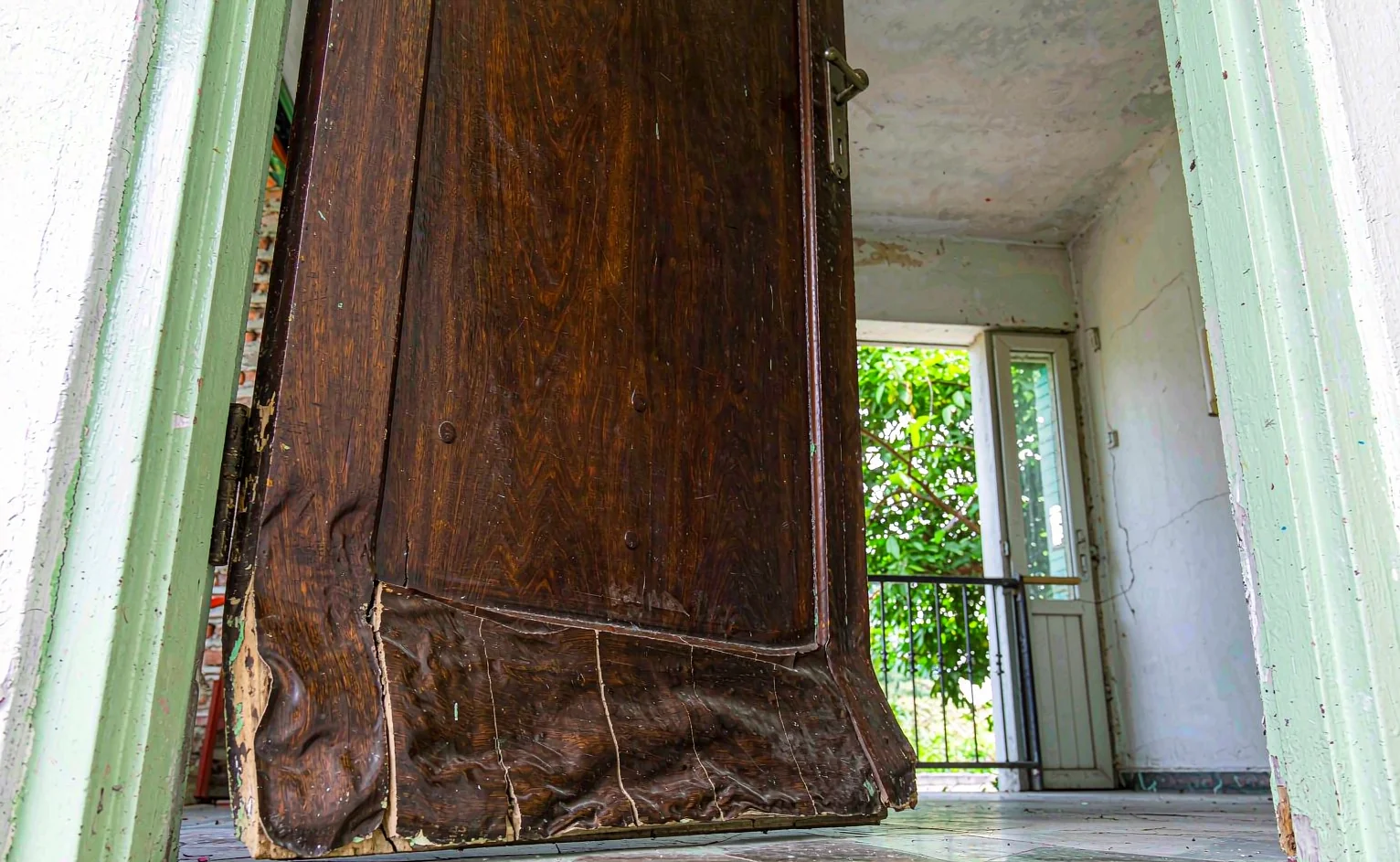
A door leaf sits in the worst microclimate in the building: one face in air-conditioning at 24 °C, the other in 85% humidity, with driving rain hitting the bottom edge. Engineered wood doors fail in a predictable way. An HDF or MDF flush door with a raw bottom edge can gain 10–20% of its thickness in swelling at the base within its first wet season, then delaminate from 200–400 mm above the floor — which is exactly why failures always look like a skirt of peeling veneer. Termites compound this: a leaf with a honeycomb or particle core is food, and once the colony finds one door it works through the frames too. We have been called to replace whole door packages in year two of projects where the same money spent on WPC at order stage would have ended the conversation. The failure is not bad luck; it is a specification gap — and it is the same gap that destroys untreated skirtings and particle-board carcases, as covered in Kitchen & Cabinetry Materials Compared.
The classic year-one failure: a wood-based leaf swollen 10–20% at the unsealed bottom edge, scraping the frame after the first rainy season.
2. The leaf material: WPC, aluminium or steel
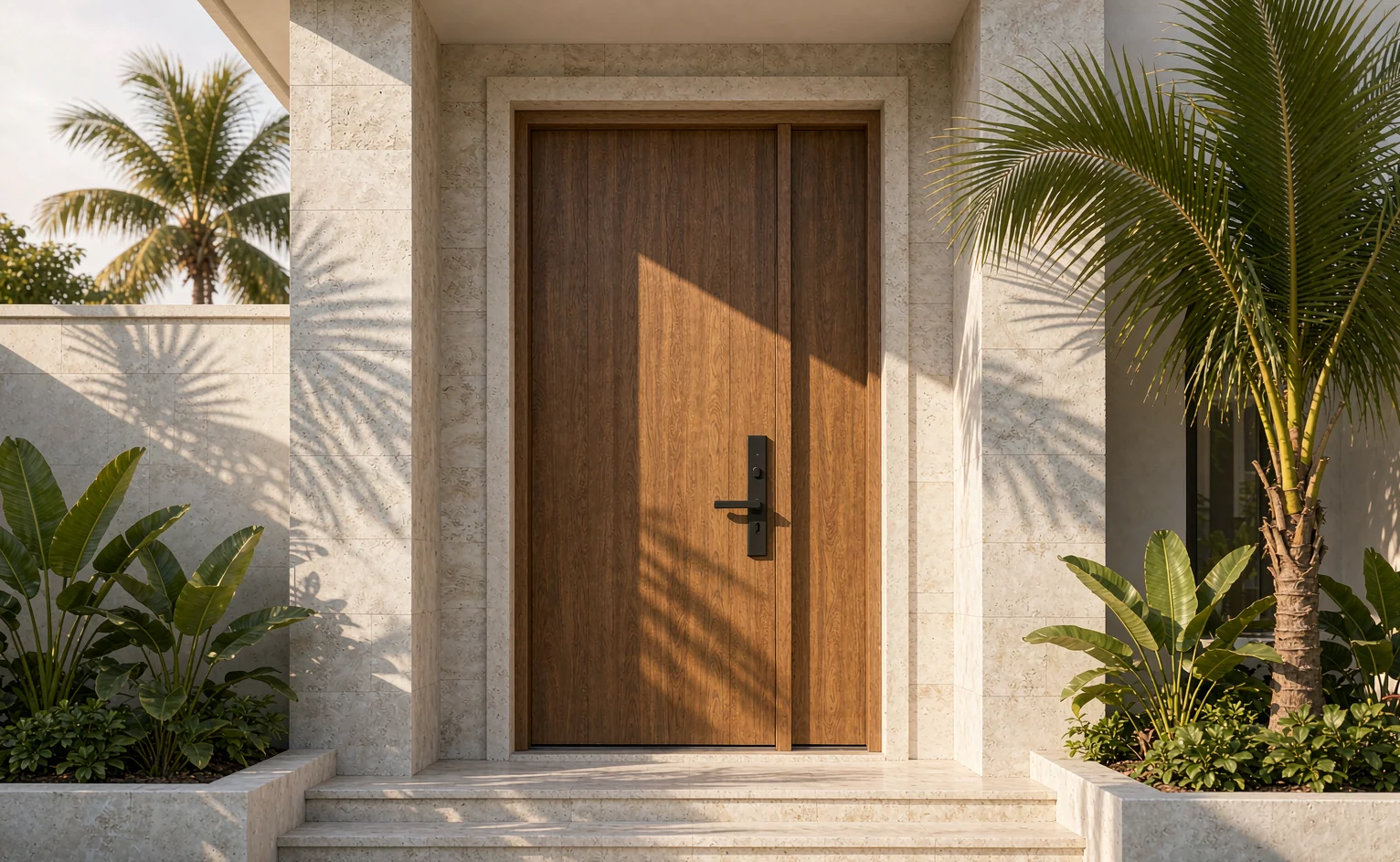
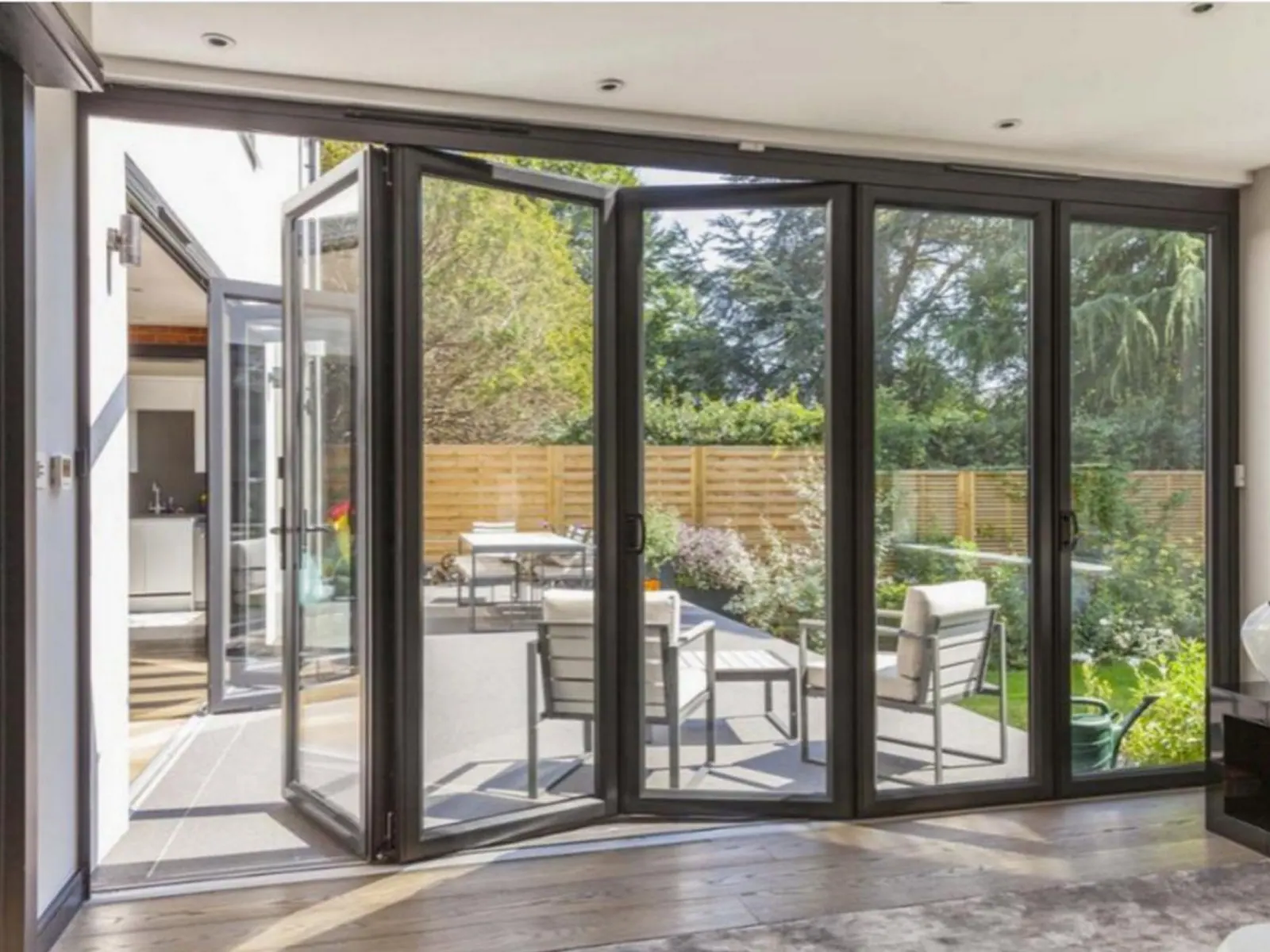
Three materials survive these climates, and each has a clear job. WPC (wood-plastic composite) is our default interior leaf: a solid 40 mm WPC door absorbs less than 1% water by weight, contains no food value for termites, machines like timber for rebates and hardware, and holds a wood-grain finish that reads as a premium timber door at a mid-range price. Aluminium owns the glazed openings: a powder-coated folding or sliding door with a 60–80 μm coating is dimensionally stable from a Sahel dry season to a Gulf summer, and pairs naturally with the glazing strategy described in Specifying Aluminum Windows & Doors for Hot Climates. Galvanized steel owns security and utility: a leaf over a 275 g/m² zinc coating with a polyester powder topcoat resists impact, resists fire for the critical first minutes, and is the only sensible choice for warehouses, plant rooms and external service doors. Solid hardwood, the showroom favourite, is the one we now specify least: even dense species move 3–5 mm across a 900 mm leaf between seasons and need re-finishing every one to two years.
Aluminium folding doors: a 60–80 μm powder coat keeps the leaf stable and the hardware dry from a Sahel dry season to a Gulf summer.
3. Hardware is the real weak point: 304 vs 316 stainless
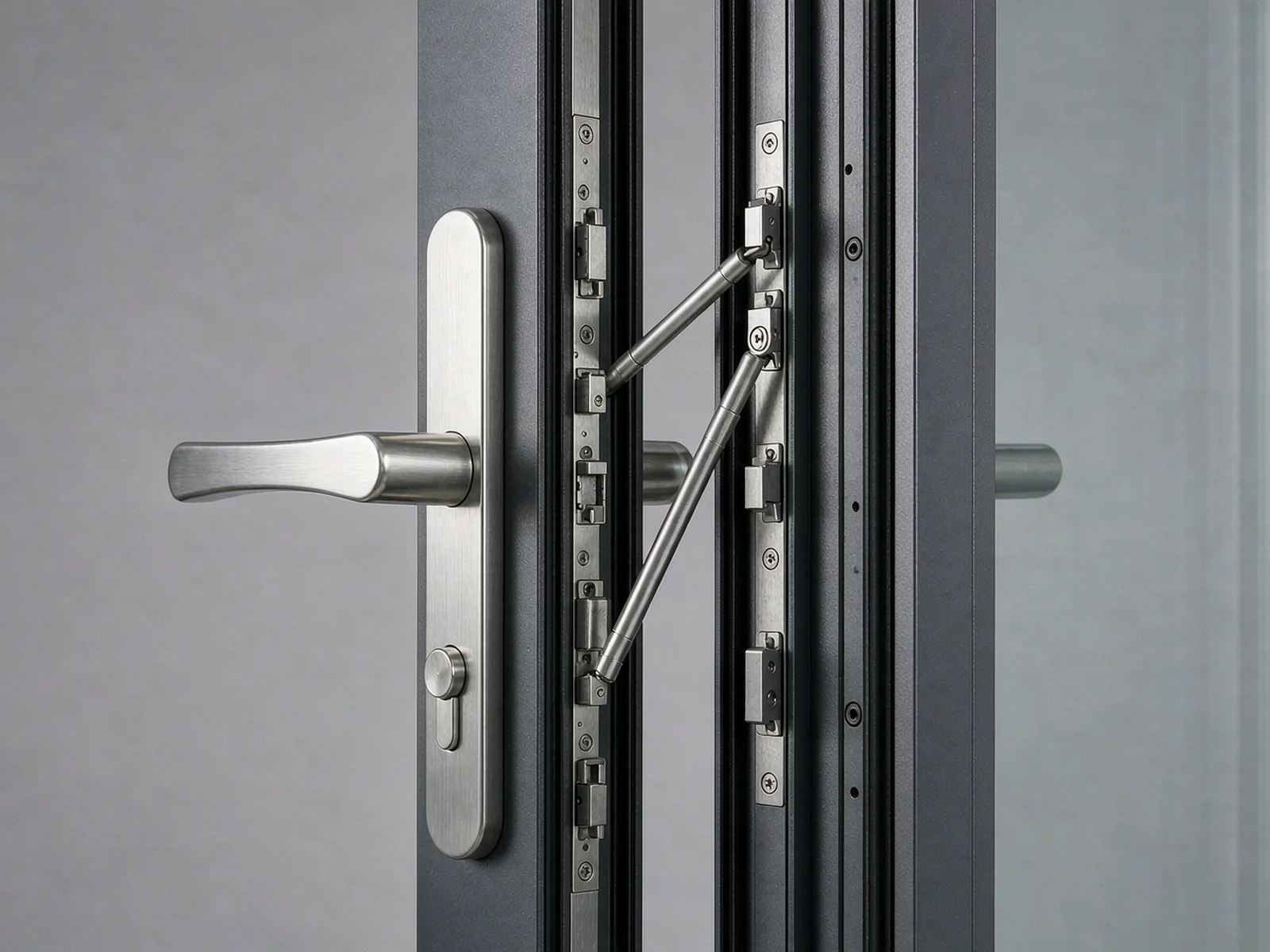
More doors are abandoned for broken hardware than for failed leaves. The culprit is grade selection: 304 stainless (the default on most imported locks and hinges) contains no molybdenum, and in salt-laden air — within roughly 5 km of a coastline, or anywhere with the Gulf’s high-salinity dust — it pits and seizes within one to two years. 316 stainless, with 2–3% molybdenum, is our coastal and Gulf default for hinges, lock bodies, closers and bolts, at a premium of only a few dollars per opening. Three details matter as much as the grade. First, multipoint locks: a three-point locking strip spreads load over the full leaf height, keeps the leaf straight against humidity-induced bow, and survives the daily slamming that kills single-point mortice locks. Second, four hinges on every 40 mm leaf, not three — the fourth hinge is cheap insurance against the leaf dropping as it moves through seasonal cycles. Third, warranty reality: a hardware supplier who will not put 316 grade in writing is telling you what is inside the box.
Multipoint locking in 316 stainless: three locking points keep the leaf straight and the mechanism alive through years of salt air.Galvanized steel on a warehouse: 275 g/m² of zinc under powder is the only leaf that shrugs off impact, fire risk and livestock traffic.
4. Warehouses and commercial buildings: the steel package
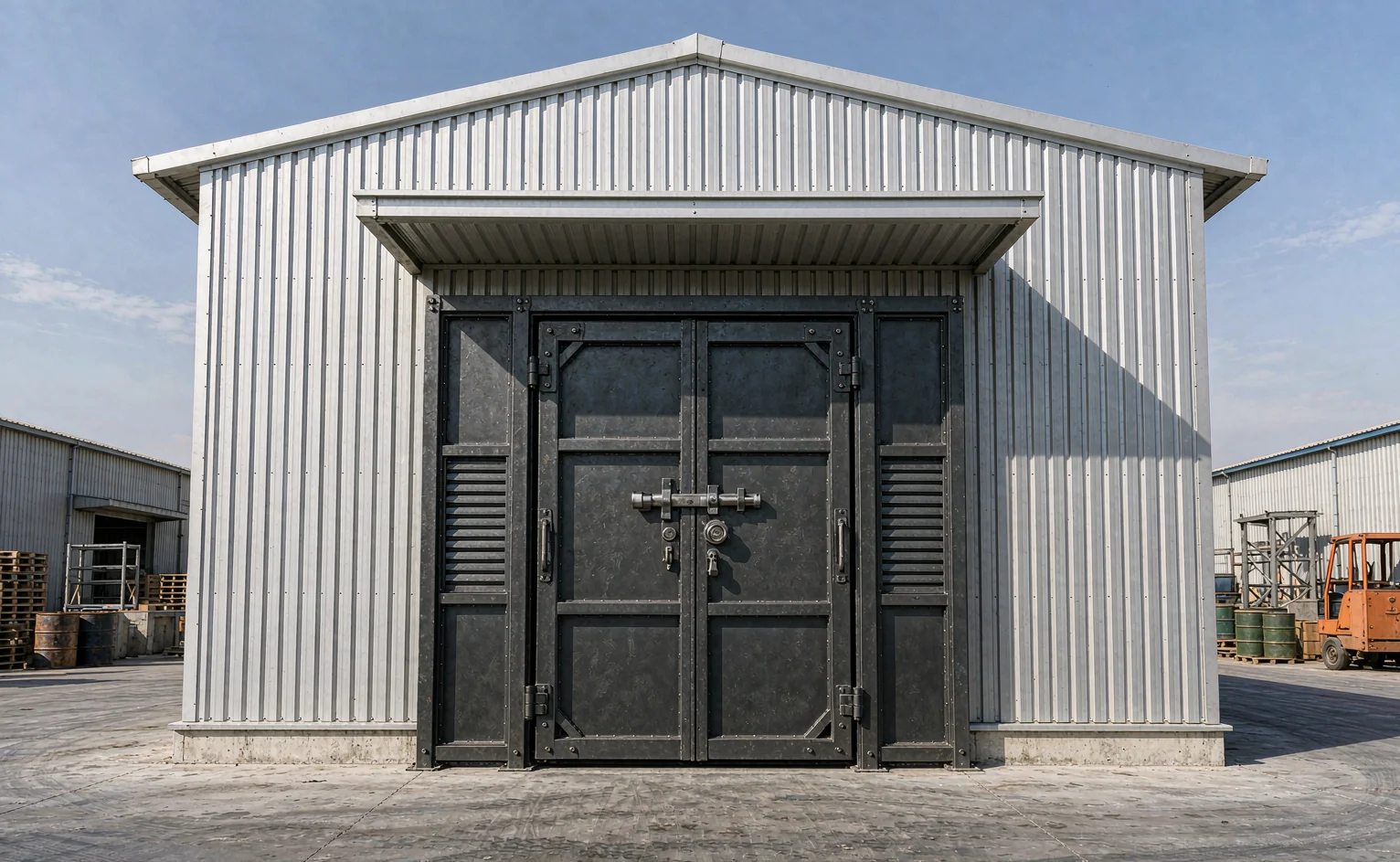
For the livestock and storage facilities that make up a growing share of our project pipeline, the door conversation is completely different: openings are 3–4 m wide, traffic is forklifts and animals, and the envelope must stay sealed against dust and driving rain. The working package is a galvanized steel double leaf or sectional door with wind locks to hold it in the frame during storms, a wicket door set inside one leaf for daily foot traffic, and — on staff and fire-exit openings — a panic bar so the route works even when the main leaf is chained. Where dust is the enemy, as across our South Sudan Building Materials: Specifying for Heat & Dust projects, we add brush seals top and bottom and a 20–30 mm raised threshold that keeps sand on the right side of the line. Rolling shutters belong on the same spec sheet: a galvanized curtain with polyester coating beats an uncoated one by years in coastal air, and a manual chain override is not optional where power cuts are routine. For the envelope around these openings, the cladding choices in Wall Panels for Hot Climates: WPC, SPC & ACP Compared complete the system.
Five checks before ordering doors for a coastal or humid project
Interior leaves in solid WPC (40 mm), never HDF/MDF flush doors with raw edges.
Seal all six faces of every leaf before hanging — especially the bottom edge.
316 stainless hinges, locks and closers within 5 km of the coast or in the Gulf.
Multipoint locks and four hinges per leaf, specified in writing.
Warehouse openings: galvanized steel with wind locks, wicket door and brush seals.
Door leaf and hardware specification for hot, humid and coastal climates
Option
Moisture behaviour
Termites & corrosion
Best use
Solid WPC leaf, 40 mm
<1% water absorption; no swelling
No food value for termites; hardware is the limit
Interior doors, bathrooms, humid bedrooms
HDF / MDF flush door
+10–20% edge swelling in first wet season
Termite food once veneer cracks
Only dry, inland, conditioned interiors
Powder-coated aluminium
Dimensionally stable in all seasons
60–80 μm coat; 316 hardware nearby
Glazed patio, balcony and folding doors
Galvanized steel, 275 g/m² zinc
Stable; seal every cut edge
Corrosion-safe under powder topcoat
Security, warehouse, plant and service doors
Solid hardwood
Moves 3–5 mm per 900 mm leaf seasonally
Needs 1–2 year re-finishing cycle
Sheltered, high-end entrances only
Hardware grade
—
316 stainless (2–3% Mo) within 5 km of coast
All hinges, locks, closers, bolts
Planning a door package for a hot or coastal project?
Send us your door schedule and we will return a leaf-by-leaf specification — WPC interiors, aluminium glazing, steel security, 316 hardware throughout — priced as a package, typically within one working day.
Are WPC doors better than wooden doors in humid climates?
Yes. A solid WPC leaf absorbs less than 1% water by weight, so it does not swell, delaminate or feed termites, while an HDF or MDF flush door can gain 10–20% of thickness at an unsealed bottom edge in its first rainy season. See Choosing Flooring for Tropical Climates.
When do door hinges and locks need 316 stainless steel instead of 304?
Within roughly 5 km of a coastline, and anywhere with high-salinity air such as the Gulf, specify 316 stainless. Its 2–3% molybdenum content is what stops pitting corrosion that ruins 304 hinges and lock bodies within one to two years. See Specifying Aluminum Windows & Doors for Hot Climates.
Which door material suits a warehouse or commercial building in Africa?
Galvanized steel. A 275 g/m² zinc coating under a powder topcoat resists corrosion, resists impact and livestock handling, and pairs with wind locks and a wicket door for daily access. See South Sudan Building Materials: Specifying for Heat & Dust.
How do I stop a new door from swelling in the rainy season?
Seal all six faces of the leaf before it is hung — especially the bottom edge, which installers most often leave raw — keep a 6–8 mm bottom clearance, and finish with a drip recess or overhang at exposed entrances. See Kitchen & Cabinetry Materials Compared.