Hotel Construction Materials: What African Hoteliers Order
Published: October 6, 2026
Hotels are our most package-driven enquiries: one room type repeated 64 times, four wet areas per floor and a facade that must survive 2,200 m of highland UV or coastal salt. This analysis reads the 35 hospitality enquiries in our client file — who they are, what they order and where they stall.
Hospitality is the sharpest test of a materials supplier. A villa buys once; a hotel buys the same room fifty times and checks every defect sixty-four times over. In our client file of 596 enquiries — the same order book mapped market by market in 596 East African Enquiries: The Material Specifying Pattern — 35 records (5.9%) are hospitality projects: 33 hotels plus two restaurants, logged between January 2024 and July 2026. Against the rest of the book (113 villas, 58 apartment projects, 8 medical, 4 retail and 4 office enquiries), hotels are a minority by count but the largest by line-item volume, because a single 64-room project multiplies every specification error by 64.
1. Who is actually behind the hotel enquiries
The roles inside the file tell you who signs. Owners dominate: 14 of the 35 records (40%) are the hotel owner or proprietor writing to us directly — including the 64-room Ethiopia project that sent a full demand list, and the 20 × 20 m owner-build hotel in South Sudan. Designers account for 5 records (including a full-package hotel interior-and-exterior brief), engineers 3, consultants 2, and one each for developer, contractor, trader and hotel manager. Geography is concentrated: Ethiopia 24 records (69%), South Sudan 6, Kenya 4, Uganda 1 — the same Ethiopia-heavy distribution as the wider file. The stage data matters just as much: 18 of 35 (51%) show no recorded progress, usually because drawings or a bill of quantities never arrived, while 6 are in pricing or quoted and one is already in production.
The hospitality file at a glance: 35 enquiries, January 2024 – July 2026
Market
Records
Typical projects on file
Ethiopia
24 (69%)
64-room hotel with full demand list; G+4 hotel; G+6 hotel/residence; G+12 mixed scheme; reception counter order in production
South Sudan
6 (17%)
20 × 20 m owner-build hotel; 50-room hotel; restaurant; commercial cabinet package at cost-check stage
Kenya
4 (11%)
4-star to 5-star upgrade quoting room-by-room; small hotel with service apartments; curtain-track order quoted
Uganda
1 (3%)
Hotel interior and exterior design, quoted
2. Guest rooms are a package, not a shopping list
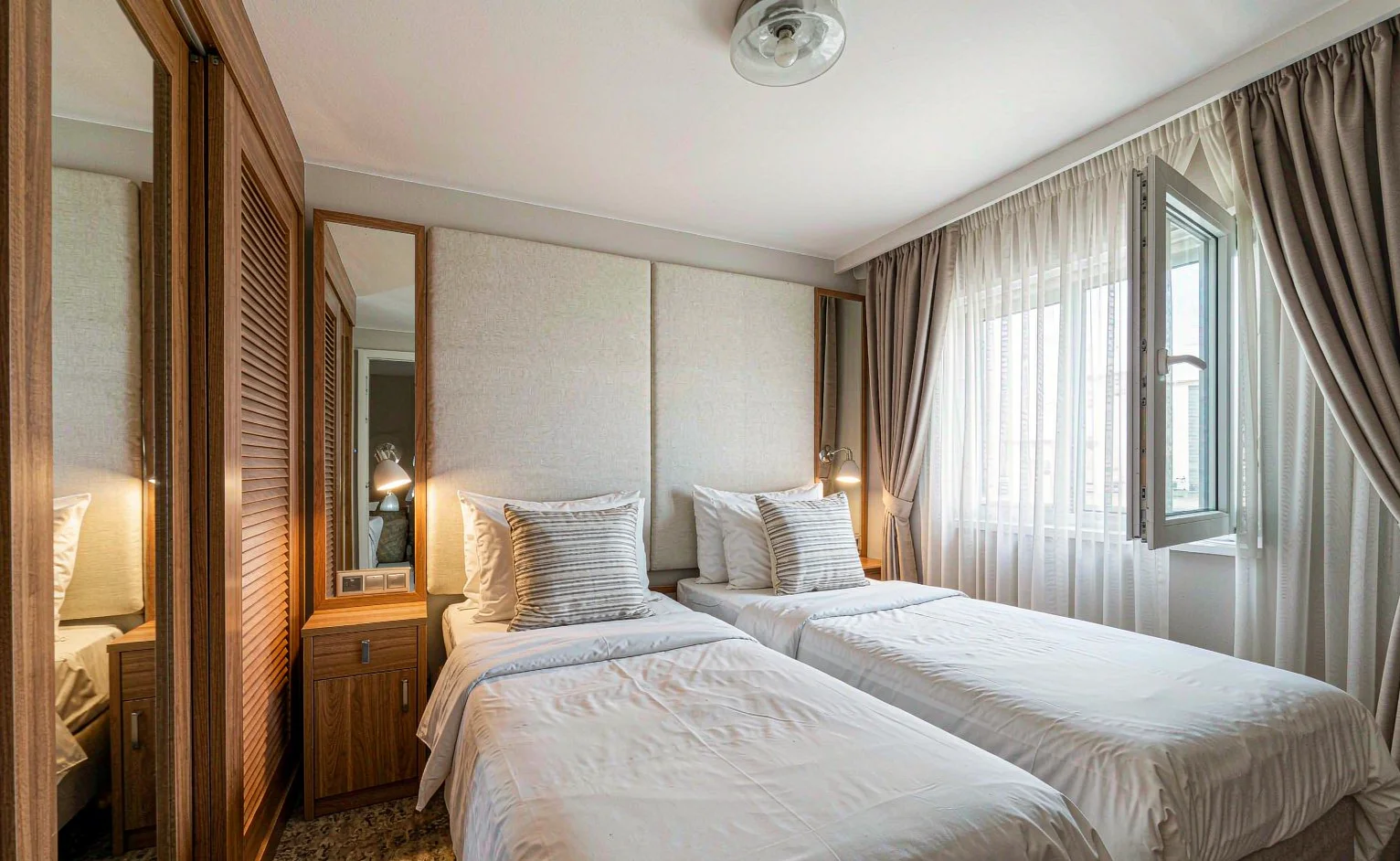
The first thing the file teaches is that hotels buy repetition. The two projects with explicit room counts — 64 keys in Ethiopia and 50 keys in South Sudan — turned every product into a multiplied line: a bedside reading light becomes 128 units, a built-in wardrobe becomes 64, a curtain track becomes 64. The recurring room-package lines across the file are furniture (beds, headboards, desks, luggage racks), built-in wardrobes specified to hotel-grade durability in Specifying Durable Furniture Materials for Hot-Climate Interiors, curtain tracks (the exact line one Kenyan owner ordered on its own), LED lighting per the specification logic of Lighting & Switches for Hot Climates: The LED Spec Guide, and hard-wearing flooring that survives housekeeping trolleys. This is also why the Kenya 4-star-to-5-star upgrade quoted one room first: cost one keys-and-furniture package, get the owner's sign-off, then multiply by the key count. It compresses a quotation cycle from weeks to days and keeps every room identical at handover.
The repeatable unit of every hotel order: one guest room — beds, headboard, built-in wardrobe, curtains, lighting — cost once, then multiplied by the key count.
3. Wet areas and public floors: where hotel specifications get harder
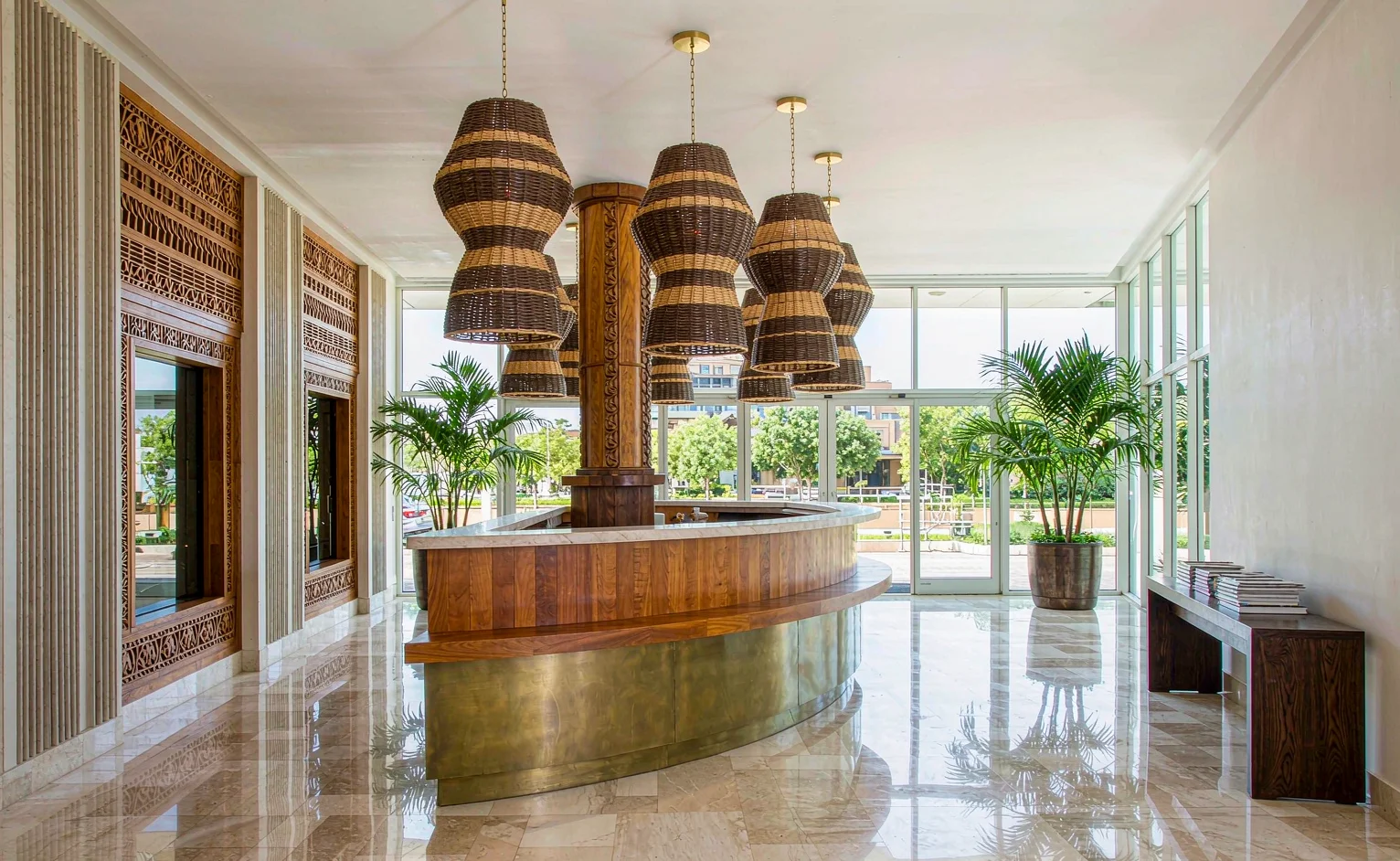
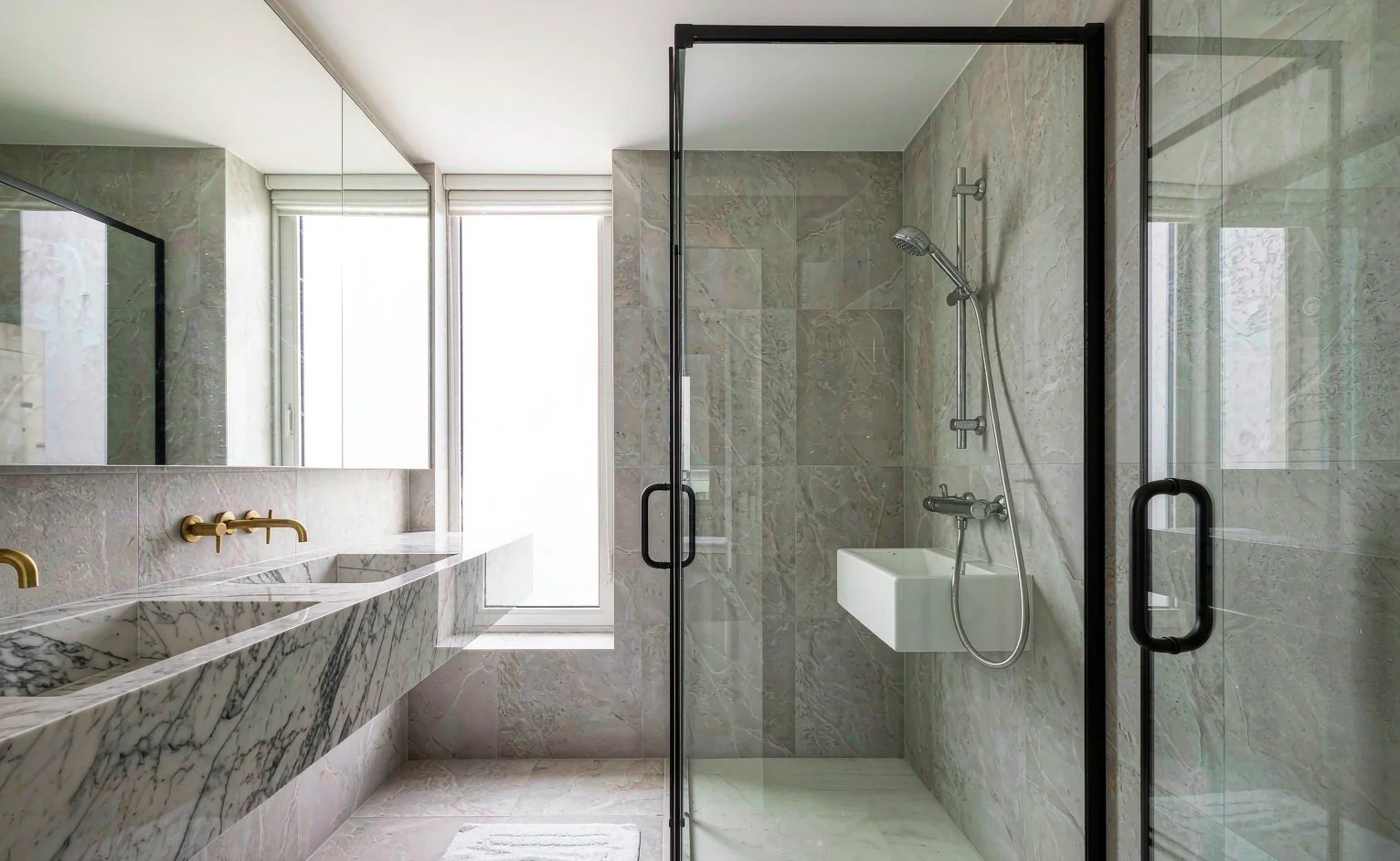
Hotel bathrooms run 24/7 and are cleaned with industrial chemicals twice a day, so the wet-area lines in the file are specified harder than residential equivalents: wall-hung sanitary ware with brass or 304-grade fittings per Specifying Sanitary Ware & Bathroom Fittings for Hot, Humid Climates, large-format porcelain at water absorption below 0.5% as set out in Specifying Porcelain & Ceramic Tiles for Hot, Dusty Climates, tempered glass shower partitions and anti-mould ceiling coatings. Public areas shift the problem from water to traffic and image: the file shows owners ordering reception counters and commercial cabinets (a South Sudan designer's cabinet package at cost-check; an Ethiopian trading company's front-desk order already in production), lobby wall panels, feature lighting and stone or polished-tile floors sized for luggage wheels. The zone matrix below is how we compress a hotel bill of quantities into four quotable blocks.
Hotel material package by zone, as quoted from the hospitality file
Zone
What repeats in the orders
Specification focus
Guest rooms
Furniture, built-in wardrobes, curtain tracks, LED lighting, resilient flooring
Durability per keys: 50–64 identical sets, easy-replace components
Reception counters, commercial cabinets, wall panels, feature lighting, stone floors
Impact and traffic resistance; brand look; fire-safe panel cores
Facade & exterior
Stone-look coatings, aluminum windows, glass balustrades, G+4 to G+12 framing
UV stability at 2,200 m highland; salt tolerance on the coast
Wet-area package: wall-hung vitreous ware, sub-0.5% absorption porcelain, tempered glass partitions and brass fittings — specified for twice-daily industrial cleaning.
4. Facades, refurbishments and how to get a hotel quoted
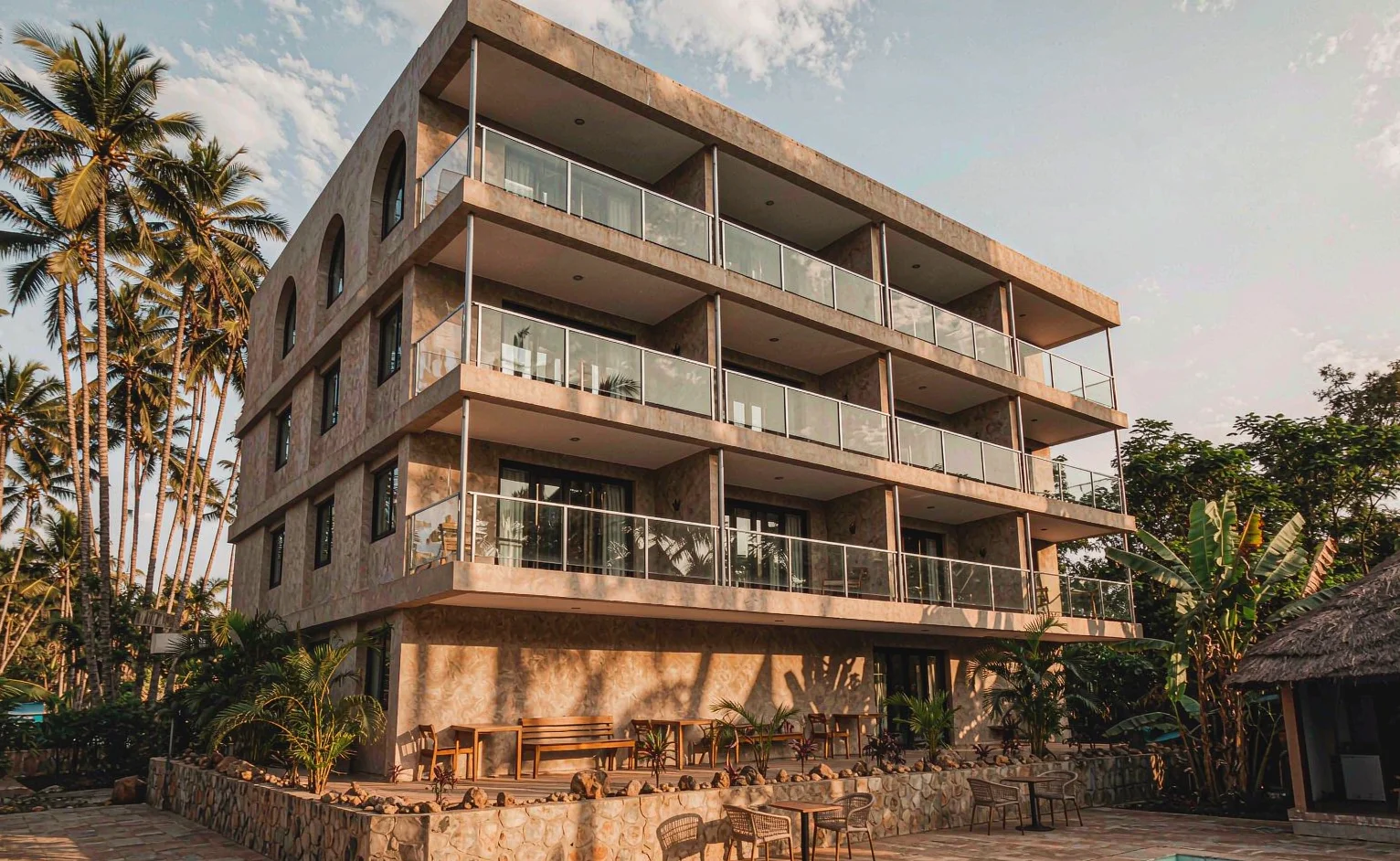
The exterior lines in the file range from a G+4 hotel and a G+6 hotel/residence to two ground-up G+12 schemes in Ethiopia, so facade packages are quoted against height and climate: stone-look coating systems, aluminum windows and glass balustrades per the opening-performance logic of Specifying Aluminum Windows & Doors for Hot Climates. Refurbishment is a distinct sub-market — the Kenyan 4-star-to-5-star upgrade proves existing hotels buy in phases, room by room, without closing. And the stage data exposes the real bottleneck: with 18 of 35 enquiries showing no recorded progress, the difference between a stalled chat and a production order was almost always a room count plus a demand list. The 64-room Ethiopia project moved from first contact to production because the owner sent both early. The same follow-through discipline we apply to the wider enquiry book, measured across all 596 records, is what keeps a hotel programme on a container schedule rather than in a chat thread.
Facade package on a mid-rise hotel: stone-look coating, aluminum-framed glazing and glass balustrades specified by height band and climate zone, from G+4 to G+12.
How we quote a hotel package
Start with keys: room count and room types decide 70% of the bill of quantities before any drawing arrives.
Cost one room, not the hotel: sign off a single keys-and-furniture package, then multiply by key count.
Zone the remainder: wet areas, public areas and facade each quoted as their own block with their own specs.
Refurbishments quote room-by-room so the hotel keeps trading during the upgrade.
Pack to the port: consolidated containers, room-numbered cartons, one delivery leg per floor sequence.
Building or upgrading a hotel in Africa or the Gulf?
Send us the key count, the city and the room types — a demand list is enough to start. You will get a room package costed per key, the public-area and facade blocks priced separately, and a container plan matched to your floor sequence.
What materials do hotel projects in East Africa order most?
Packages, not single products. Across our 35 hospitality enquiries, the recurring order lines are furniture and built-in wardrobes for guest rooms, curtain tracks, LED lighting, wall-hung sanitary ware and large-format porcelain for bathrooms, reception counters and commercial cabinets for lobbies, and coated facades with aluminum glazing up to G+12. The enquiry-level pattern behind these lines is analysed in 596 East African Enquiries: The Material Specifying Pattern.
How do you quote a 60-room hotel without losing weeks?
Quote the room, then multiply. A hotel is one room type repeated 50 or 64 times, so we cost a single keys-and-furniture package per room first, price the public areas separately, and ship the whole programme in consolidated containers. Specifying the furniture inside that package is covered in Specifying Durable Furniture Materials for Hot-Climate Interiors.
Which materials survive 24/7 hotel bathrooms in humid climates?
How long does hotel material procurement take from enquiry to shipment?
In our file, 18 of 35 hospitality enquiries stall before pricing because drawings or a bill of quantities never arrive; the six that reached pricing took roughly two to four months from first contact, and one Ethiopia order for a 64-room hotel was already in production after an early demand list. The stage-by-stage behaviour behind these numbers is set out in 596 East African Enquiries: The Material Specifying Pattern.