Specifying Durable Furniture Materials for Hot-Climate Interiors.
Published: September 21, 2026
Stable wood, humidity-proof upholstery and corrosion-resistant metal — the furniture specification we lock before the interior finish.
In Africa and the Gulf, furniture is the material that gets used the most and forgiven the least. A dining table, a sofa or a wardrobe that looks perfect in the showroom will warp, fade or corrode within a few years if the materials were not chosen for the climate. The cause is rarely the design — it is the substrate, the finish and the hardware specified as a single system. In our From Concept to Completion process, furniture is specified early, because every interior finish and lighting plan keys off the furniture layout. Here is the decision framework we use with our own project clients. It is written for owners and FF&E specifiers who need to read a furniture schedule without a workshop beside them.
1. Start with the wood, not the finish
A painted or laminated surface hides the substrate, and the substrate is what fails. In hot, humid climates we specify stable solid hardwoods with a low-movement grain — teak, iroko, mahogany and oak — for pieces that see daily use, because they resist the moisture swings that make softwoods warp and check. For large runs and budget lines we move to engineered boards, but only with a moisture-resistant core: plywood bonded with a phenolic or marine-grade adhesive, or MDF that is explicitly rated for high humidity, never standard MDF that swells at the edges. Every board is acclimatised on site for at least 48 hours before assembly, and the joinery is detailed with a movement allowance so the frame does not crack as the wood breathes with the seasons. For a resort or villa we target a moisture content of 8–10% at delivery, which matches the local equilibrium and keeps movement under 1 mm across a 2 m span over a full year.
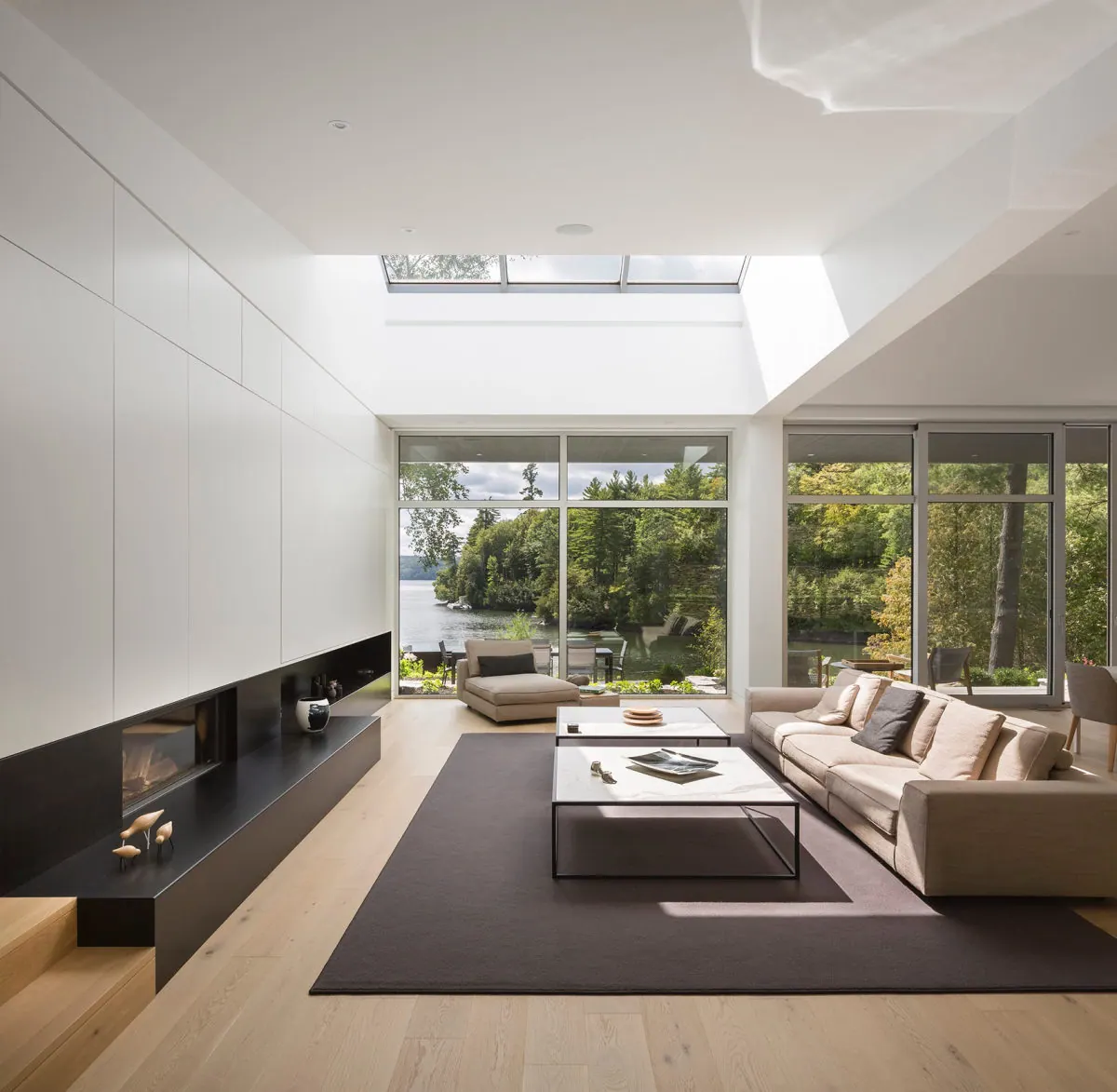
Stable solid hardwood is the difference between furniture that lasts and furniture that warps.
2. Upholstery that survives humidity and dust
A sofa is only as durable as its fabric and its foam. In dusty, humid interiors we specify performance weaves and solution-dyed acrylics with a rub count above 60,000 double rubs, because they shed dust, resist staining and dry quickly when they get wet. We avoid natural fibres like cotton and linen in high-traffic and coastal rooms, where they hold moisture and breed mould, and keep them to low-use accent pieces. The foam core matters as much as the cover: high-density, closed-cell foam at 35 kg/m³ or above for seating, because open-cell foam collapses under sustained heat and humidity. Every cushion is specified with a removable, washable cover, because in these climates the cover is the part that actually gets cleaned. We specify a Martindale or Wyzenbeek rub count of at least 60,000 and a backing that is itself hydrophobic, so a spill beads on the surface instead of wicking into the fill.
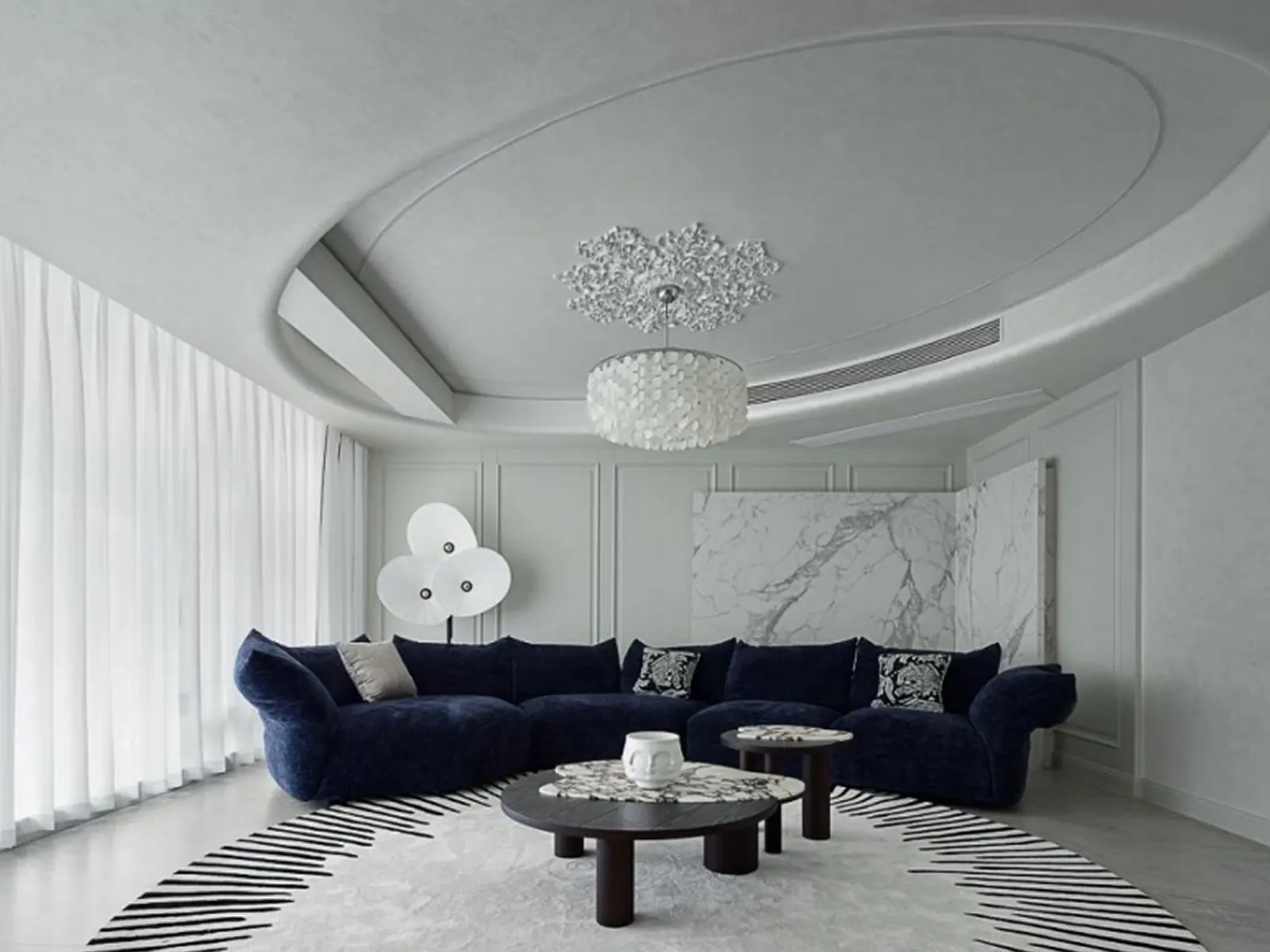
Humidity-resistant performance fabric and closed-cell foam — the cover is the part that actually gets cleaned.
3. Metal frames and corrosion-resistant finishes
Metal is the skeleton of most modern furniture, and it is where hot-climate pieces quietly fail. We specify powder-coated or anodised aluminium for frames and legs, with a minimum 60-micron powder coat on coastal and high-humidity projects, and we move to 316 stainless steel for anything that touches water or sits in a coastal room. For steel frames we require a hot-dip galvanised or e-coat base under the finish, because a paint-only finish on bare steel will blister and rust within a season. Every fastener is specified in stainless — 304 minimum, 316 at the coast — and called out by grade in the BOQ, because a single carbon-steel screw is where the rust always starts. On outdoor and poolside pieces we move to fully welded 316 stainless or powder-coated aluminium with a marine-grade primer, because chlorine and salt air eat a standard finish in a single season.
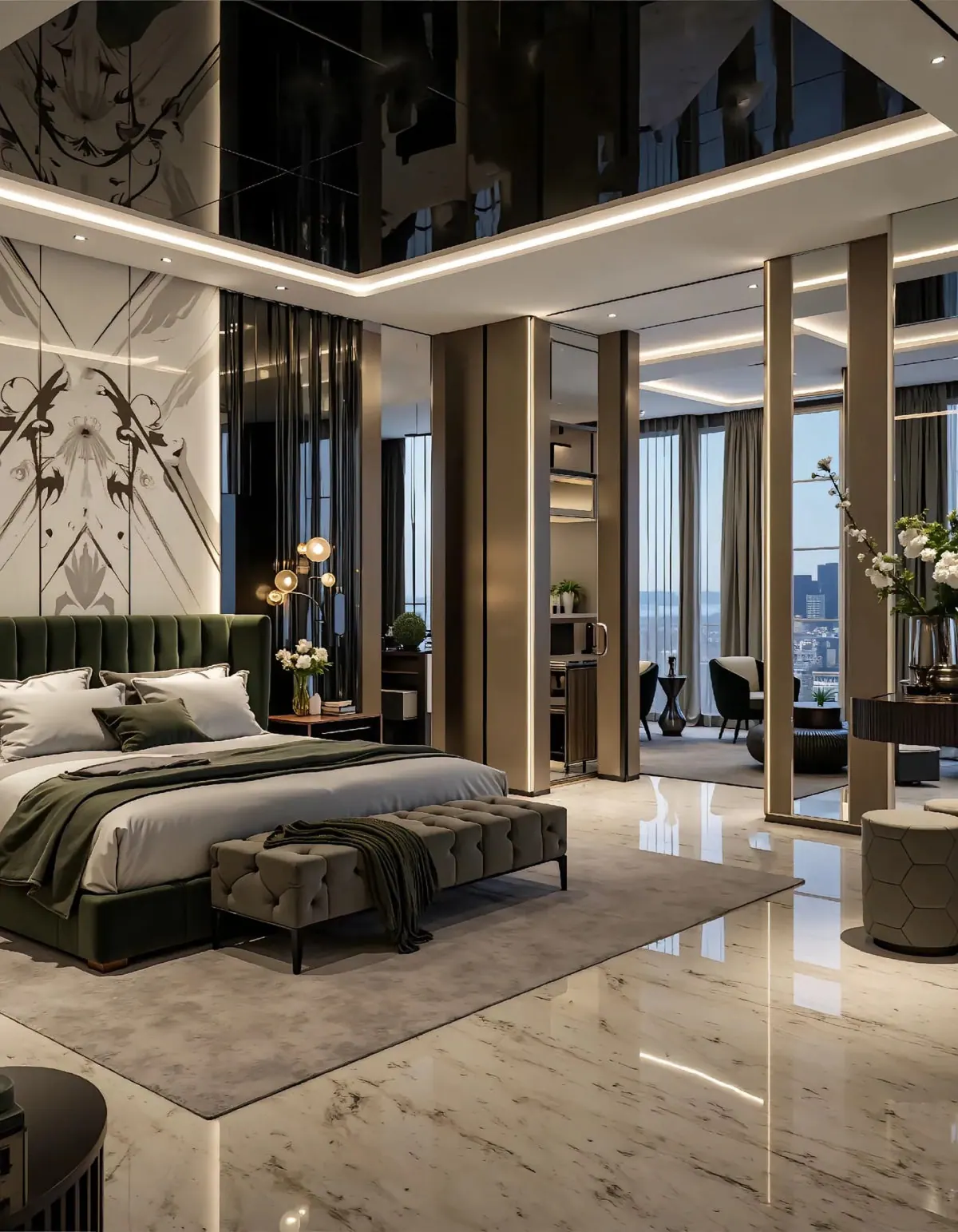
Corrosion-resistant powder-coat finish on the metal frame — the skeleton is where hot-climate furniture quietly fails.
4. Stone tops and the details that make furniture last
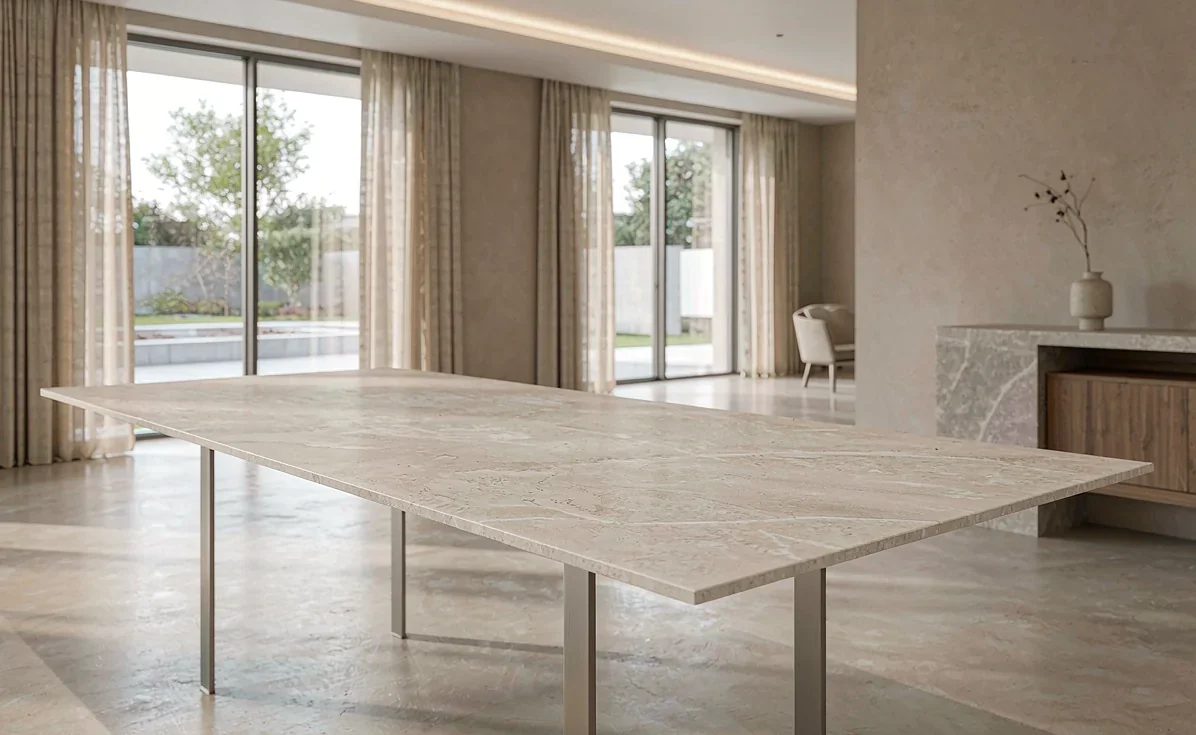
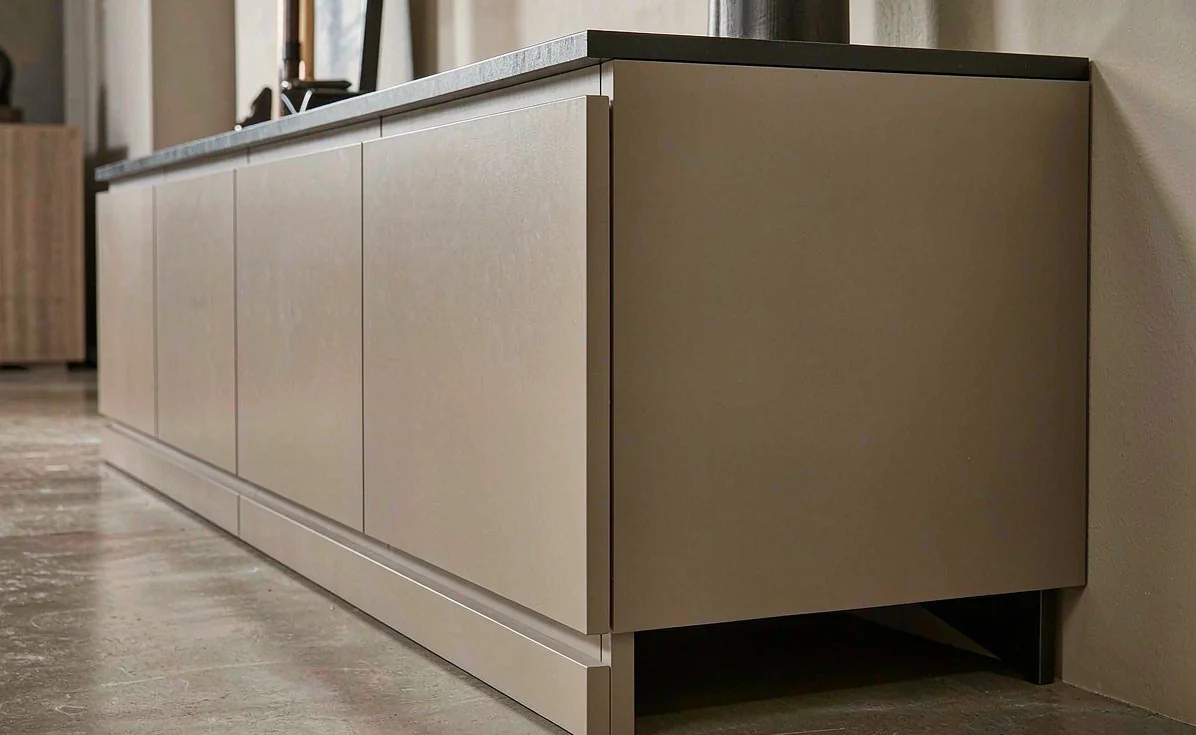
The top is the surface that takes the heat, the weight and the wear, and it is the easiest place to cut corners. We specify sintered stone for dining, kitchen and bar tops, because it is denser and harder than natural stone, resists heat and staining, and does not need sealing. For natural-stone pieces we require a full impregnating sealant and a clear specification of the stone grade, because a low-grade slab will etch and stain within a year. The detailing is what separates furniture that lasts from furniture that fails: a drip edge that sheds water clear of the substrate, a rear clearance that lets air move behind the piece, and a plinth or feet that lift the base off the floor so it does not wick up ground moisture. In our completed villa and resort projects, the furniture schedule is drawn up as a full material and detail specification — not just a style — because that is where the failures always find their way in. We fix the top with a perimeter cleat rather than a centre-only blob of adhesive, so thermal movement does not crack the stone or lift the edge over time.
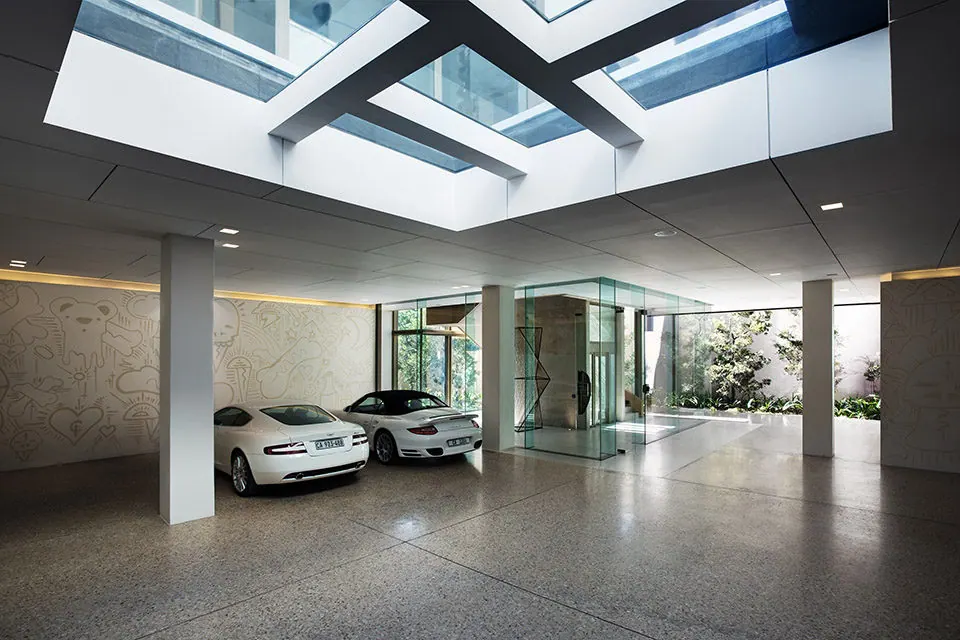
Sintered-stone top with a drip edge that sheds water clear of the substrate.Rear clearance and a raised plinth that lift the base off the floor.
Four-point checklist before ordering furniture for a hot-climate project
Specify stable solid hardwood or moisture-resistant engineered cores, acclimatised on site.
Upholster with performance weaves, 60k+ rub count, and 35 kg/m³ closed-cell foam.
Use powder-coated or 316 stainless metal frames with stainless fasteners.
Detail stone tops with a drip edge, rear clearance and a raised plinth.
Furniture material selection — quick comparison
Material
Best choice for hot climates
What to avoid
Key specification
Solid wood
Kiln-dried teak, iroko, mahogany, oak
Undried softwood that warps
Acclimatise 48 h on site; movement allowance
Engineered board
Marine-grade plywood, humidity-rated MDF
Standard MDF (swells at edges)
Phenolic-bonded core
Upholstery
Solution-dyed acrylic, 60k+ rubs
Cotton / linen in wet rooms
35 kg/m³ closed-cell foam
Metal frame
Powder-coat 60 µm, 316 stainless
Paint-only bare steel
Galvanised or e-coat base; stainless fasteners
Stone top
Sintered stone
Low-grade natural slab (etches)
Drip edge, rear clearance, raised plinth
Planning a project?
Share your drawings or furniture schedule and we will return an itemized furniture BOQ with wood, upholstery, metal and stone-top specifications — typically within one working day.
Which wood is best for furniture in a hot climate?
A stable hardwood or a well-engineered composite. Kiln-dried teak or oak behave well; solid timber that was not dried to the local equilibrium moisture content moves and splits.
What upholstery survives humidity?
Closed-cell foam under a performance fabric that resists mould and fading. Open-cell foam traps moisture and starts to smell within a season of humid air.
Do metal frames rust indoors?
They can. A powder-coat at 60 microns or above over a properly pre-treated frame holds up; thin paint over untreated steel blooms with rust in coastal rooms.
How do I make furniture last in a resort?
Specify for the worst room, not the showroom — corrosion-resistant frames, humidity-resistant covers, sealed stone tops and fixings to match.