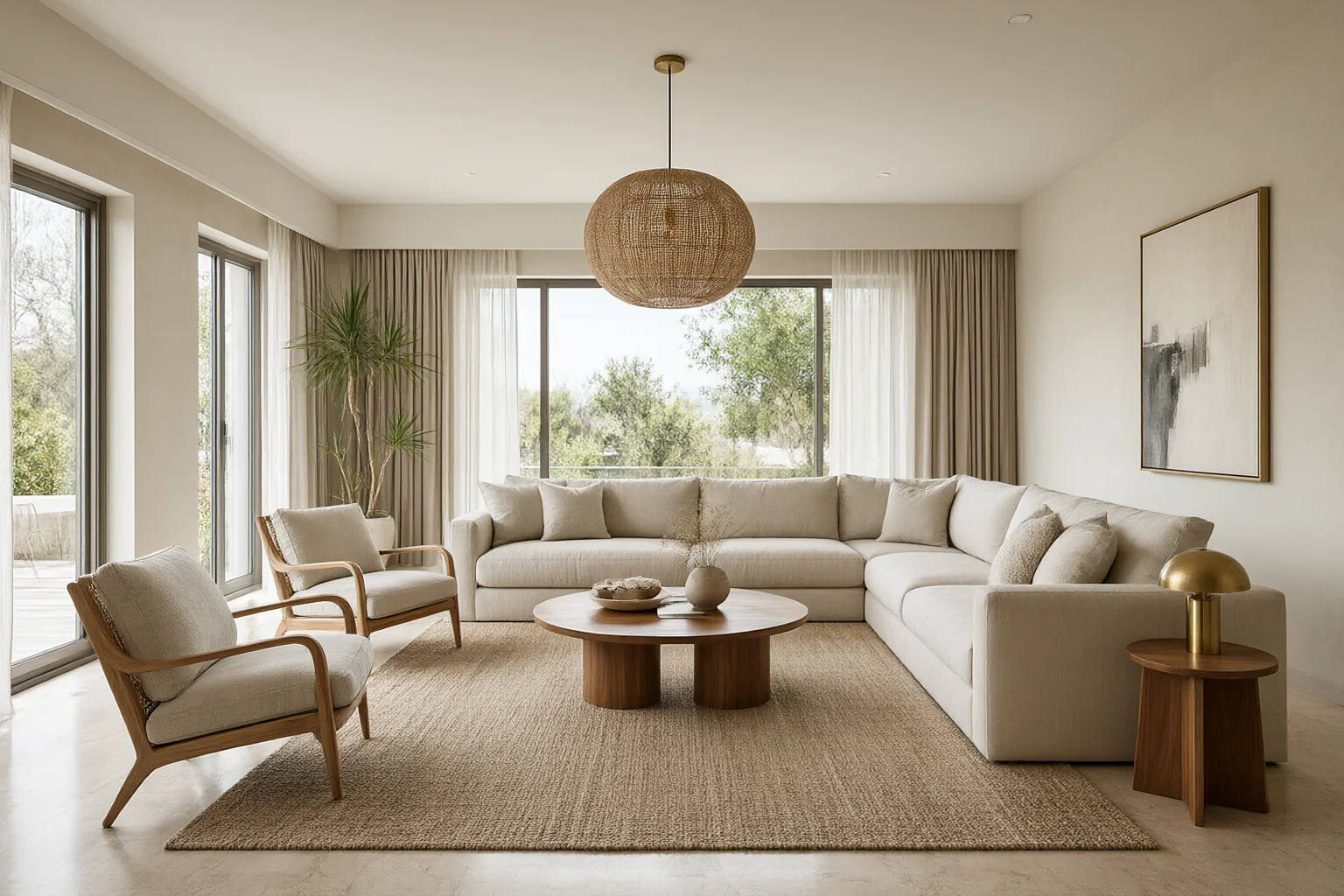
Interior Design Ideas for Warm Climates: 7 Material Moves
Published: October 17, 2026
Most interior design ideas online were drawn for temperate homes. Here are seven material moves that keep the look intact at 35°C, 80 percent humidity and a full dust season — with the spec numbers behind each one.
Scroll any design feed and you will find interior design ideas photographed in Copenhagen, Melbourne or the Pacific Northwest — pale oak floors, bouclé sofas, glossy white joinery. Ship that palette to Lagos, Juba or Dubai and it fails within two monsoons: oak cups and swells, bouclé traps dust, gloss white shows every hairline scuff under a harsh equatorial sun. Modern interior design for Africa and the Gulf keeps the calm, neutral mood but swaps in materials chosen for how they behave at 35°C and 80 percent relative humidity. This guide sets out the seven moves we specify most, and the numbers behind each.
1. Start with the climate, not the mood board
Every warm-climate interior faces the same four forces. Heat: indoor air regularly sits at 30–38°C, and surfaces near glazing run hotter still. Humidity: coastal West and East Africa spend months at 70–90 percent RH, which moves solid wood and swells cheap board. Dust: the Harmattan and Gulf shamal carry fine silt through every louvre gap. UV: near-vertical equatorial sun bleeds dyes and yellows clear coatings faster than anywhere at higher latitudes.
A spec that ignores these forces produces interiors that photograph beautifully on handover and look tired within a year. So before the mood board, fix the material baseline. The seven moves below are ordered roughly as you would decide them: floor first, then walls, then soft layer, then metal and light. Where a move needs deeper numbers — absorption rates, moisture content, coating systems — we link the dedicated guide.
2. Seven interior design ideas that hold up in heat
These are the moves that carry a warm-climate scheme, whether the project is a villa in Nairobi or a boutique hotel in Jeddah. Each is specified by performance, not by look alone — that is what separates a durable scheme from a styling exercise.
| Move | What to specify | Why it holds up |
|---|---|---|
| 1. Large-format porcelain floors | 600×1200 mm or larger, water absorption <0.5%, PEI IV–V | Cool underfoot, dust sweeps off, no grout maze; see our porcelain & ceramic tile guide |
| 2. Kiln-dried timber accents | Teak, iroko or merbau at 8–10% moisture content | Natural oils resist rot; correct MC stops cupping in 80% RH |
| 3. WPC / aluminium wall panels | WPC or powder-coated ACP on a ventilated batten | No swelling, washable, patchable one module at a time |
| 4. Solution-dyed textiles | Acrylic or olefin yarns, colour locked in the fibre | UV-stable for years of window sun; bleach-cleanable |
| 5. Breathable mineral paint | 100% acrylic or silicate systems, matt sheen | Lets walls dry, resists mould, hides dust better than gloss |
| 6. Warm metals, not chrome | Brushed brass, PVD finishes, 316 stainless near coast | No mirror-smudge, no pit-rust in salted coastal air |
| 7. Layered window dressing | Sheer + blackout on a double track | Cuts glare and radiant heat without darkening the room |
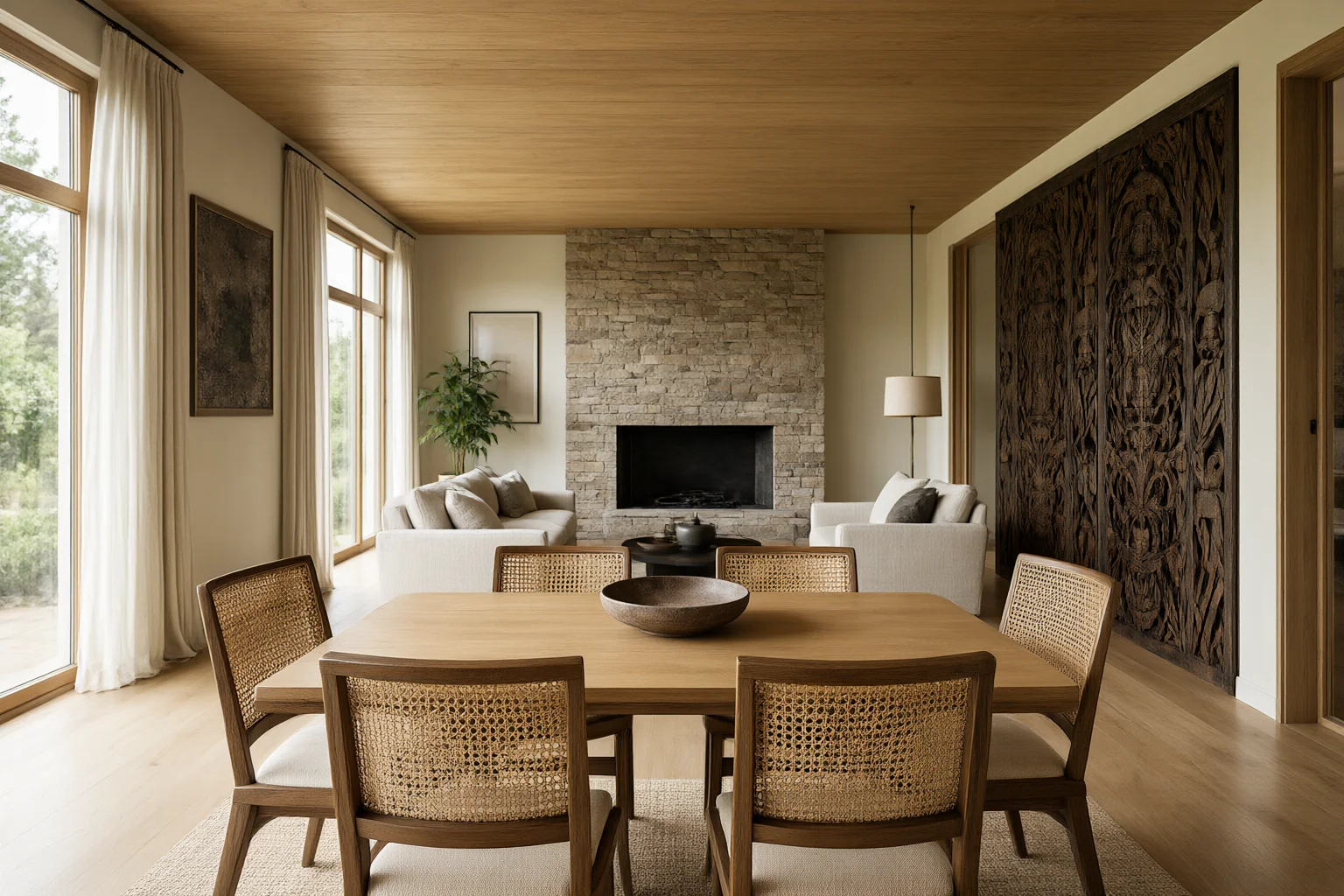
Notice what is absent: no high-gloss lacquer, no pale bouclé, no raw MDF skirtings. The palette still reads calm and neutral — that is the modern interior design language our clients ask for — but every element earns its place on durability. The same logic extends to the furniture itself, which we cover in the Furniture Materials for Hot-Climate Interiors guide.
3. Residential and commercial interiors: where the specs diverge
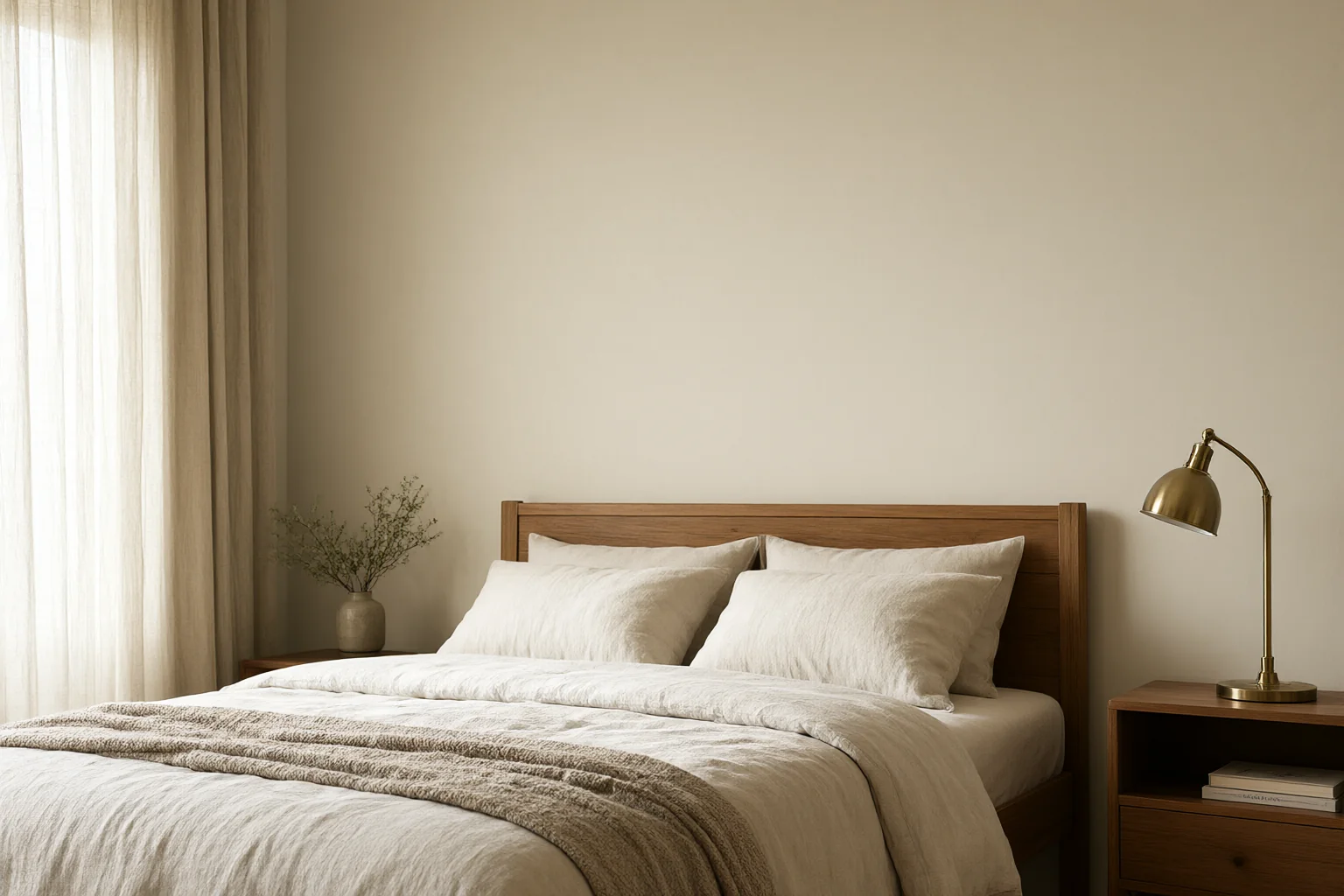
The seven moves are a shared baseline, but weight shifts with the building type. In residential interior design, comfort and touch dominate: timber and rattan accents, softer textiles under hand, and lighting tuned warm. Bedrooms want kiln-dried bed frames, breathable plaster walls and a sheer layer that softens the morning sun without plunging the room into blackout.
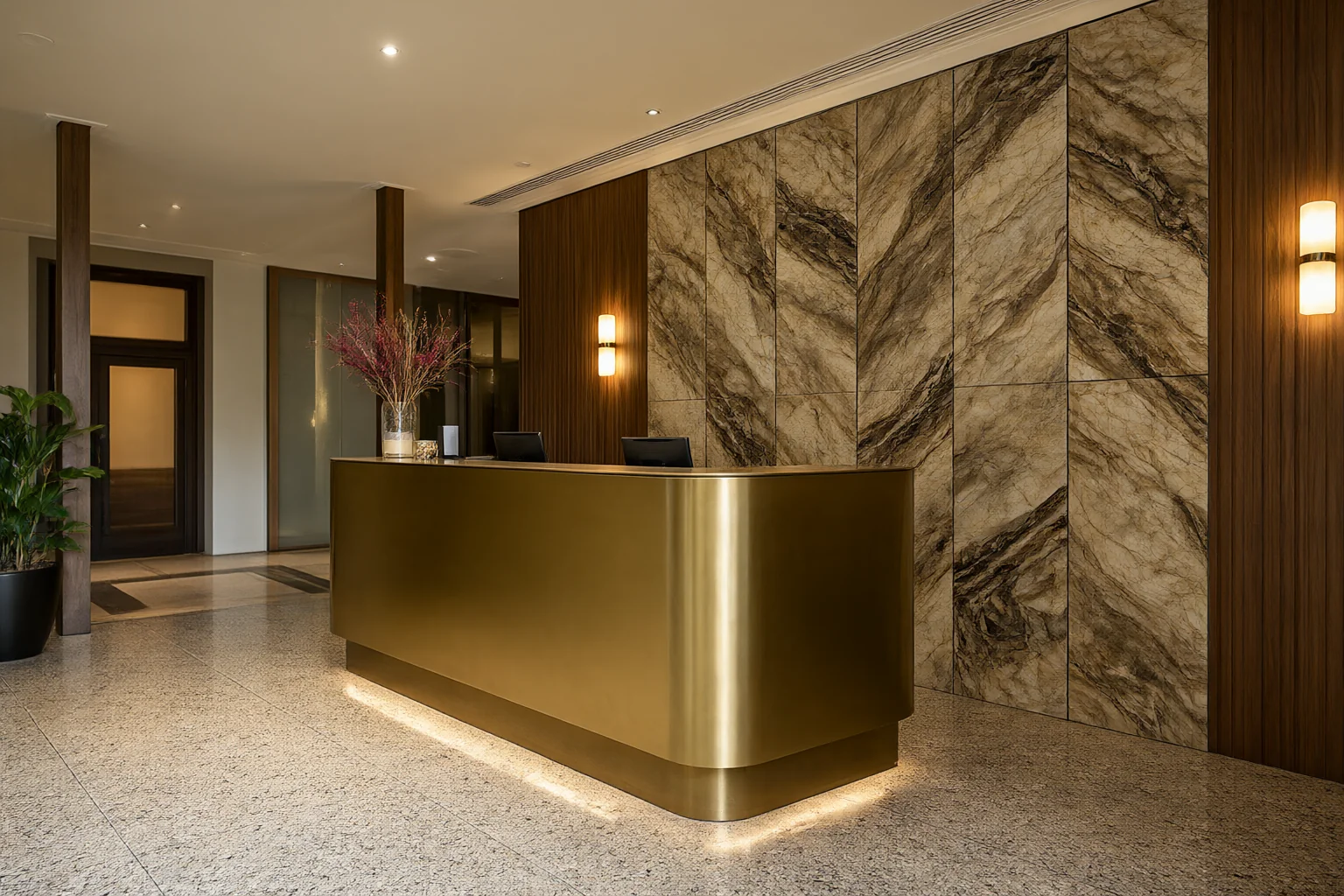
In commercial interior design — hotel lobbies, offices, clinics — traffic and maintenance take over. Floors go to stone, terrazzo or high-grade porcelain because vacuum cycles and trolleys punish timber; bookmatched stone feature walls replace paint where the first impression is revenue; and every touch surface needs a commercial abrasion rating. An installed sintered stone reception desk, for example, shrugs off keys, luggage and disinfectant in a way no lacquered joinery can.
If you are shortlisting an interior design company for either type of project, ask one question first: what moisture content and absorption figures do you specify by default? A team that answers in numbers — 8–10% MC, <0.5% absorption, 316 stainless within 5 km of the coast — is designing for your climate. A team that answers in mood words is designing for the photograph.
4. Colour, light and the last ten percent
With the baseline fixed, the finishing layer decides whether the room feels designed. Colour: equatorial light is harsh and near-vertical, so pure white gloss reads clinical by day and glares at 4 p.m. Mid-tones — bone, sand, terracotta, deep green — with a matt or eggshell sheen under 30 percent gloss sit far better against strong light and hide a dust season. Lighting: specify warm-white LED at 2700–3000 K with CRI 90 or above; it flatters timber and stone after dark, where cool 6000 K office light makes warm materials look grey. The full fixture and circuit logic is in our lighting & switches spec guide.
Windows close the loop. A double track — one sheer, one blackout — is the single highest-value dressing in a hot climate: the sheer kills glare and a slice of radiant heat while keeping daylight, and the blackout earns its keep at nap time and on west facades. Fabric choice matters as much as the layer: solution-dyed weaves resist the UV that fades standard dyed curtains within a year, as set out in the soft furnishings guide. Underfoot, pair the sheer layer with the flooring choices for tropical climates so the whole envelope ages at the same rate — and keep wall finishes in the same system family with the WPC, SPC & ACP wall panel comparison.
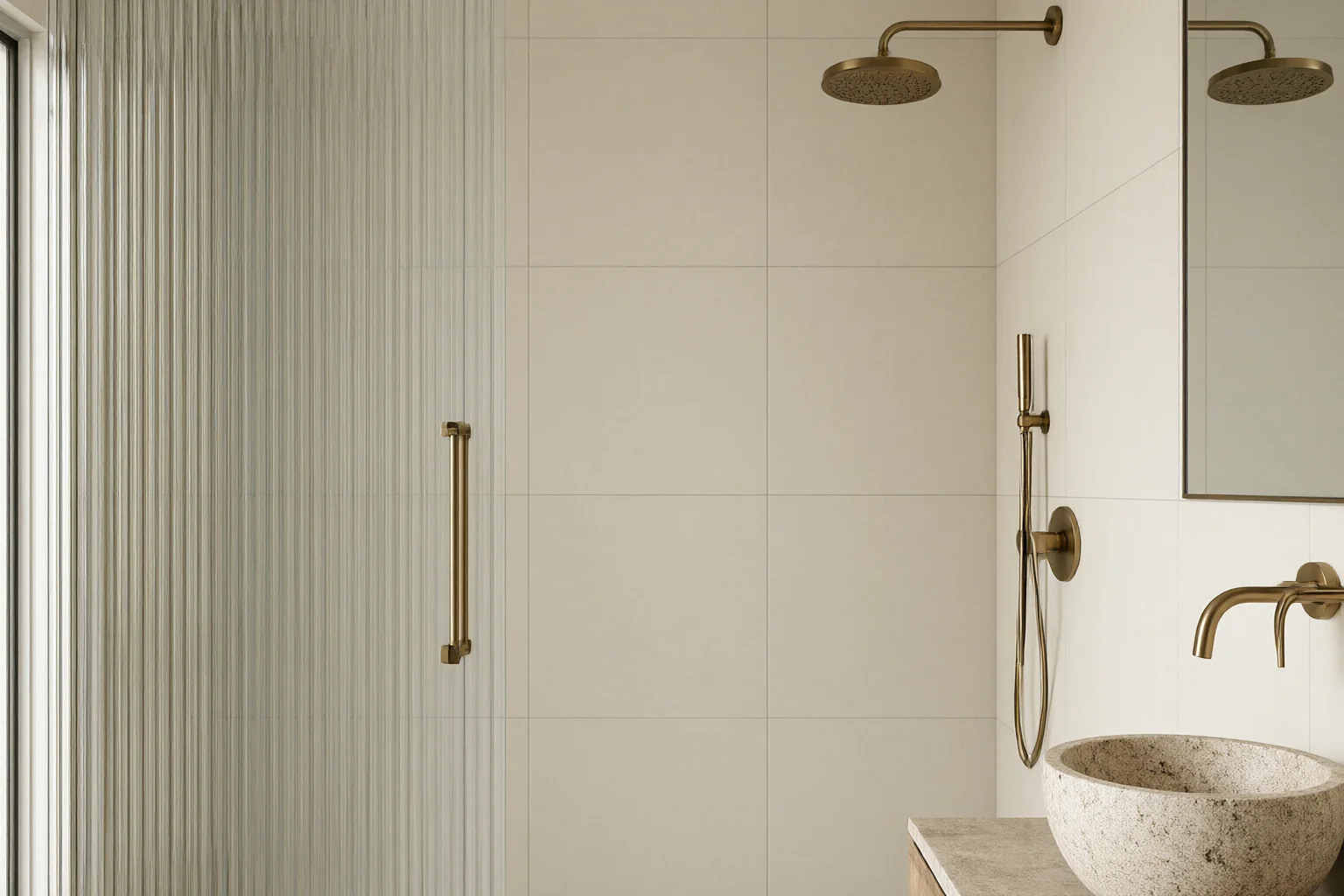
- Porcelain floors at <0.5% absorption — cool, hard, dust-proof.
- Kiln-dried timber accents at 8–10% MC — warm without the cupping.
- WPC / aluminium wall panels — washable, patchable, swell-proof.
- Solution-dyed fabrics — colour locked against equatorial UV.
- Mineral or 100% acrylic paint in matt — breathable, mould-resistant.
- Brushed brass and 316 stainless — warm metals that survive coastal air.
- Sheer + blackout double track — glare control without losing daylight.
Turning interior design ideas into a shipping spec?
Send us your drawings, the city and the budget. We return a material schedule — floors, walls, joinery, textiles, hardware — with the climate numbers filled in, quoted against the full package and delivered to your port.
Get a Material Schedule →Frequently asked questions
What interior design ideas actually work in hot climates?
Ideas built on materials that tolerate heat, dust and humidity. Seven moves cover most warm-climate projects: large-format porcelain floors, kiln-dried timber at 8–10 percent moisture content, WPC or aluminium wall panels, solution-dyed fabrics, breathable mineral paint, brushed brass or powder-coated aluminium hardware, and a layered sheer-plus-blackout window dressing. Each one is specified for how it behaves at 35°C and 80 percent humidity, not just how it photographs.
Which materials last longest in heat and humidity?
Porcelain tile with water absorption below 0.5 percent, kiln-dried hardwoods such as teak, iroko and merbau, WPC and powder-coated aluminium panels, 316-grade stainless steel near the coast, and solution-dyed acrylic or olefin textiles. These hold colour, dimension and finish through years of 35°C-plus days without swelling, fading or corroding.
How do residential and commercial interior design differ in warm climates?
Residential interior design optimises for comfort and touch: timber and rattan accents, softer textiles, layered lighting at 2700–3000 K. Commercial interior design — hotel lobbies, offices, retail — optimises for traffic and maintenance: stone or terrazzo floors, panelised wall systems that can be patched one module at a time, and commercial-grade abrasion ratings on every surface people touch.
How do I choose colours and lighting for a hot-climate interior?
Work with the light, not against it. Equatorial sun is harsh and near-vertical, so mid-tone palettes with a matte or eggshell sheen (under 30 percent gloss) hide dust and glare better than white gloss. Warm-white LED at 2700–3000 K with CRI 90 or above flatters timber and stone after dark, and sheer layers on windows cut glare without shutting out daylight.