
East Africa Quote-to-Order: Why 135 Quotations Stall
Published: October 15, 2026
Our 596-record enquiry book shows 135 quotations issued and 14 orders closed. Where the deals die between those two numbers, and the four documents that bring them back.
Material suppliers selling into East Africa live between two numbers: quotations sent and orders paid. Our own enquiry book — 596 records across nineteen monthly sheets, the same dataset behind 596 East African Enquiries: The Material Specifying Pattern — currently holds 135 files at the quoted-or-pricing stage. Fourteen have reached payment, production or shipment. That 10 percent conversion is not a failure of pricing: files die on what was missing when the number was calculated. This article maps where those 135 files sit, who broke through to order, and the four documents that restart a stalled quote.
1. The funnel in numbers: 596 in, 14 out
Of 596 enquiries, 135 — 23 percent — were quoted or went to pricing. Fourteen — 2.3 percent of the book — reached money: seven payments received, five shipments out, two in production. Another 33 files are in documented active follow-up: groups built, drawings awaited, calls logged. The remaining 384 — 64 percent — carry no recorded status at all: most enquiries never generated enough substance to track.
The age of the quoted files is the sharper number. Of the 135 quote-stage records, 99 carry a valid enquiry date, and the median file has been open for 453 days. Sixty-five of the 99 are more than a year old; thirty-four sit between three and twelve months. Not one open quotation is younger than three months. A quotation is perishable — steel, tile and freight prices all move within a quarter — so a year-old quote is a morgue of once-valid prices.
| Stage | Records | Share of book | What it means |
|---|---|---|---|
| Enquiry logged | 596 | 100% | Every contact, all markets, all sources |
| Quoted or pricing | 135 | 23% | A price was issued or costed — but not against full documents |
| Paid / in production / shipped | 14 | 2.3% | 7 payments received, 5 shipped, 2 in production |
| Active follow-up | 33 | 5.5% | Group built, drawings awaited, calls logged |
| No recorded status | 384 | 64% | The enquiry never produced a priceable document |
2. Who actually gets from quote to order
The 149 files that reached quotation or beyond — quoted, paid, producing or shipped — are not a random slice of the book. Ethiopia accounts for 77 of them, 52 percent, against a 41 percent share of total enquiries: as our Ethiopia material insights file argues, Ethiopian buyers enquire less often but carry projects further. The buyer roles skew the same way: owners (46 files) and traders (25) dominate the pipeline, while engineers and designers hold ten files each — the pattern Who Specifies Materials in East Africa documents: the person who pays pushes the file, the person who draws stalls it.
Source channel matters more than it should. Facebook-generated enquiries are 58 percent of the book (344 records) but 65 percent of the pipeline (97 of 149). Enquiries that arrive from a social contact with a project already in mind convert to quotation at one and a half times the book average. What the fourteen closed files share is not channel but completeness: every one of them — the Ethiopia full-house fit-out, the Kenya villa, the hotel front desk in production — carried a drawing, a room list or named items before the price was issued.

3. Where the quote dies: four blockers
Reading the demand fields of the 135 stalled files tells you why they stalled. The first blocker is missing geometry: enquiries that describe area but not rooms — “600sqm”, “20 by 20 meters”, “luxury house” — get a range, not a price, and ranges do not get paid against. The second is the budget re-cut: villa and hotel files that were quoted whole and returned phased, asking what survives at half the budget. The answer — a phased bill of quantities — is rarely requested twice.
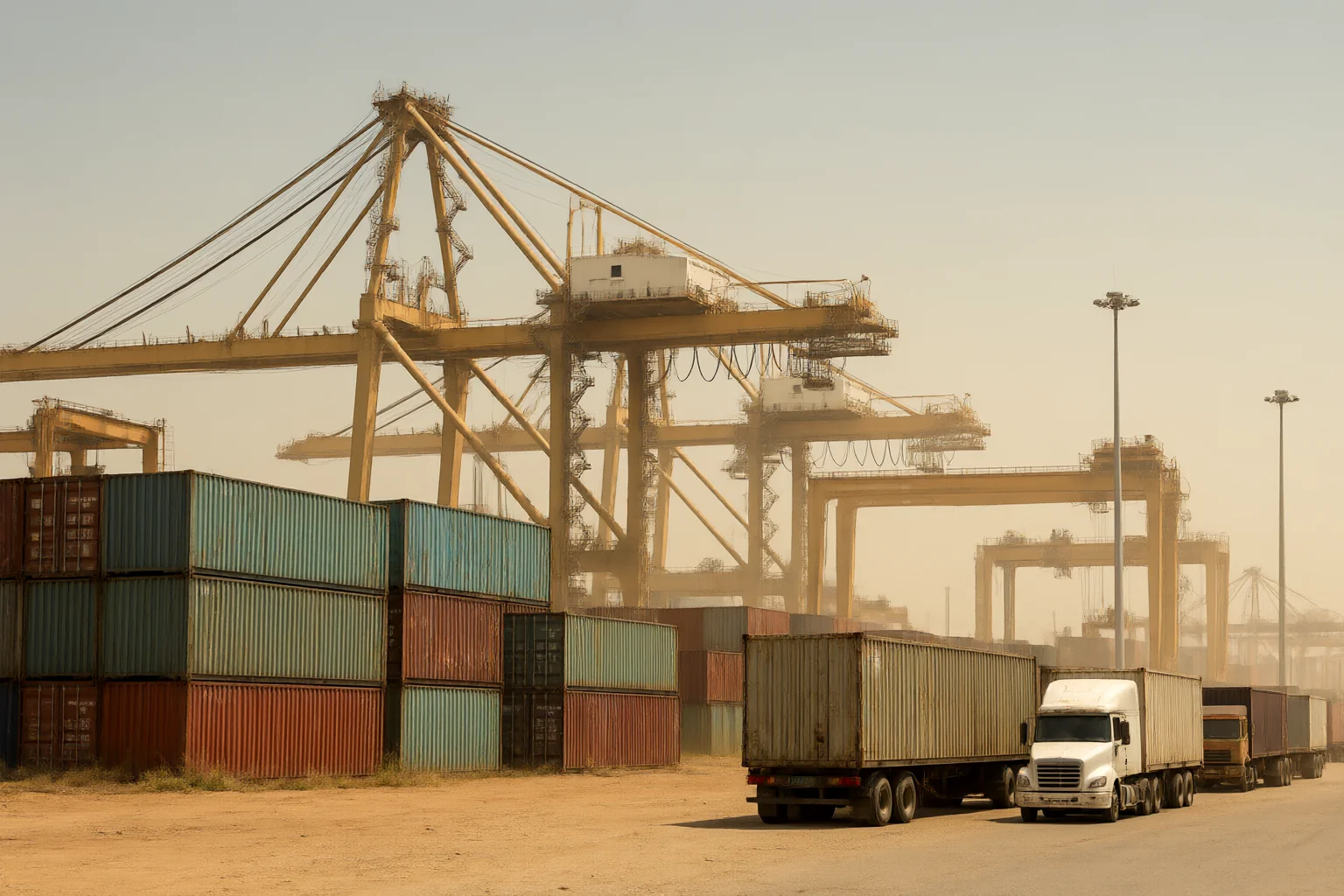
The third blocker is payment mechanics. Ethiopia's pipeline is the deepest in the book and also the one where the letter of credit decides the calendar; a quote that ignores LC lead times — the amendment cycles and bank document checks — prices a delivery date the buyer's bank cannot honor. The fourth is freight that was never attached to geography: a quotation without a named port and delivery point is incomplete, particularly for the landlocked sites where the inland leg can equal the ocean leg. Consolidation is the counterweight — a mixed building order that fills one or two 40-foot containers, the economics set out in Container & Prefab Builds in East Africa, cuts the freight per item far below what line-item shipping costs.
| Blocker | Signal in the enquiry record | Document that unblocks it | Typical turnaround |
|---|---|---|---|
| No drawing, no quantities | “600sqm”, “luxury house” — area without rooms | Dimensioned plan set + BOQ with unit counts | 3–7 days once drawings land |
| Budget re-cut | Whole-house quote returned phased | Phased BOQ, unit prices per line item | 2–4 days |
| Payment mechanics | LC-heavy Ethiopia pipeline; bank calendar ignored | Proforma invoice + LC document checklist | 1–3 weeks with the buyer's bank |
| Freight unknown | No port or delivery point in the file | Named port + delivery city; consolidated container plan | 1–2 days |

4. The four documents that restart a stalled quote
A stalled quotation is not dead; it is unfinished. Restarting it costs four documents, and the buyer who supplies them converts at a different rate from the book. First, the dimensioned drawing set or a room schedule — even sketch plans with measurements beat a floor area. Second, the bill of quantities with unit counts: 42 doors, 310 square metres of tile, 18 window units — the counts that let a supplier price lines instead of adjectives. Third, the finish schedule naming the visible surfaces, because the grade spread on the same tile format runs four to one. Fourth, the delivery point: destination port and final city, so freight lands inside the quote instead of beside it.
With those four in hand, re-pricing a year-old file takes days: the pricing work — take-off, finish options, freight lanes — was never the problem; the inputs were. This is the same discipline the Whole-House Material Packages analysis found in the 63 enquiries that ordered whole houses: buyers who ordered by document paid faster and disputed less than buyers who ordered by conversation. And when the file does convert, the goods move the way the fourteen closed files moved — container loading at the yard, the port leg, and delivery to a site named from the first quote, as in the delivered orders behind our structural steel guide and the home demand mapped in Kenya Building Materials.
- Dimensioned drawing set or room schedule — sketch plans with measurements are enough to start; a floor area alone is not.
- Bill of quantities with unit counts — doors, square metres, window units, lineal metres of skirting.
- Finish schedule — the visible surfaces named, so the price carries the grade you actually want.
- Delivery point — destination port and final city, inland leg quoted with the goods, not after them.
- Payment route declared early — deposit, TT or LC, because the bank calendar is part of the delivery date.

Sitting on a stalled quotation?
Send the drawings, the BOQ or even a room list with counts, the finishes you want and the delivery city. We re-price stalled files in days — materials, freight to the named port, and the consolidated container plan in one document.
Restart My Quotation →Frequently asked questions
Why do most East African material quotations never become orders?
Because the quote was priced against a conversation, not a document. In our 596-record enquiry book, 135 files sit at the quoted-or-pricing stage and only 14 have reached payment, production or shipment. The four recurring blockers are missing dimensioned drawings, bills of quantities without unit quantities, unconfirmed payment mechanics, and freight that was never attached to a named port or delivery point. Each one is unblocked by a document, not by a cheaper price.
How long do stalled quotations sit in the pipeline?
Of the 135 quote-stage records, 99 carry a valid enquiry date, and the median file has been open for 453 days: 65 of the 99 are more than a year old and 34 are between three and twelve months. A quote that survives a year without drawings attached is effectively a new enquiry that has to be re-priced.
What should a buyer prepare before requesting a material quotation?
Four documents convert an enquiry into a price that holds: a dimensioned drawing set or room schedule, a bill of quantities with unit counts, a finish schedule naming the visible surfaces, and the delivery point with the destination port. The pattern across 596 enquiries is documented in our 596 East African Enquiries analysis, and the result is consistent: the files that carried quantities moved to order; the files that carried only a floor area stayed at quote.
Does the quotation include shipping to Addis Ababa, Nairobi or Juba?
It does when the delivery point is named. Ocean freight is quoted to the port — Mombasa for Kenya, Djibouti for Ethiopia and South Sudan transit — and the inland leg is quoted separately against the final delivery city, the same logic we apply for landlocked sites. Because a mixed building order consolidates into one or two 40-foot containers, the freight per item drops sharply once the whole order is priced together rather than line by line.