Gulf vs East Africa: Two Material Baselines Compared
Published: October 1, 2026
One catalogue, two opposite climates — how the same aluminium, porcelain and hardware get respecified for a 45°C Gulf summer versus a humid East African rainy season.
INDECO supplies one showroom to two very different construction markets, and our own follow-up record makes the split visible. Of 596 tracked enquiries, Ethiopia (223) and Kenya (141) carry East Africa, South Sudan (50) is the third cluster, and the Gulf — Saudi Arabia (8) plus a thin tail of UAE and Qatar contacts — is the smaller, newer side of the book. The two regions buy many of the same product families, but they are building for opposite climates. Here is how a single aluminium, porcelain and hardware catalogue gets respecified for each, and what that means for an owner about to freeze a material schedule.
1. Two markets, two climates
The Gulf and equatorial East Africa are both “hot”, but the heat behaves differently. Across the Gulf, summer daytime peaks run 45–50°C, relative humidity sits as low as 10–30% inland (Riyadh) and climbs to 70–90% on the coast (Jeddah, Dubai, Doha), and the day-night swing can exceed 20°C — enough to work joints, seals and coatings every single day. Inland the problem is dust and solar gain; at the coast it is salt-laden humidity. East Africa runs cooler in the highlands (Addis Ababa and Nairobi sit between 20 and 30°C) and hotter in the lowlands (Juba and the Mombasa coast reach 38–42°C), but it is far more humid — 60–85% relative humidity — and it rains hard in two seasons, the long rains from March to May and the short rains from October to December.
The practical consequence is a different enemy in each market. In the Gulf you are keeping the sun and the dust out of the building; in East Africa you are keeping the water and the mould out. That single sentence decides most of the material schedule that follows.
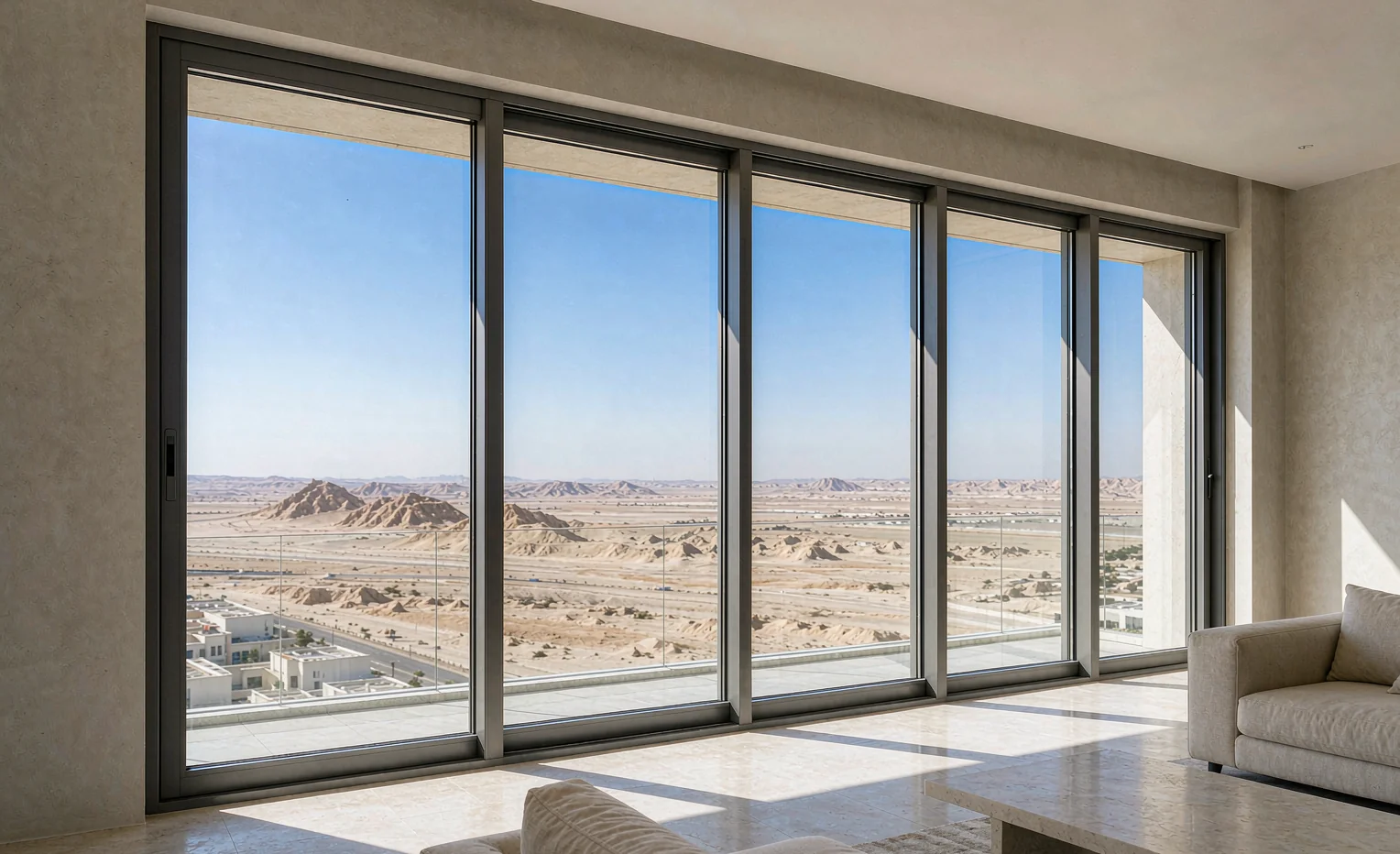
Full-height thermal-break sliding glazing in a Gulf apartment — the opening is the first line of defence against a 45°C sun.
2. What each climate demands of the openings
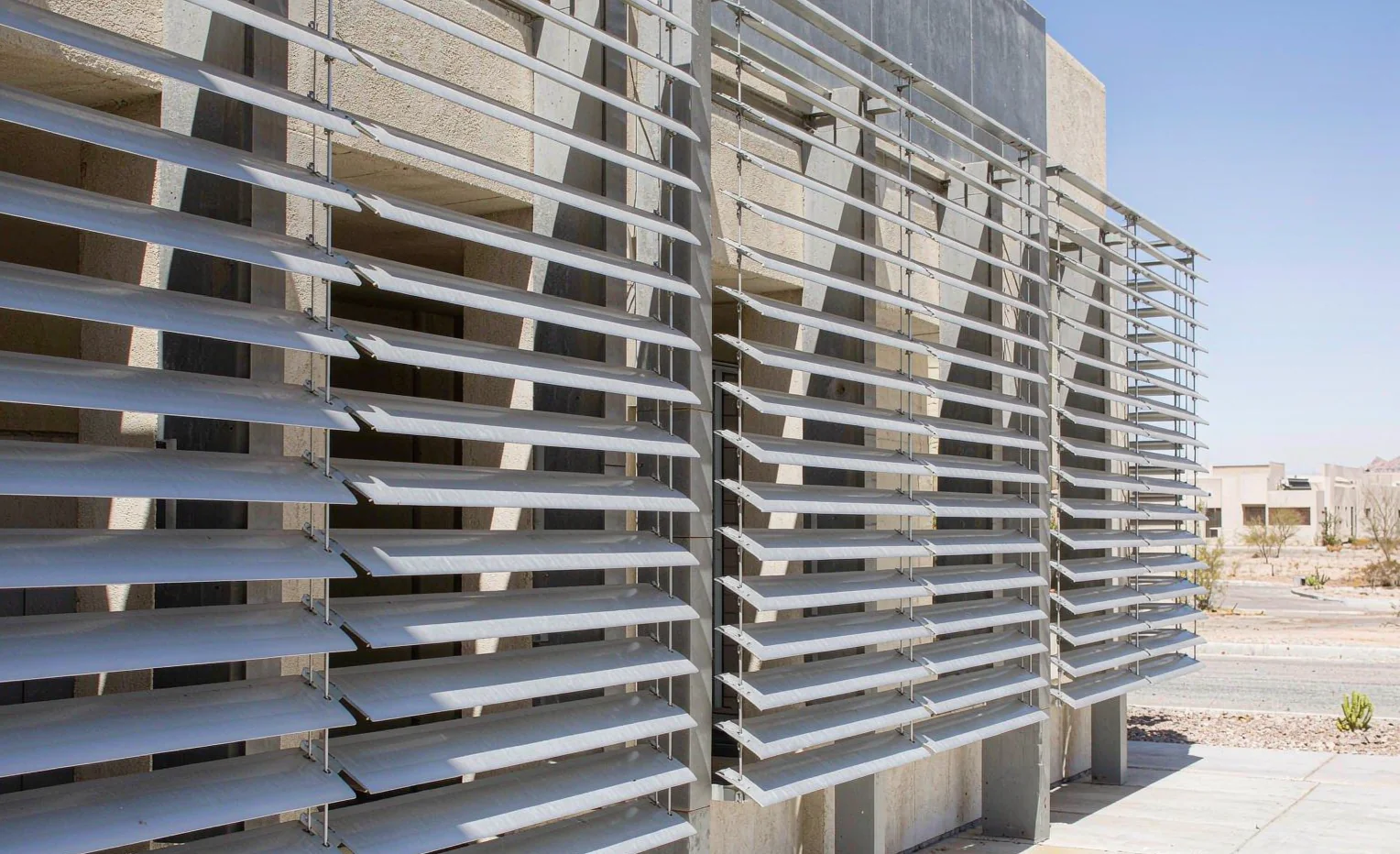
Openings take the climate head-on, so they diverge first. For the Gulf we specify solar-control glass with a low-emissivity coating and a solar heat gain coefficient below 0.35 on west and south elevations, and we add external aluminium shading — a brise-soleil or a horizontal louvre — because no glass alone carries a 45°C façade. Sliding tracks are sealed and drained against fine desert dust, and the thermal break matters as much in winter as summer, when night-time temperatures fall and a conductive frame becomes a cold bridge. For East Africa the priorities invert: rain-rated seals, a drained and sloped external sill, generous overhangs, and desiccant-filled glazing units so humidity cannot fog the cavity from the inside. Glare control still matters, but it is secondary to water shedding. We walk through the full opening specification in the aluminium windows and doors guide.
External aluminium shading louvers on an arid façade — in the Gulf the shading, not the glass, carries the cooling load.
3. Surfaces, substrate and hardware: where the shortlists split
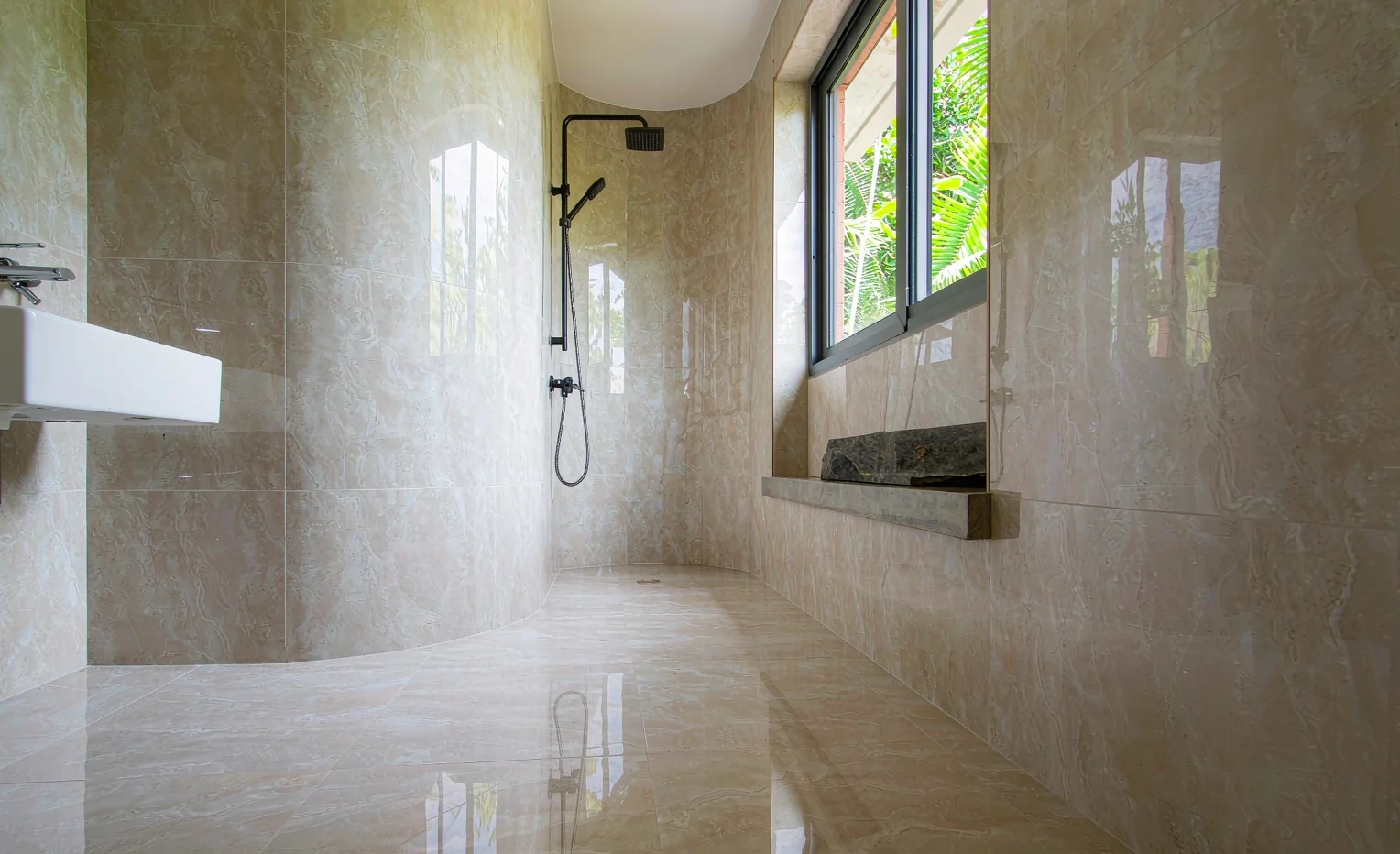
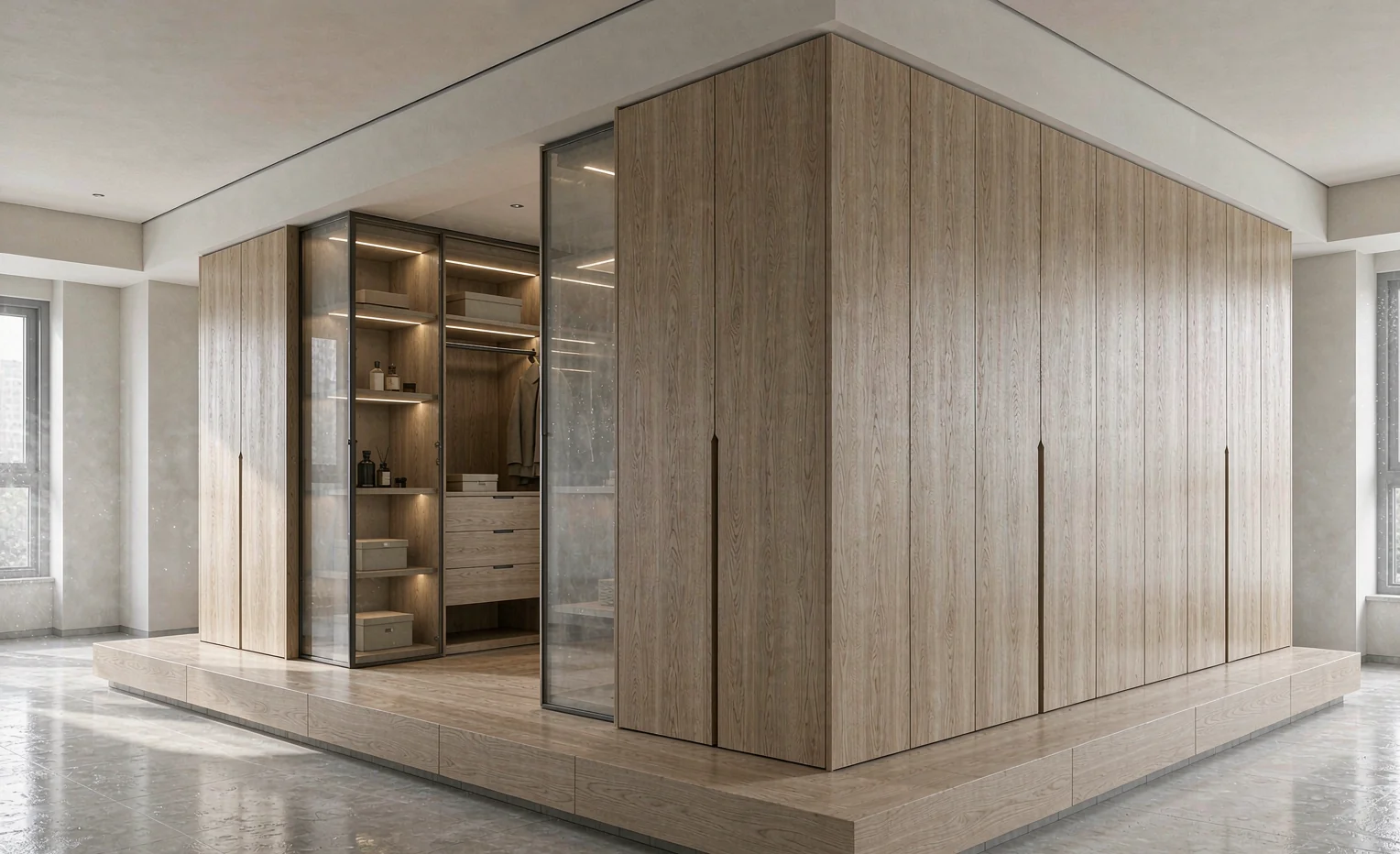
Below the opening line the same families recur but the grades move. Large-format full-body porcelain below 0.5% water absorption takes floors and walls in both regions, but East Africa pushes the slip rating up (R10–R11) where wet floors are the norm, while the Gulf leans to lighter, higher-reflectance tones that shed heat. Timber and joinery are where East Africa is strictest: everything comes off the floor on a raised plinth — the principle in our furniture material selection and kitchen and cabinetry comparison — timber is dried to 8–10% moisture content and treated against termites, and cut edges are sealed, because a piece sitting flat on a damp slab will swell and fail inside a year. The Gulf allows more veneer and more metal, but must tolerate a 20°C daily movement that opens unsealed joints.
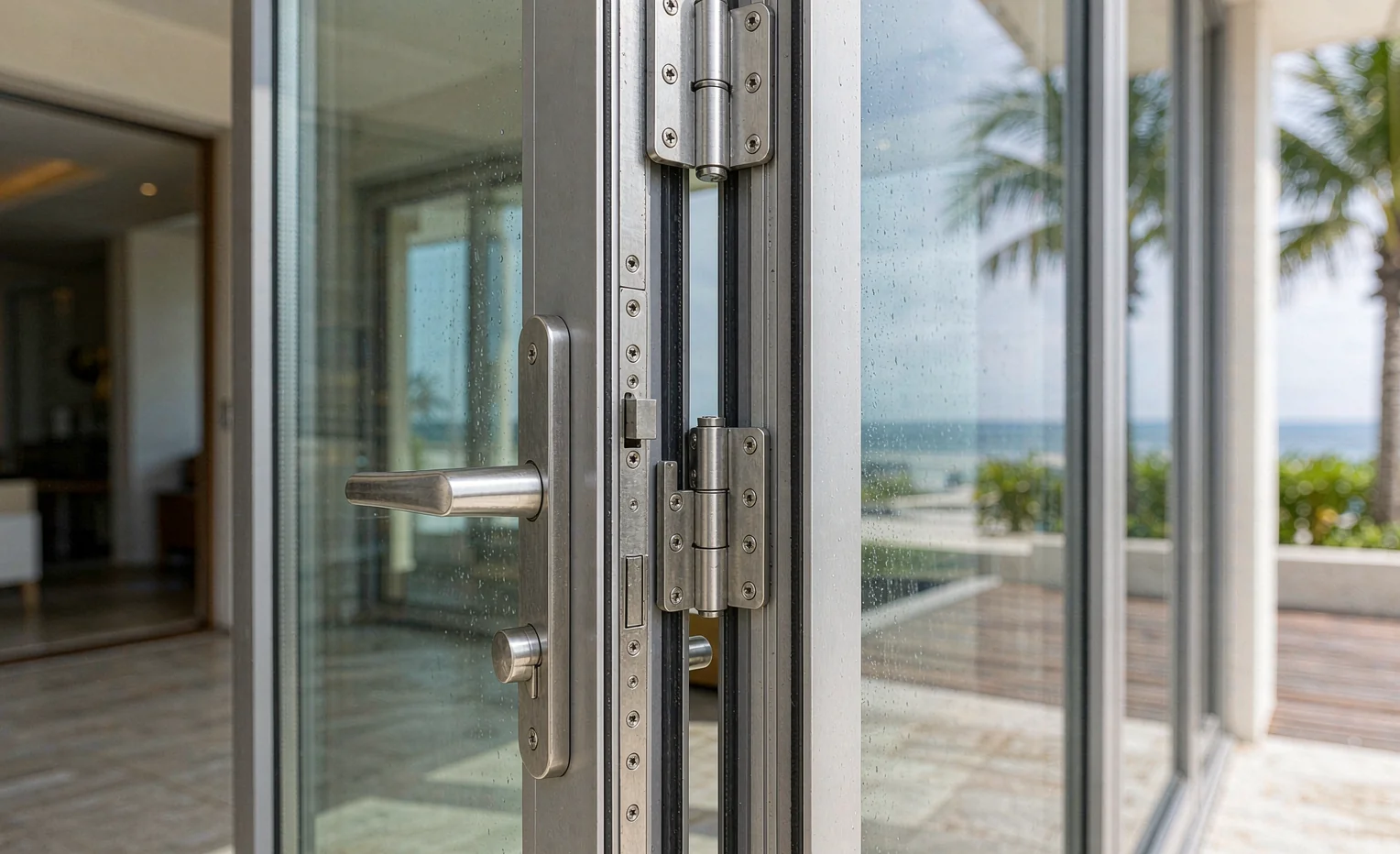
Hardware is the quiet differentiator. Within 20 km of any coast — Mombasa, Jeddah, Dubai — we step locks, hinges and fasteners up to marine-grade 316 stainless and powder-coat every aluminium component; inland, 304 stainless with a 60-micron powder coat is sufficient and cheaper. Compound that with dust, and every moving part needs a sealed, serviceable mechanism rather than an exposed one.
Full-body porcelain in a humid-climate bathroom — the same family the Gulf buys, but slip-rated for wet traffic in East Africa.
4. Reading the buying record: how Gulf and East African clients decide
The material divergence is matched by a behavioural one, and our follow-up data shows it. Of 596 tracked enquiries, 140 sit at the quote or design stage, and nine have run more than three months without closing — usually because the material brief kept moving after the drawings were issued. The pattern behind that is structural. Most East African enquiries arrive owner- or developer-led — a villa, a hotel, an apartment block where the client is also the decision-maker — so the material schedule is frozen late and revised in the room. Gulf enquiries are more often specifier- or contractor-led, arriving with a fixed bill of quantities, so they are frozen early and then defended against value-engineering.
The lesson for both sides is the same: decide the climate baseline before the first fixer arrives. An owner-led buyer can approve a pre-agreed shortlist in one meeting instead of three; a specifier-led buyer gets a schedule that already names 316 over 304, an SHGC below 0.35 and 8–10% moisture content, so it survives the cost-cutting pass intact. That is why we ship a climate-matched baseline with every quotation instead of a bare price list. Our read of how five different markets specify interior materials covers the same method market by market, and our East African enquiry analysis and 596-enquiry pattern go deeper into the pipeline itself.
East Africa: 8–10% moisture-content timber on a raised plinth, termite-treated, sealed edges.
Both: thermal-break aluminium, 24 mm polyamide strip, 1.4 mm minimum wall, 316 stainless at the coast.
Gulf / Middle East vs East Africa — regional material baseline
Element
Gulf / Middle East
East Africa
Why it diverges
Glazing
Low-E, SHGC <0.35, external shading
Rain-rated, dual-sealed units, drainage
Solar gain vs rain and humidity
Frame & tracks
Thermal break, dust-sealed track
Thermal break, sloped drained sill
Dust ingress vs water ingress
Floor / wall
Light-tone full-body porcelain
R10–R11 full-body porcelain
Heat reflectance vs wet slip
Joinery
Veneer and metal, sealed joints
Raised plinth, 8–10% MC, termite-treated
Daily thermal movement vs damp and termites
Hardware
304 inland, 316 at the coast
316 throughout coastal sites
Corrosion from salt air
Marine-grade 316 stainless hardware — the coastal default in both regions.Joinery on a raised plinth — the East African defence against damp and termites.
Planning a project in either region?
Send us your drawings or a short brief and we will return a climate-matched material schedule — Gulf or East Africa baseline, with the grades already named — typically within one working day.
How do Gulf and East African material specs differ?
The Gulf brief is built around solar and dust control — low solar-heat-gain glazing, external shading and sealed tracks — while the East African brief is built around humidity, rain and termites — drained sills, raised joinery and marine-grade hardware. Many of the same product families are used, but the grades and the details differ.
Which materials stay the same across both regions?
Thermal-break aluminium openings, full-body large-format porcelain below 0.5% water absorption, stainless hardware and moisture-resistant joinery appear in both. Only the grade and the detailing change — for example 316 stainless at the coast, 304 inland.
Where do most material schedules go wrong?
Freezing the schedule too late. In our record, 140 of 596 enquiries sit at the quote or design stage and nine have run more than three months without closing, usually because the material brief kept moving. A pre-approved climate baseline shortens that cycle.
Should I specify differently for coastal sites?
Yes. Within 20 km of the coast, step hardware up to 316 stainless, use marine-grade fasteners and powder-coat all aluminium, because salt air corrodes 304 and unprotected steel within a couple of seasons.