What 200+ East African Project Enquiries Reveal About Material Specification.
Published: September 23, 2026
We tracked 596 enquiries across the region. Ethiopia leads with 223, and the demand clusters around whole-house fit-outs, towers, cabinetry and steel — here is what that pipeline tells us about specifying materials.
Behind every INDECO shipment is a conversation that started months earlier. We currently track 596 project enquiries in our pipeline, and the geography and the briefs tell a clear story about how interior materials should be specified for East Africa. The region is not one climate and not one building type — it is a mix of highland capitals, coastal cities and fast-growing secondary towns, each with its own failure modes. In our From Concept to Completion process, the enquiry itself is the first specification input: the country, the building type and the stage of the deal predict which materials will actually survive. Here is what the numbers say.
1. Ethiopia is the anchor market — and it is whole-house
Of 596 tracked enquiries, Ethiopia accounts for 223 — more than a third of the entire pipeline and well ahead of Kenya at 141 and South Sudan at 50. The Ethiopian briefs are distinctive: the most common request is a full whole-house fit-out, and a large share are multi-storey buildings — G+2 villas and G+10 towers — rather than single rooms. That shifts the specification entirely. A whole-house job means flooring, cabinetry, wardrobes, sanitary and lighting are all specified together, so the substrate decisions (slab moisture, wall flatness, ceiling height) have to be locked before any finish is ordered. A G+10 tower means fire-rated cores, heavier-duty hardware and lift-compatible delivery, none of which a villa needs. We treat the Ethiopian pipeline as our default whole-building specification case, because it is where the most complete briefs arrive.
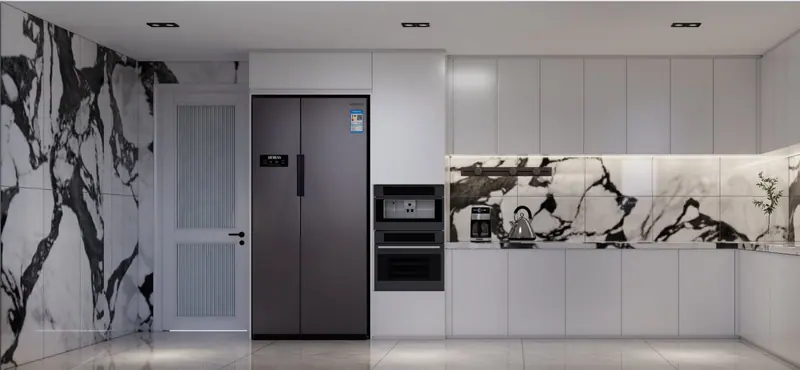
Whole-house fit-outs dominate the Ethiopian pipeline — flooring, cabinetry and sanitary specified as one package.
2. The demand clusters into four material systems
Across the region, the enquiries group into four repeatable systems, and each has a known weak point. Cabinetry and wardrobes — kitchens, hotel joinery, bedroom storage — fail most often on board stability and edge sealing in humid rooms. Steel structures (G+2/G+10 frames, staircases, balustrades) fail on corrosion where the coastal or high-humidity finish is thin. Whole-house flooring and tiling fail on slab moisture and expansion gaps. Sanitary and lighting fail on water quality and voltage. When an enquiry names one of these four, we pre-empt the failure mode in the quote rather than discovering it on site. The pattern is so consistent that our completed villa and resort projects now ship with a one-page failure-mode note per system, so the client sees the risk before they sign.
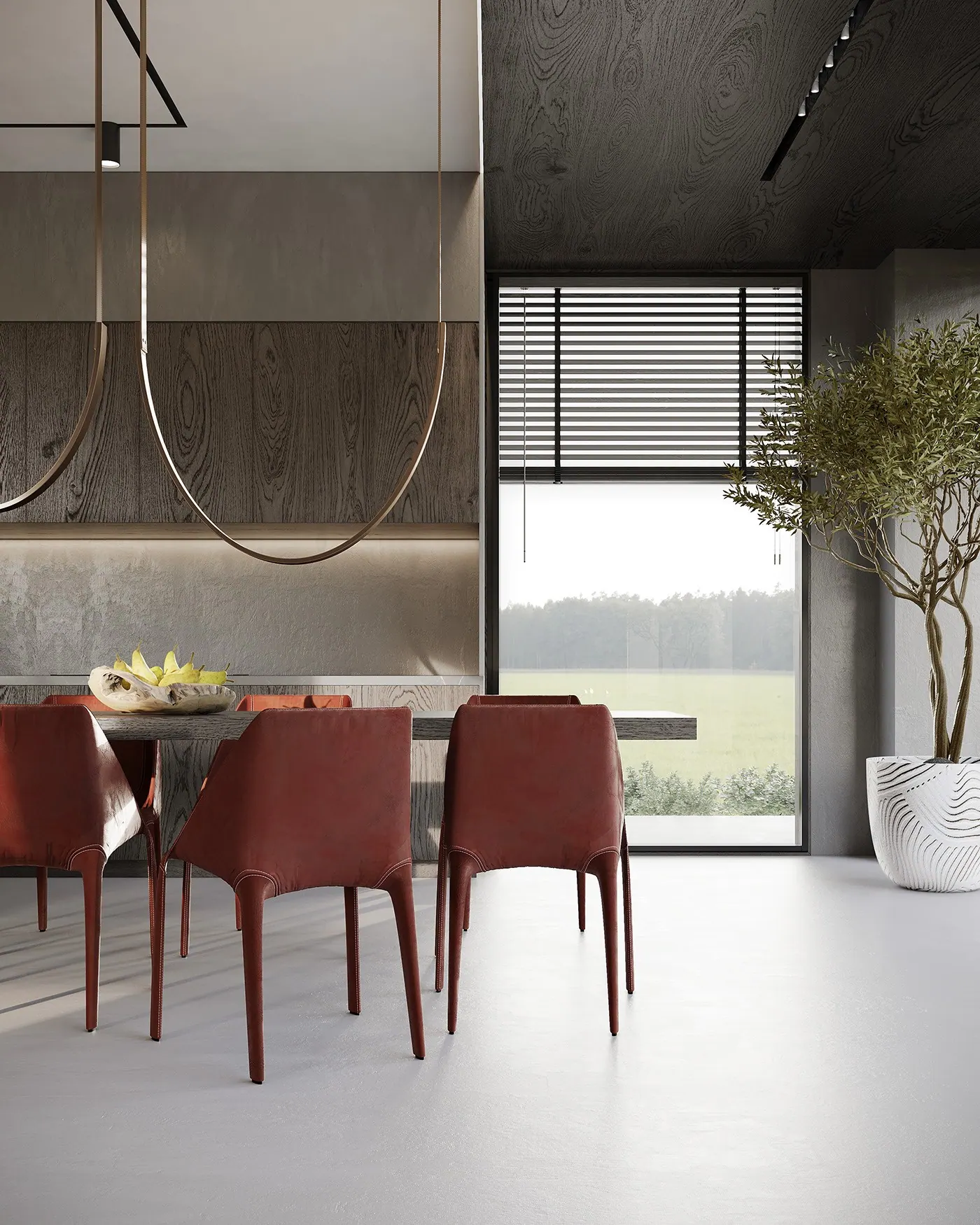
Cabinetry and wardrobes are the second most-requested system — board stability and edge sealing decide whether it lasts.
3. Where projects stall — and what a clear BOQ fixes
The pipeline status tells its own story: 80 enquiries are at quoted, 34 at quoting, and only 7 have reached paid with 5 shipped. The long gap between quoted and paid is rarely about price — it is about ambiguity. Deals stall when the BOQ mixes finishes, omits the substrate condition, or leaves the hardware grade open, because the client cannot compare like-for-like or the bank cannot release against a vague schedule. The single biggest accelerator we have found is a BOQ that names the material system, the substrate requirement and the hardware grade in one table. An enquiry that arrives with drawings converts faster than one that arrives with a photo, and a quote that lists grades converts faster than one that lists styles. We now return a structured BOQ within one working day precisely because the format, not the price, is what moves the deal.
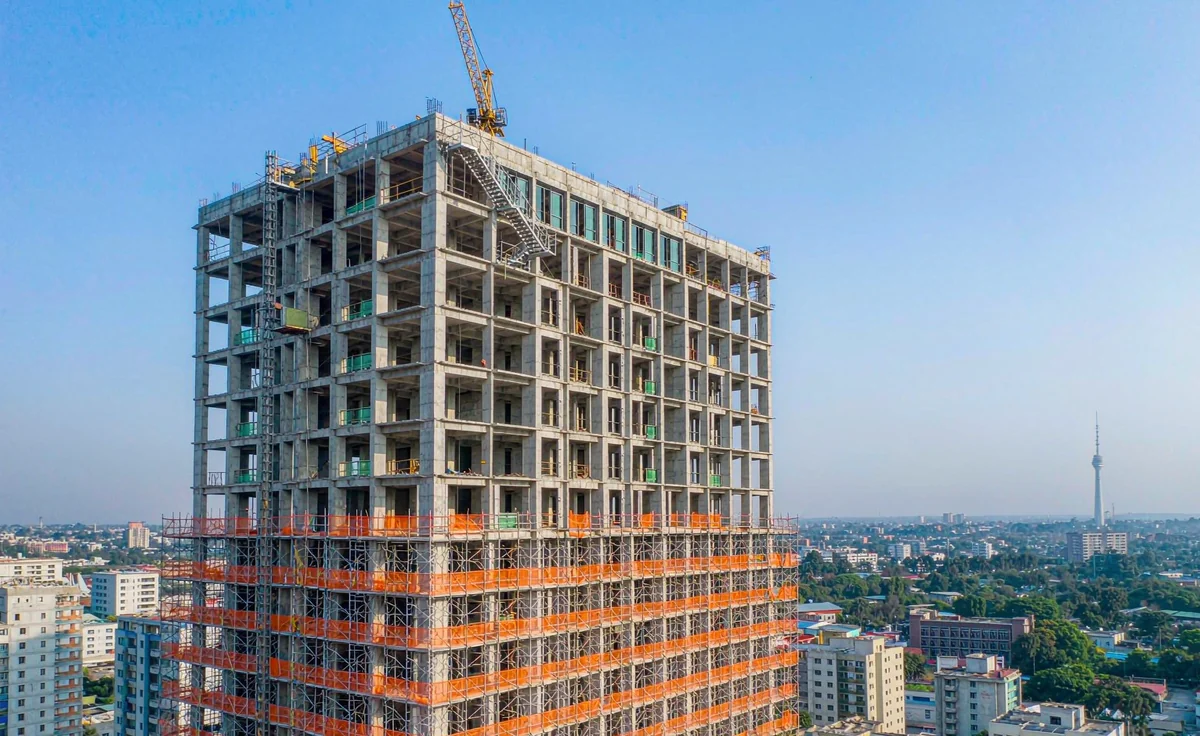
Multi-storey towers (G+10) are a growing share of the pipeline — fire-rated cores and lift-compatible delivery change the spec.
4. Material specification that survives East African conditions
Pulling the four systems together, the East Africa specification we now default to is climate-zone aware. In highland capitals (Addis Ababa, Nairobi) the risk is the daily temperature swing and the rainy season, so we specify dimensionally stable boards, UV-stable lacquers and expansion gaps at every perimeter. In coastal and lake-adjacent sites (Mombasa, the Gulf of Zanzibar, lakeside resorts) the risk is salt and humidity, so we move to 316 stainless hardware, marine-grade board cores and powder-coat finishes at 60 microns or above. For towers we add fire-rated cores and documented load ratings. None of this is exotic — it is the same catalogue we sell everywhere, specified differently per zone. The enquiry data is what tells us which zone a project is in before the first sample ships.
Four takeaways for specifying East African interior projects
Ethiopia leads the pipeline (223 enquiries) and is overwhelmingly whole-house and multi-storey — spec the substrate first.
Demand clusters into four systems: cabinetry, steel, flooring/tiling, sanitary/lighting — each has one predictable failure mode.
Deals stall on BOQ ambiguity, not price — a graded, structured BOQ converts faster than a styled one.
Specify by climate zone: stable boards and UV lacquer for highlands, 316 stainless and marine cores for coast.
Planning an East African project?
Send your drawings or area schedule and we will return a zone-aware BOQ with material systems, substrate requirements and hardware grades — typically within one working day.
Which interior materials perform best in East African highland cities like Addis Ababa and Nairobi?
In highland capitals the main risk is the daily temperature swing and the rainy season, so we specify dimensionally stable boards, UV-stable lacquers and expansion gaps at every perimeter. For flooring choices in similar tropical and highland conditions, see our guide on Choosing Flooring for Tropical Climates; for cabinetry board stability read Kitchen & Cabinetry Materials Compared.
How should aluminium windows and doors be specified for hot, humid East African sites?
For coastal and lake-adjacent sites the risk is salt and humidity, so we move to 316 stainless hardware, marine-grade board cores and powder-coat finishes at 60 microns or above. Our dedicated guide Specifying Aluminum Windows & Doors for Hot Climates covers the exact grade decisions.
What makes an East African fit-out installation actually last?
Substrate preparation and hardware grade decide longevity, not the visible finish. Our on-site checklist in Installing Cabinetry, Wardrobes & Metal Screens lays out the sequence that prevents the four common failure modes.
Which East African markets have the strongest demand for interior materials?