West Africa Coastal Specs: Ghana, Nigeria & Sierra Leone
Published: October 5, 2026
Ghana, Nigeria, Sierra Leone and the Gambia combine three failure modes at once — salt air within 5 km of the shoreline, 80–90% humidity for most of the year, and a dry harmattan that pulls the air back to 20–30%. Here is how we change the spec for that coast, and what 21 live enquiries from the region tell us buyers actually want.
Most material guides are written for one climate. The West African coastal belt refuses that: it is wet and salty for eight months, then dusty and dry for three — and the same wall survives both. Freetown takes roughly 3,000 mm of rain a year, Lagos about 1,500 mm, and Accra around 800 mm falling in two violent seasons — while the December–February harmattan drops relative humidity from 90% to 20–30% and coats every detail in Saharan dust. Add termite pressure and 30–35 °C afternoons and four stresses act on one building — which is why the Ghana, Nigeria and Sierra Leone spec is not the Nairobi or Addis Ababa spec. This is what we change, and the enquiry evidence behind it.
1. Why the West African coast is its own material climate
Four forces act on the coastal belt between roughly 4°N and 9°N, and they do not act in sequence — they overlap. Salt air. Within about 5 km of the Atlantic shoreline, airborne chloride settles on every exposed surface; it attacks unprotected steel and eats through thin galvanising — which is why coastal hardware moves to 316 stainless while inland jobs stay at 304. Humidity. Coastal relative humidity sits at 80–90% for much of the year, with sea-surface temperatures around 27–29 °C; mould is a maintenance issue, not a defect, unless the surfaces are non-absorbent. Rain intensity. The totals matter less than the bursts: 60–100 mm can fall in hours, so flashings, gutters and thresholds take a beating a typical 40 mm/hour calculation does not cover. Harmattan. For two to three months the same building dries out completely: relative humidity drops to 20–30%, timber and MDF shrink and open at the joints, and fine dust works into every unsealed track and hinge. Materials that tolerate only one regime fail at the other end of the year: timber that survives the rains splits in the harmattan, and panels chosen for the dry season grow mould by July.
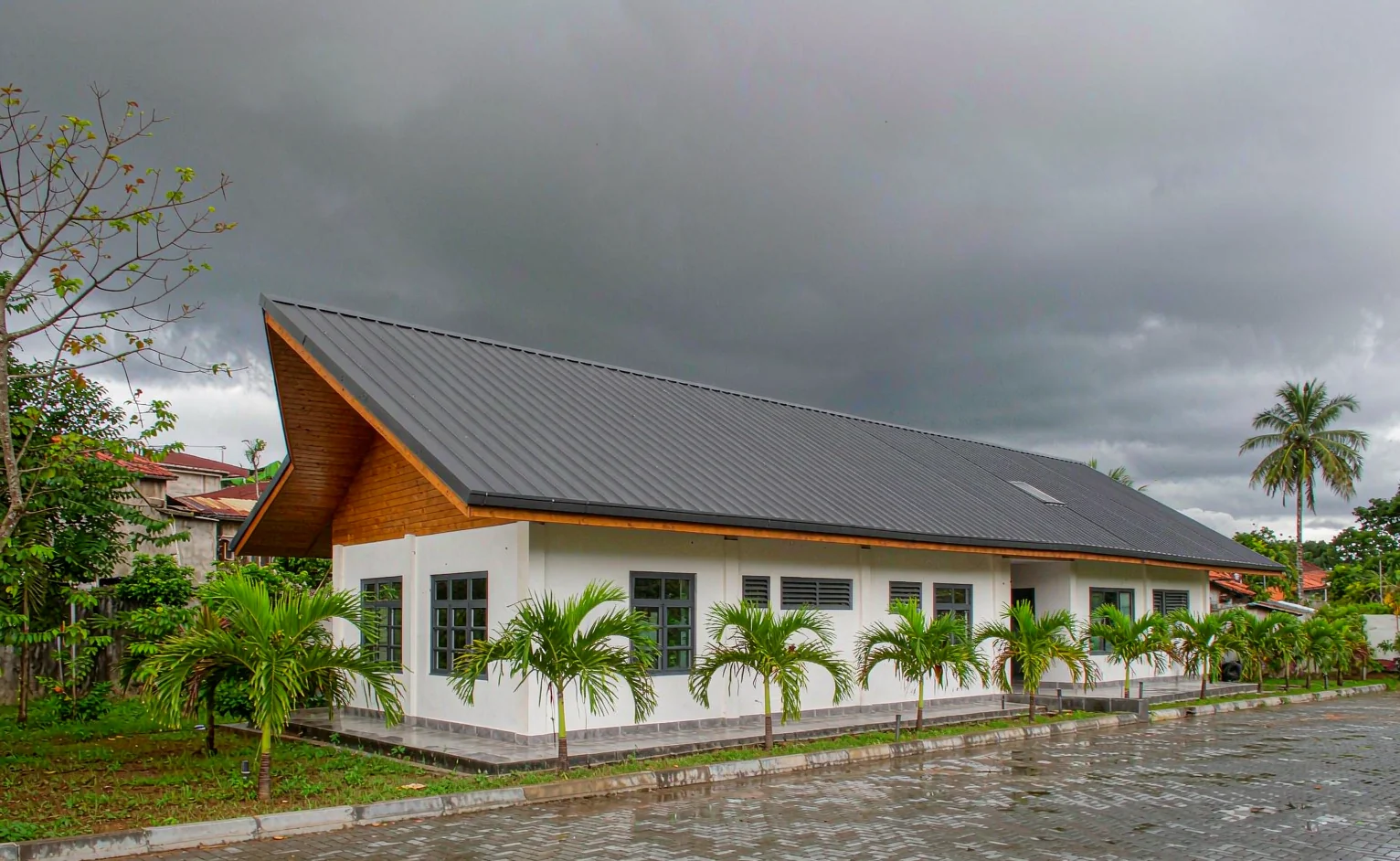
Pitch and overhang do more work than the sheet itself: a coastal roof needs 25° or steeper, a 600–900 mm eave to keep wind-driven rain off the render, and gutters sized for short violent bursts rather than annual averages.
2. What 21 West African enquiries actually asked for
Our customer file holds 596 records, and 21 of them sit in the West African coastal belt: Ghana 9, Nigeria 7, Sierra Leone 3, the Gambia 1 and Cameroon 1. East Africa sends single-villa owners; West Africa sends traders, developers and contractors alongside private clients — five traders among the 21, plus one developer and one contractor, with 19 of the 21 arriving through Facebook. The requests are consistently multi-category: only three of the 21 named a single product; the rest asked for a whole-house list — the pattern our consolidated quoting model is built around.
West African coastal enquiries in the INDECO file (21 of 596 customer records)
Market
Records
What they asked for
Buyer type
What it implies for the quote
Ghana
9
Whole-house material packages for villas and apartments, lighting, appliances; one order shipped
Owners 4, traders 3, engineer 1
Consolidated container: tiles, aluminium, doors, sanitary, lighting in one B/L
Nigeria
7
100-unit housing scheme, super-luxury fit-out, whole-house lists, villa design support
Developer, contractor, architect, owner, trader
Repeatable unit spec for volume, plus a premium finish tier for show units
Sierra Leone
3
Whole-house selection, tiles and gypsum board by container, outdoor waterproof screens
Private owner, traders 2
Trade pricing and container-load quantities; exterior-grade panel specs
Gambia
1
Windows, doors and sanitary ware for a family home
Owner
Small mixed load — coastal hardware upgrade is the deciding spec
Cameroon
1
Villa, design-led brief handled directly by our principal
Owner
Design plus supply, with an agreed finish schedule
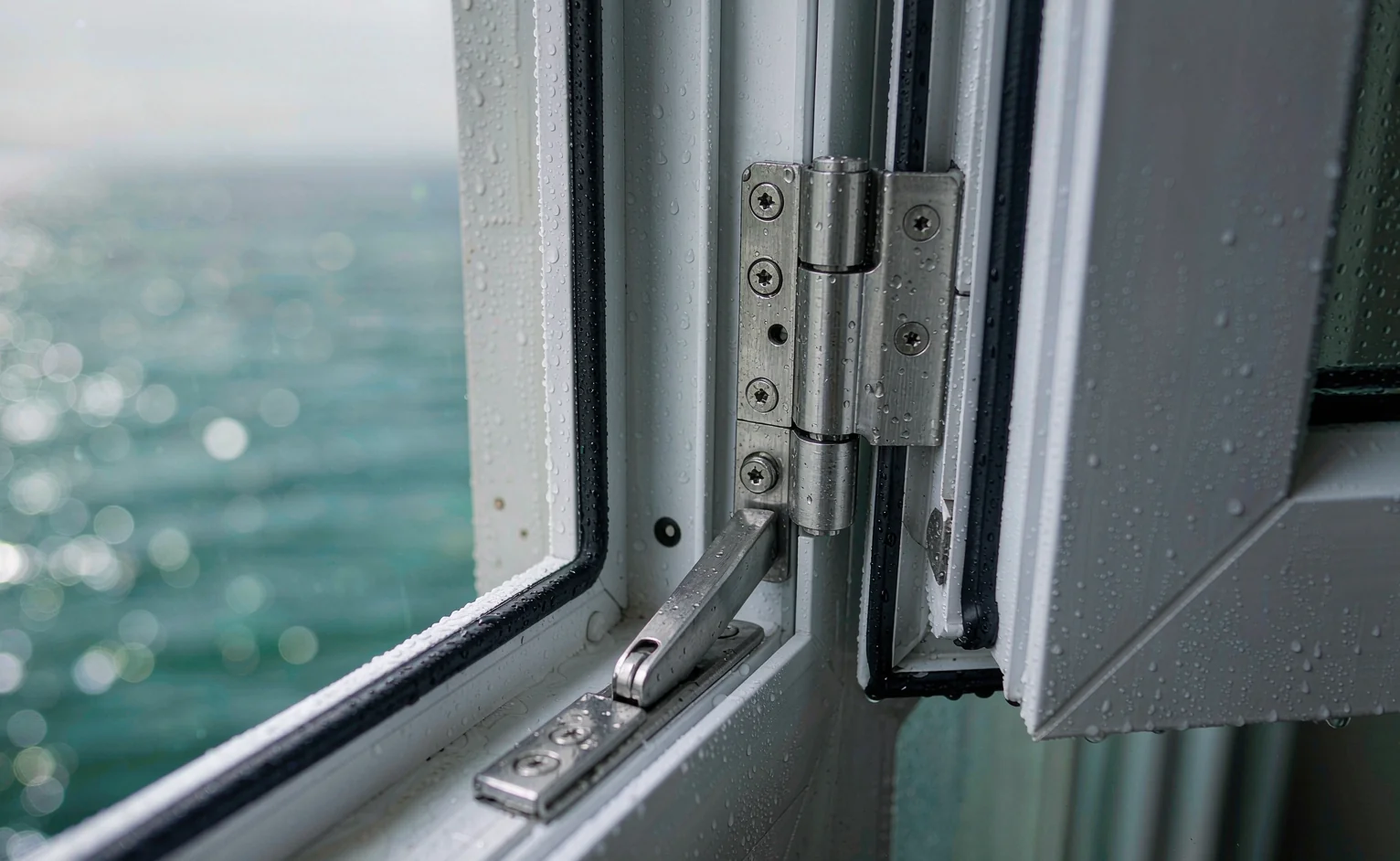
The coastal window detail: 6063-T5 aluminium, powder coat at 80 microns or more, EPDM gaskets and 316 stainless hinges and stays — hardware is where coastal openings fail first.
3. The five spec changes we make for this coast
Coastal West Africa needs the right grade of ordinary materials, not exotic ones. First, openings: 6063-T5 aluminium in place of recycled sections, powder coating at 80 microns minimum rather than the 60 we accept inland, EPDM gaskets instead of PVC, and 316 stainless hinges, handles and stays — the same corner-of-the-building logic set out in Specifying Aluminum Windows & Doors for Hot Climates and in Doors for Hot & Humid Climates: WPC, Aluminium or Steel?. Second, roofing and drainage: 0.45–0.55 mm aluzinc or stone-coated profiles at 25° or steeper, with gutters and downpipes sized for roughly 200 mm/hour and wide eaves. Third, exterior walls and panels: fibre-cement board or PVDF-coated ACP for anything exposed, with sealed joints and a minimum 100 mm clearance to ground; the panel-by-panel comparison is in Wall Panels for Hot Climates: WPC, SPC & ACP Compared. Fourth, floors and wet areas: porcelain with water absorption under 0.5% or SPC with a four-sided click, anti-mould silicone and epoxy grout, and mechanical extraction — the bathroom-side specification is in Specifying Sanitary Ware & Bathroom Fittings for Hot, Humid Climates. Fifth, fixings: hot-dip galvanised or 316 stainless for every exposed fixing.
Inland versus West African coastal specification — what we change
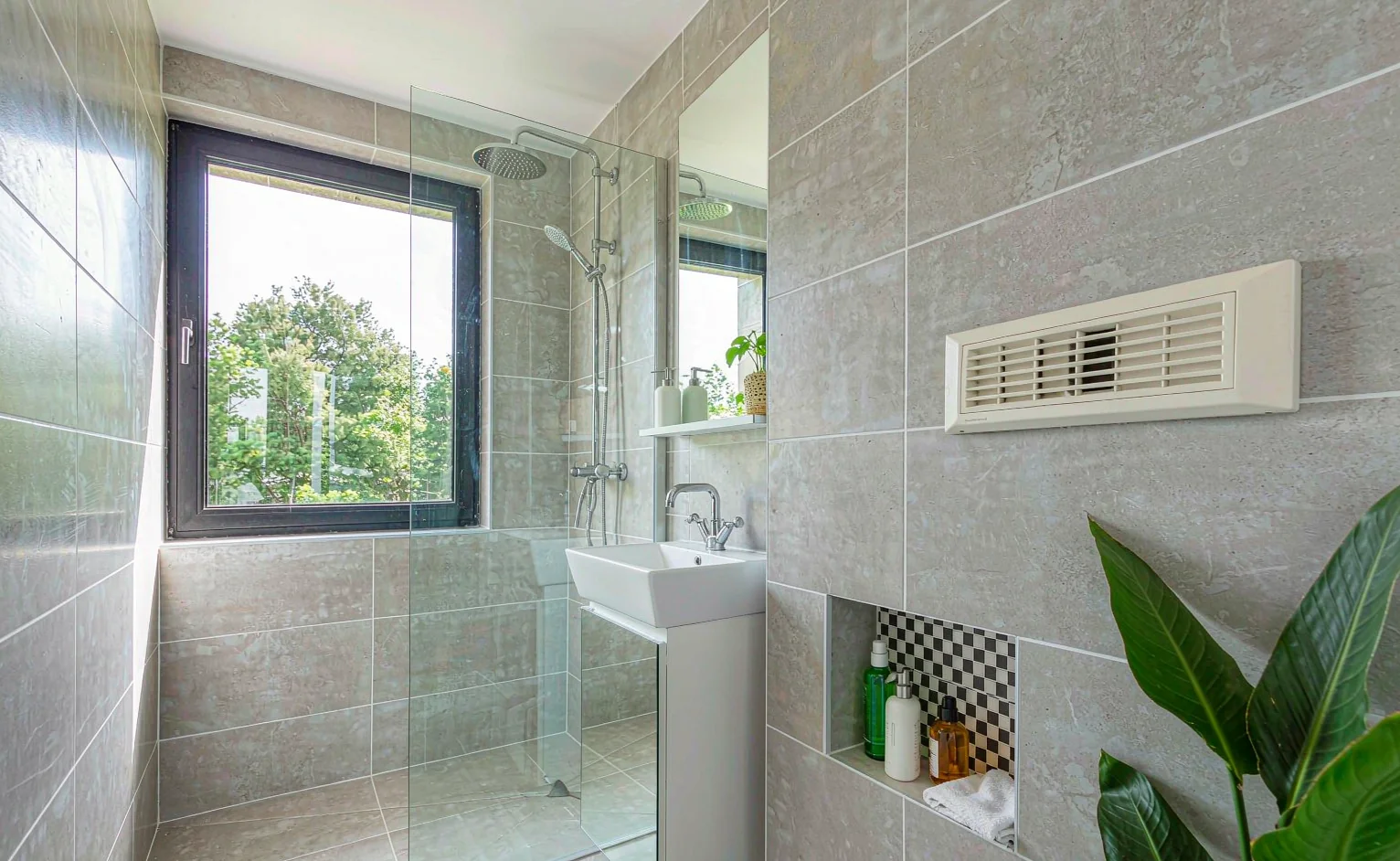
Large-format porcelain, epoxy grout and a mechanical extractor: in a 90% humidity climate, ventilation is part of the tile specification — surfaces that stay dry are surfaces that stay clean.
4. Freight, packing and the paperwork the coast adds
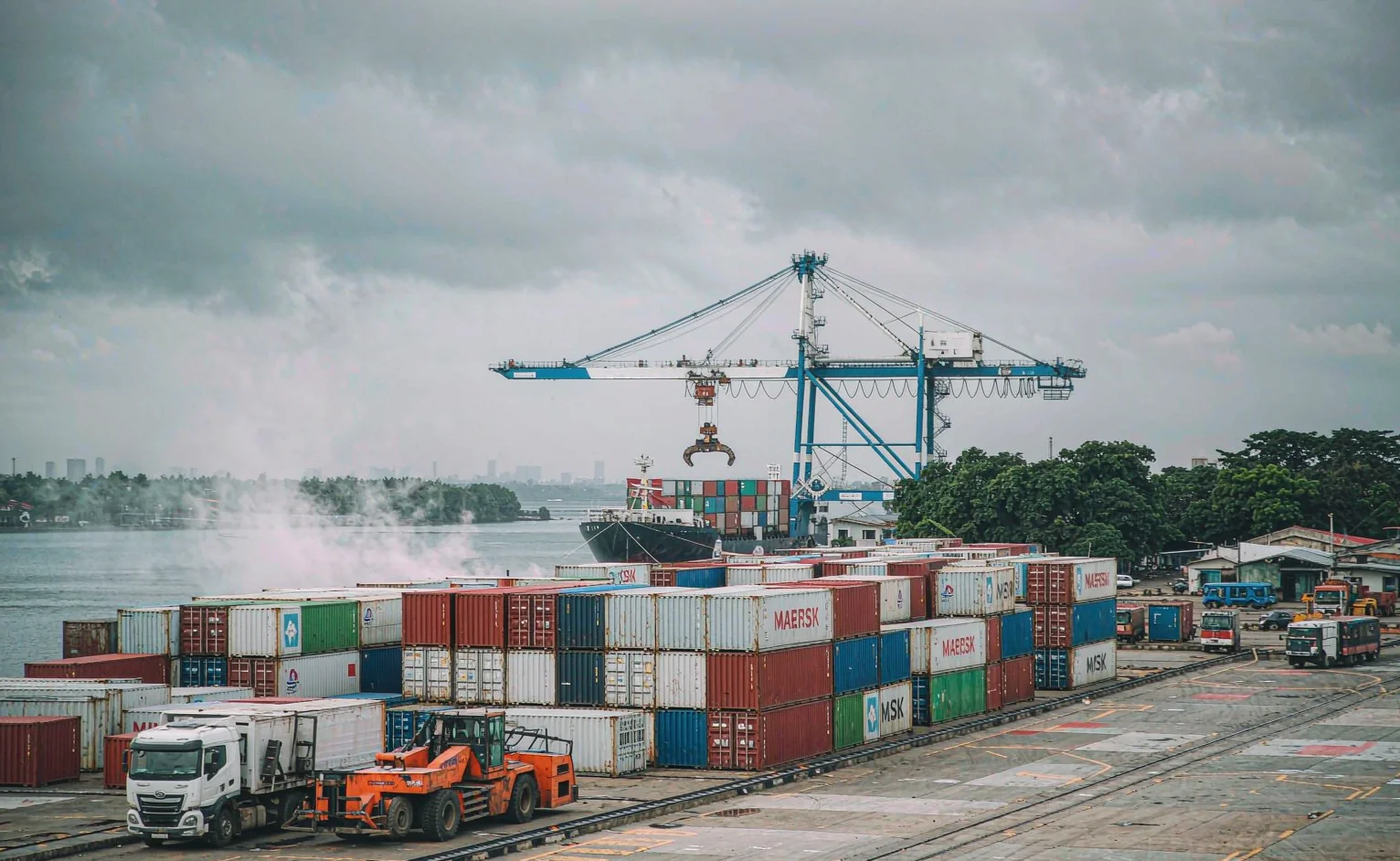
A West African coastal project is a port project before it is a design project. Ghana receives through Tema, Nigeria through Apapa and Lekki, Sierra Leone through Freetown, the Gambia through Banjul and Cameroon through Douala — five destinations, five clearance routines. Three practical rules follow. Consolidate. A 40 HQ container holds roughly 68 m³, and mixed loads are packed heavy-first: tiles and porcelain at the floor, sanitary and hardware mid-stack, aluminium profiles and panels braced vertically, nothing loose at the doors. Protect against both climates. Coastal freight spends weeks at 90% humidity before it is unloaded, so we use moisture-barrier liners and desiccant, VCI paper on exposed steel, and sealed cartons that also survive harmattan dust. Get the certificate before the container sails. Nigeria and Ghana both run conformity schemes — SONCAP in Nigeria, checks through the Ghana Standards Authority — and a certificate raised on arrival instead of before departure is what turns a four-week voyage into a three-month landing. That discipline — specify to the coast, pack to the crossing, quote the lot as one shipment — is what a West African schedule needs.
West African delivery is a port problem as much as a design one: one consolidated 40 HQ load, packed heavy-first with moisture barriers and desiccant, clears faster than three part-shipments on three sets of documents.
Coastal West Africa spec checklist
Salt-air band within 5 km: 316 stainless hardware and fasteners, powder coat at 80 microns or more, EPDM gaskets.
Roof at 25 degrees or steeper, 0.45–0.55 mm aluzinc, wide eaves, gutters sized for 200 mm/hour bursts.
No MDF or solid timber in wet rooms or at ground level — WPC, SPC or fibre-cement with 100 mm ground clearance.
Porcelain under 0.5% water absorption in wet areas, anti-mould silicone, epoxy grout and mechanical extraction.
One consolidated 40 HQ container with moisture barrier and desiccant; conformity certificate raised before departure, not on arrival.
Planning a West African coastal project?
Send us your drawings or a room schedule and tell us the port — Tema, Apapa, Freetown, Banjul or Douala. We will quote the coastal specification, pack it for the crossing and issue the whole fit-out as one schedule with one lead time.
How does salt air change the window spec for Ghana and Nigeria?
It moves the whole opening to 6063-T5 aluminium with a powder coat of at least 80 microns instead of the 60 microns we accept inland, EPDM rather than PVC gaskets, and 316 stainless hinges, handles and fasteners on anything within 5 km of the shoreline. Standard galvanised steel fittings in that chloride band start showing white rust inside one wet season. See Specifying Aluminum Windows & Doors for Hot Climates.
What roof pitch and gauge do you specify for the West African coast?
Pitch at 25 degrees or steeper with a 0.45–0.55 mm aluzinc or stone-coated profile, not the 0.40 mm economising sheet. Freetown takes around 3,000 mm of rain a year and Lagos about 1,500 mm, most of it in short violent bursts, so we also size gutters and downpipes for roughly 200 mm per hour and add a 600–900 mm overhang to keep wind-driven rain off the render. See Gulf vs East Africa: Two Material Baselines Compared for how the same drainage logic shifts between two coasts.
Is timber suitable for coastal West African interiors?
Not for wet or ground-floor work. Termite pressure across the coast is high and year-round humidity swings from 90% in the rains to 20–30% during the December–February harmattan, which makes solid timber and MDF move, swell at the joints and then crack. We specify WPC or SPC panels, fibre-cement board or 316-framed units instead, with a minimum 100 mm clearance to ground. See Wall Panels for Hot Climates: WPC, SPC & ACP Compared.
What does INDECO's enquiry file show for West Africa?
Twenty-one of our 596 customer records sit in the coastal belt: Ghana 9, Nigeria 7, Sierra Leone 3, Gambia 1 and Cameroon 1, and 19 of the 21 arrived through Facebook. The pattern is one-stop: Ebo in Ghana shipped a whole-house material package for a villa, a Nigerian developer priced a 100-unit housing scheme, and a Sierra Leone client is selecting a whole-house list by container from our 102,491-file catalogue. See 596 East African Enquiries: The Material Specifying Pattern.