Who Specifies Materials in East Africa: 596 Enquiries
Published: October 5, 2026
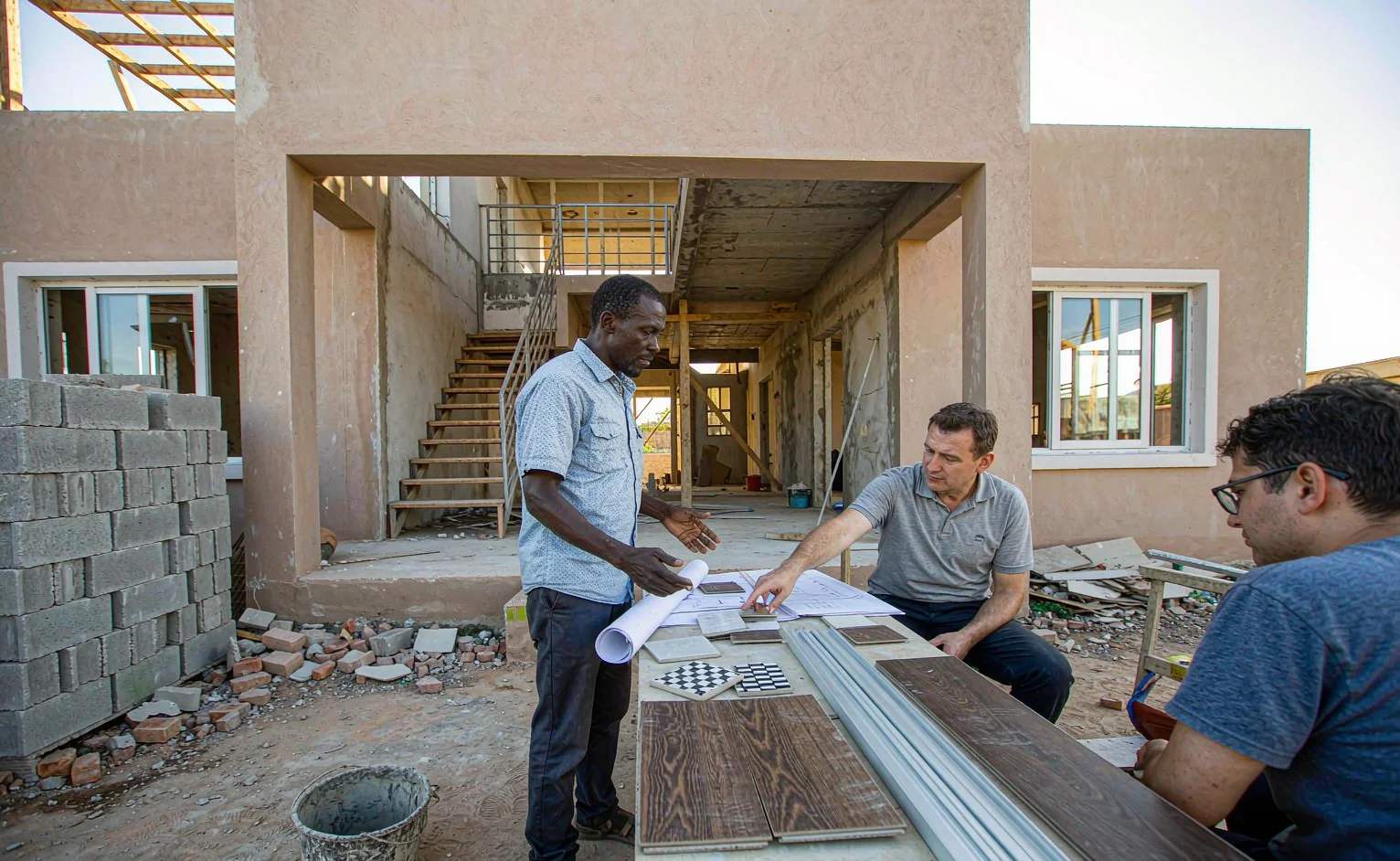
Behind every container there is a committee of one: an owner, an engineer, a trader or a developer. Of the 596 enquiries in our client file, 357 carry a role tag — and the role changes what the quotation must contain, from sample boards to SKU price lists.
Material choices in East Africa are not made the way European tender documents assume. There is rarely a full specifier team; there is usually one person signing the order, and who that person is decides whether the enquiry arrives as a sketch on WhatsApp, a drawing set, or a request for a wholesale price list. We went back through our customer file — 596 records — and tagged every record that names a role. The result is a buying-committee map of the region: 357 tagged records, six roles, three different kinds of quotation. The overall demand pattern by market and material is already set out in 596 East African Enquiries: The Material Specifying Pattern; this piece looks at the file through the other end of the telescope — the person, not the product.
1. The buying committee: 357 tagged roles across 596 enquiries
Of 596 records, 357 (59.9%) state the buyer’s role. The distribution is heavily skewed toward the end user: 210 owners — 58.8% of the tagged file — against 39 engineers (10.9%), 34 traders (9.5%), 33 designers (9.2%), 18 developers (5.0%) and 10 contractors (2.8%), with factories, architects, consultants and importers making up the remainder. Geographically the file concentrates hard: Ethiopia 252 records, Kenya 145, South Sudan 59, Rwanda 19, Saudi Arabia 16 and Uganda 12 — six markets holding 84.4% of everything we track. The project mix behind those records explains the owner skew: 112 villa, 90 home-finishing and 55 apartment enquiries against 32 hotel and 11 commercial-complex ones. A villa buyer in Addis Ababa or Nairobi is usually spending their own money on their own rooms, which is why the region’s default enquiry is a whole-home fit-out rather than a single trade package — a pattern the Kenyan slice of the file confirms in detail in Kenya Building Materials: What 150 Home Enquiries Ask For.
2. What each role asks for first
Roles do not only differ in authority; they differ in what they name first. Owners open with the rooms they live in: kitchens and wardrobes lead their list at 17 records (8.1% of owners), followed by stairs (8), tiles (7), sanitary ware (6), furniture (5) and aluminum windows (5). Engineers open with the building’s performance envelope: aluminum windows and doors appear in 5 of their 39 records — 12.8%, the highest single-material concentration of any role — and the same records carry the largest scales in the file: a 600 sqm villa in South Sudan, a G+1 villa of 1,529 sqm in Saudi Arabia, and towers rising to G+16. Traders open with repeatable lines — profile, ceiling, screen — and developers open with unit counts.
Who specifies what: role distribution and first asks across 357 tagged enquiries (of 596 records)
Role
Records (share)
Named first in the enquiry
What the quotation must contain
Owner
210 (58.8%)
Kitchens & wardrobes (17), stairs (8), tiles (7), sanitary ware (6), furniture (5), aluminum windows (5)
Room-by-room BOQ, sample board, one consolidated container
Engineer
39 (10.9%)
Aluminum windows & doors (5 of 39 = 12.8%, highest of any role)
Profile sections, thermal-break and hardware data, G+ load logic
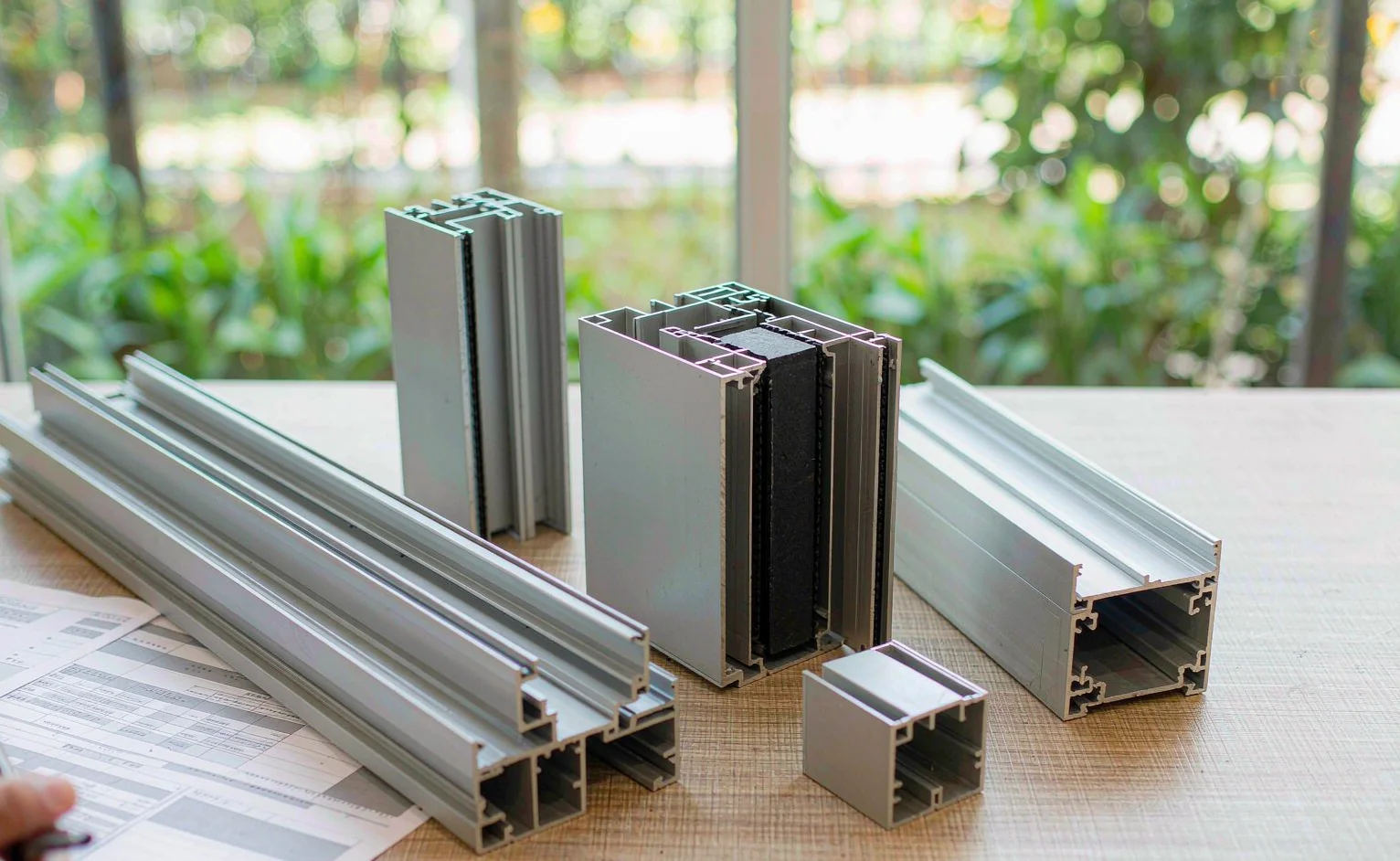
Aluminum profile sections are the engineer’s opening question: 12.8% of engineer-tagged enquiries name windows and doors first, the highest single-material concentration of any role in the file.
3. Owners versus traders: two different quotations
The same catalogue serves both, but almost nothing else about the two quotations matches. 63 of the 596 records — 10.6% — ask for a whole-house package, and the wording repeats across borders: a Ghanaian owner asked for whole-house materials for a villa, a Saudi owner for an apartment, an Iraqi engineer for villa materials loaded by container. An owner’s quote is priced room by room, starts from drawings or even photos, and ships as one consolidated 40 HQ with the kitchens, tiles and sanitary ware packed in reverse installation order, flooring last. The 34 trader records read differently: wholesale appears again and again — aluminum profile in Ethiopia (two separate accounts) and Uganda, a branded sanitary-ware line in Ethiopia, PVC ceiling in Lebanon, outdoor waterproof screens in Sierra Leone. A trader needs SKU codes, MOQ, carton quantities and a price list that survives being re-quoted to a third party, not a room schedule. Quoting a trader with an owner’s BOQ loses the order in both directions — and it is why our catalogue is organised by SKU family first, a structure visible in the kitchen and cabinetry ranges compared in Kitchen & Cabinetry Materials Compared.
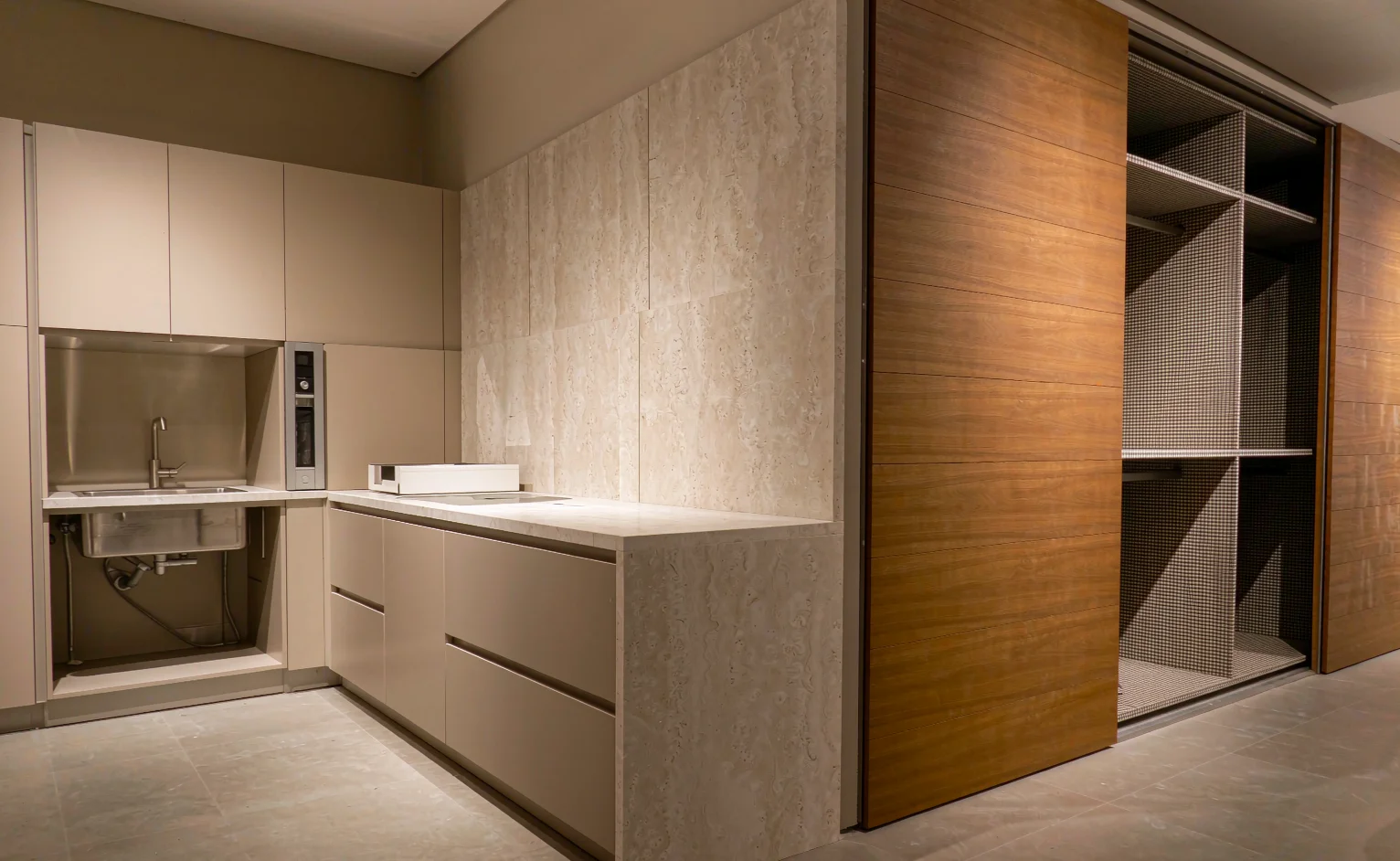
Kitchens and wardrobes are the owner’s first question — 17 records, more than any other line — because they are the room the family touches first after handover.
4. Developers and designers: the multi-unit quote and the mood board
The 18 developer records are small in number but carry the file’s largest numbers: a 100-unit housing project in Nigeria, a container-house development on a large Kenyan plot, 4 villas in Ethiopia, a curtain-wall complex in Addis Ababa, and a sample flat in Riyadh — the tell that a developer buys one unit first and multiplies later. Their vertical cousins appear in the height ladder scattered through the engineer records: G+2 is the modal tower at 11 mentions, then G+1 and G+3 at five each, G+7 at four, and single mentions up to G+16 — the specification logic for which is covered in High-Rise in East Africa: Materials for G+10 and Beyond. The 33 designers buy differently again: an Ethiopian hotel specified as a full-package fit-out, commercial cabinetry for a South Sudanese hotel, doors and windows for a Zimbabwean penthouse, restaurant interiors in Addis Ababa. A designer’s quotation is a finish schedule with samples attached, and it is the role most likely to return for a second project once the first palette is proven. Three practical rules fall out of all of this: quote the role, not the product; put the document the role actually reads in the first reply; and keep the material performance layer — stone absorption, hardware ratings, sealant joints — identical across roles, because the climate does not care who signs the order.
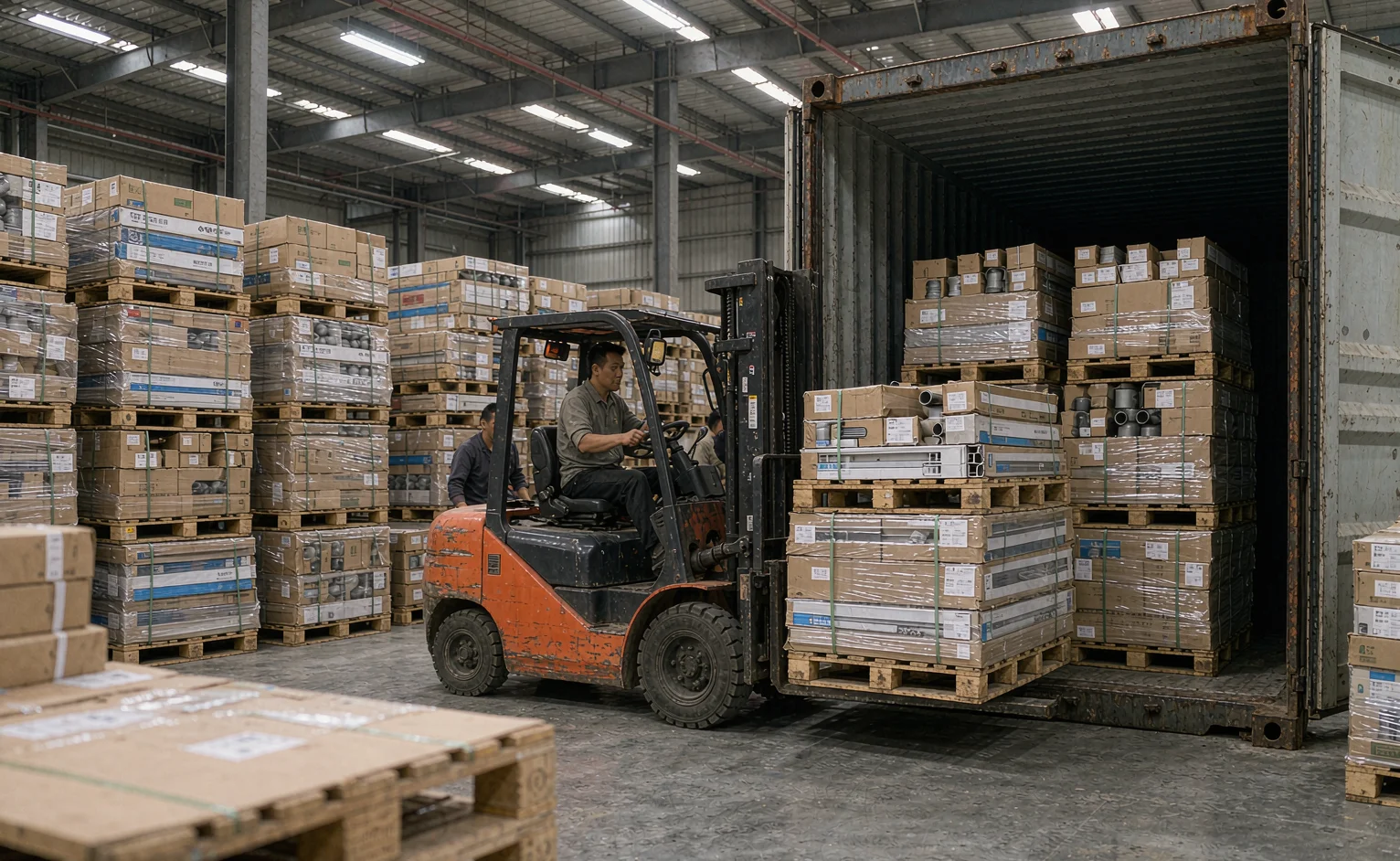
Trader enquiries end at a loading dock: SKU-coded cartons, MOQ discipline and mixed-container packing are what turn a wholesale price list into a repeat order.
How we quote each role
Owner (58.8% of the tagged file): room-by-room BOQ, sample board before contract, one consolidated 40 HQ packed in reverse installation order.
Engineer (10.9%): profile sections, thermal-break and hardware data, glazing and load figures, scales stated as G+ levels and square metres.
Trader (9.5%): SKU-coded price list, MOQ, carton quantities and pallet plan; keep prices re-quotable to a third party.
Developer (5.0%): quote one unit type first, prove it with a sample flat, then multiply with phased delivery dates.
Designer (9.2%): finish schedule with physical samples, batch lead times, and one contact who owns the palette end to end.
Quoting a project in East Africa or the Gulf?
Tell us who you are — owner, engineer, trader or developer — and send the drawings, the room list or the SKU list. You will get the document your role actually needs: a BOQ per room, a spec sheet per profile, or a wholesale price list per carton, priced for the port you ship to.
Who decides building materials in East African projects?
More often the owner than a professional specifier. In our 596-record client file, 357 records carry a role tag and 210 of them — 58.8% — are private owners, against 39 engineers (10.9%), 34 traders (9.5%), 33 designers (9.2%) and 18 developers (5.0%). A quotation therefore has to read as a room-by-room shopping list, not a clause-referenced spec. The wider demand pattern is analysed in 596 East African Enquiries: The Material Specifying Pattern.
Why do engineers ask for aluminum windows and doors first?
Because openings carry the performance risk they are held to. Aluminum windows and doors appear in 5 of the 39 engineer-tagged enquiries — 12.8%, the highest single-material concentration of any role — and the same records carry the largest scales we quote: a 600 sqm villa in South Sudan, a G+1 villa of 1,529 sqm in Saudi Arabia, and towers up to G+16. Profile sections, thermal breaks and hardware ratings are set out in Specifying Aluminum Windows & Doors for Hot Climates.
What is a whole-house package enquiry?
One quotation covering every finish in the building. 63 of our 596 records — 10.6% — ask for a whole-house package, and the wording repeats across markets: a Ghanaian owner asked for whole-house materials for a villa, a Saudi owner for an apartment, an Iraqi engineer for villa materials by container. These quotes are priced room by room and shipped as one consolidated load; the kitchen and cabinetry scope inside them is compared in Kitchen & Cabinetry Materials Compared.
How should a supplier quote a trader differently from an owner?
A trader buys SKUs, an owner buys rooms. Trader records — 34, or 9.5% of the tagged file — ask wholesale for aluminum profiles in Ethiopia and Uganda, PVC ceilings in Lebanon and outdoor screens in Sierra Leone, so they need a price list, MOQ and carton packaging per item. Owners need a BOQ per room, samples first and one consolidated container. The landlocked freight logic behind Ugandan orders is covered in Rwanda & Uganda: Materials for Landlocked Projects.