MARKET INSIGHT
Rwanda & Uganda: Materials for Landlocked Projects.
Published: October 3, 2026
Freight, humidity, termites and mid-rise growth — what our enquiry data and live Kigali and Kampala projects change in the specification.
Published: October 3, 2026
Freight, humidity, termites and mid-rise growth — what our enquiry data and live Kigali and Kampala projects change in the specification.
Most material guides for East Africa stop at the coast. But a growing share of the enquiries in our 596-record CRM sit inland: of the clients we track across Angola, Ethiopia, Ghana, Kenya, Nigeria and Rwanda, the Rwandan pipeline now runs from a full-house residential brief to a 10-storey commercial building, and our Ugandan enquiries concentrate on cabinetry and fit-out. Inland projects obey different economics — every square metre of material has crossed an ocean and roughly 1,200–1,500 km of road before it reaches the site — and a different microclimate: highland humidity, red laterite dust and the region’s most aggressive termite pressure. This guide sets out how those three forces change the shortlist.
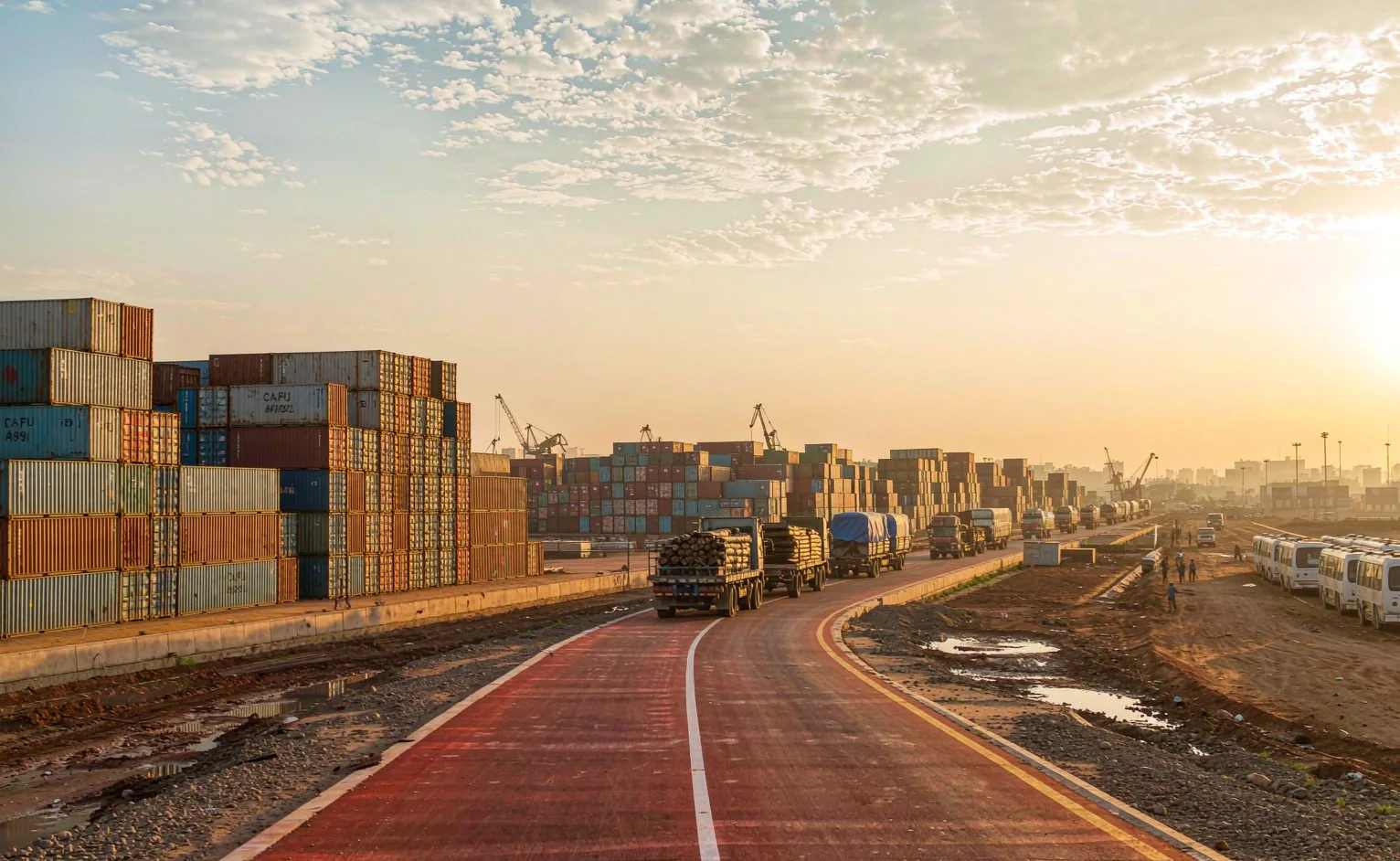
Kigali sits about 1,560 m above sea level and roughly 1,500 km by road from the port of Dar es Salaam; Kampala is about 1,200 km from Mombasa. That last leg adds one to three weeks over a coastal delivery, and — more importantly — two or three extra handling points where crates are lifted, stacked and re-loaded. On our inland orders we therefore: consolidate into as few containers as possible (a mixed container of tiles, aluminium profiles and cabinetry beats three half-empty ones), add a 5% transit breakage allowance on tiles and stone on top of the normal cutting waste, and reject any specification that depends on replacing a single damaged piece quickly — a cracked 600×1200 mm porcelain tile with no local equivalent can stall a handover for weeks. Fragile finishes get crated, not palletised. The logistics line in the BOQ is not an afterthought; for a Kigali project it can move the landed cost of heavy, low-value materials like tiles by 20–30% versus the ex-works price. The same discipline applies across the region — see how it plays out in South Sudan Building Materials: Specifying for Heat & Dust, an even more extreme inland case.
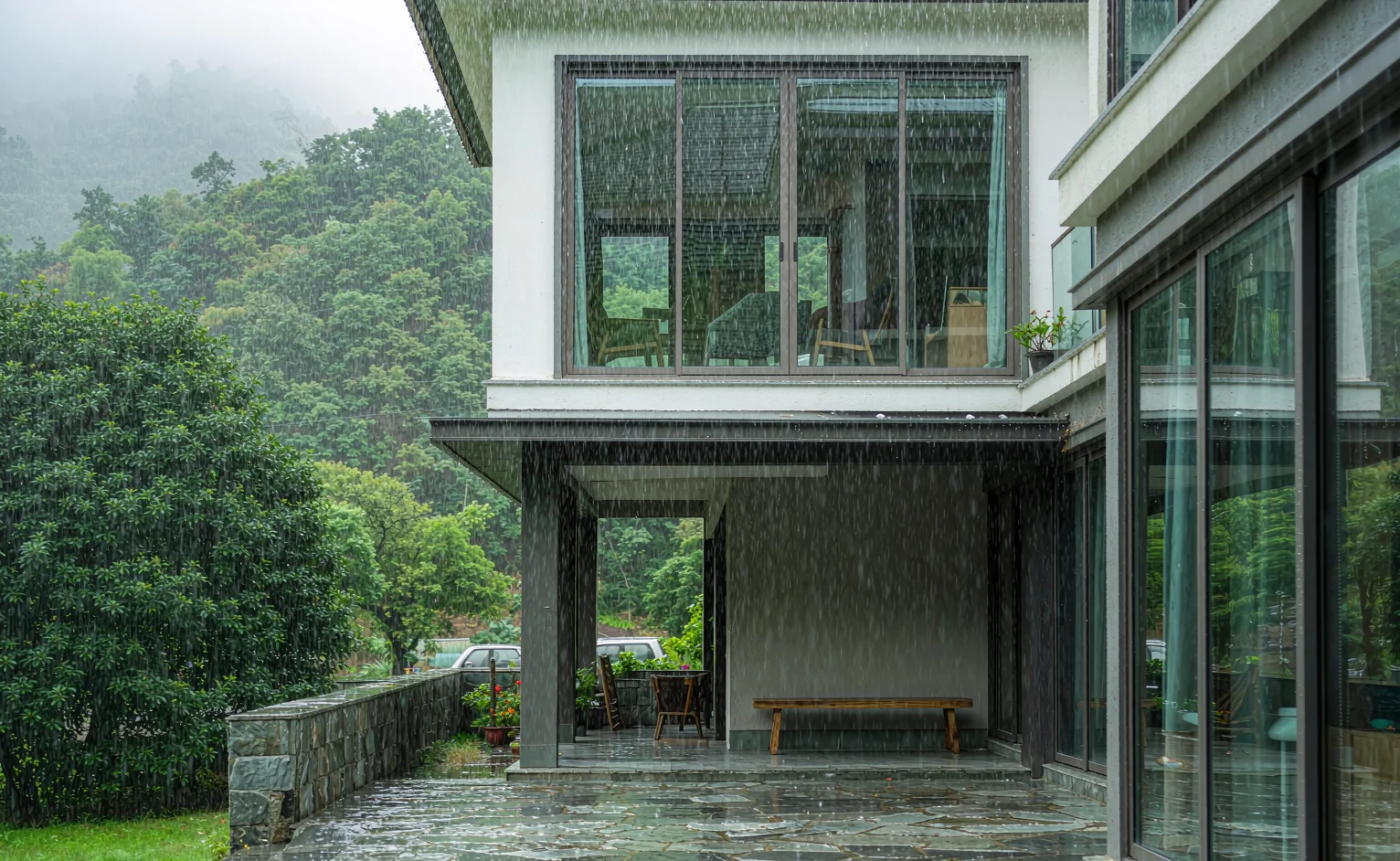
Rwanda and Uganda break the “Africa = heat” assumption. Kigali’s altitude holds daily temperatures near 15–27 °C year-round and Kampala stays around 17–29 °C — mild by Gulf standards. What kills materials here is water and light. Both cities see two rainy seasons (roughly March–May and September–December), relative humidity climbs past 80% for weeks at a time, and at 1,500 m the UV index is fierce even on a 22 °C afternoon. So the specification flips: exterior coatings need UV-stable pigments rather than pure heat reflectance; external aluminium finishes hold up best as powder coating rather than anodising alone; and every external joint must assume driving rain, not just sun — we detail sill flashings and 15–20 mm drainage gaps behind external cladding that a desert project would never need. Condensation is the hidden one: a shaded villa in Kigali can see morning condensation on large single-glazed panels, which is why we push double glazing here for thermal comfort and to keep glass surfaces above the dew point.
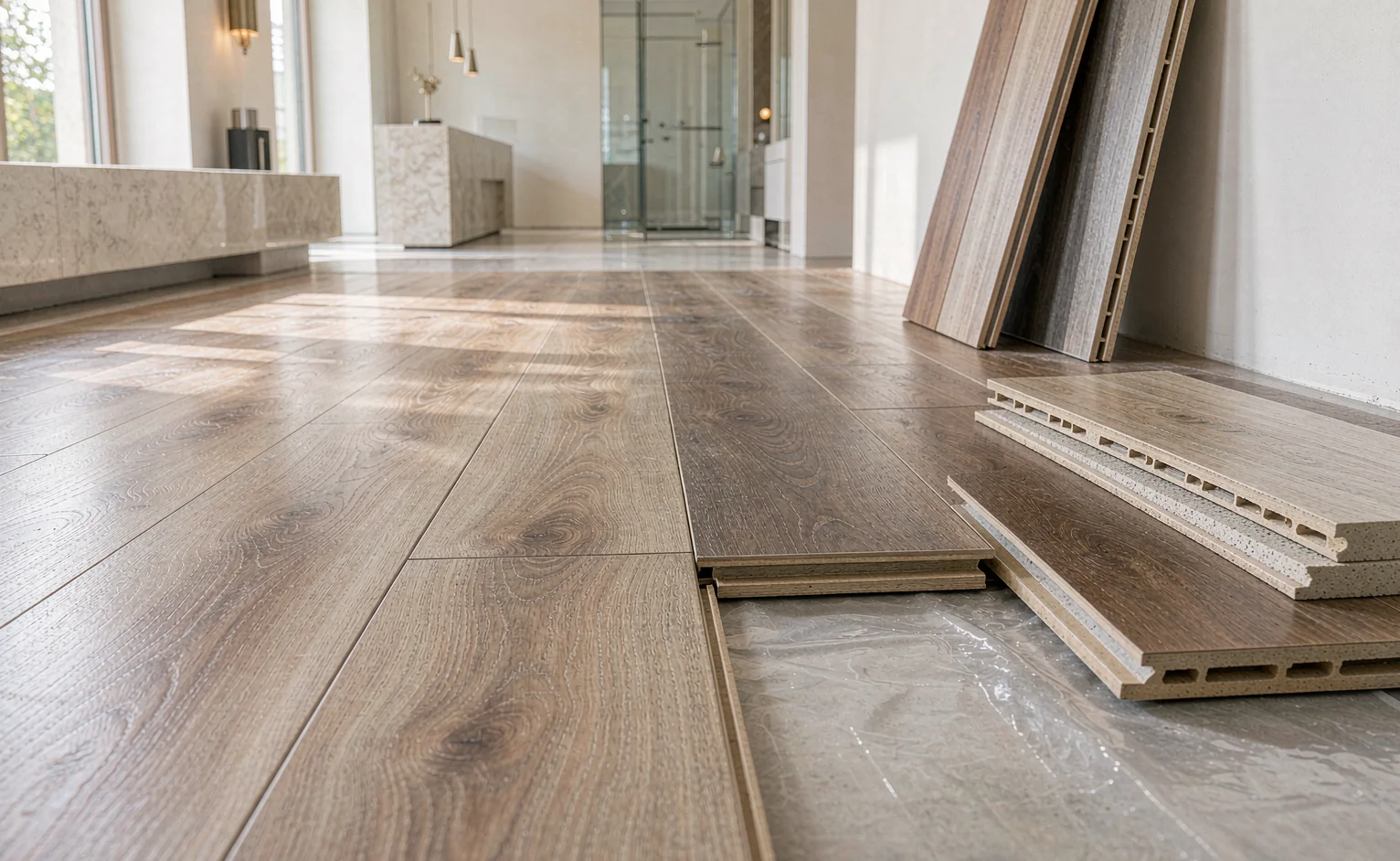
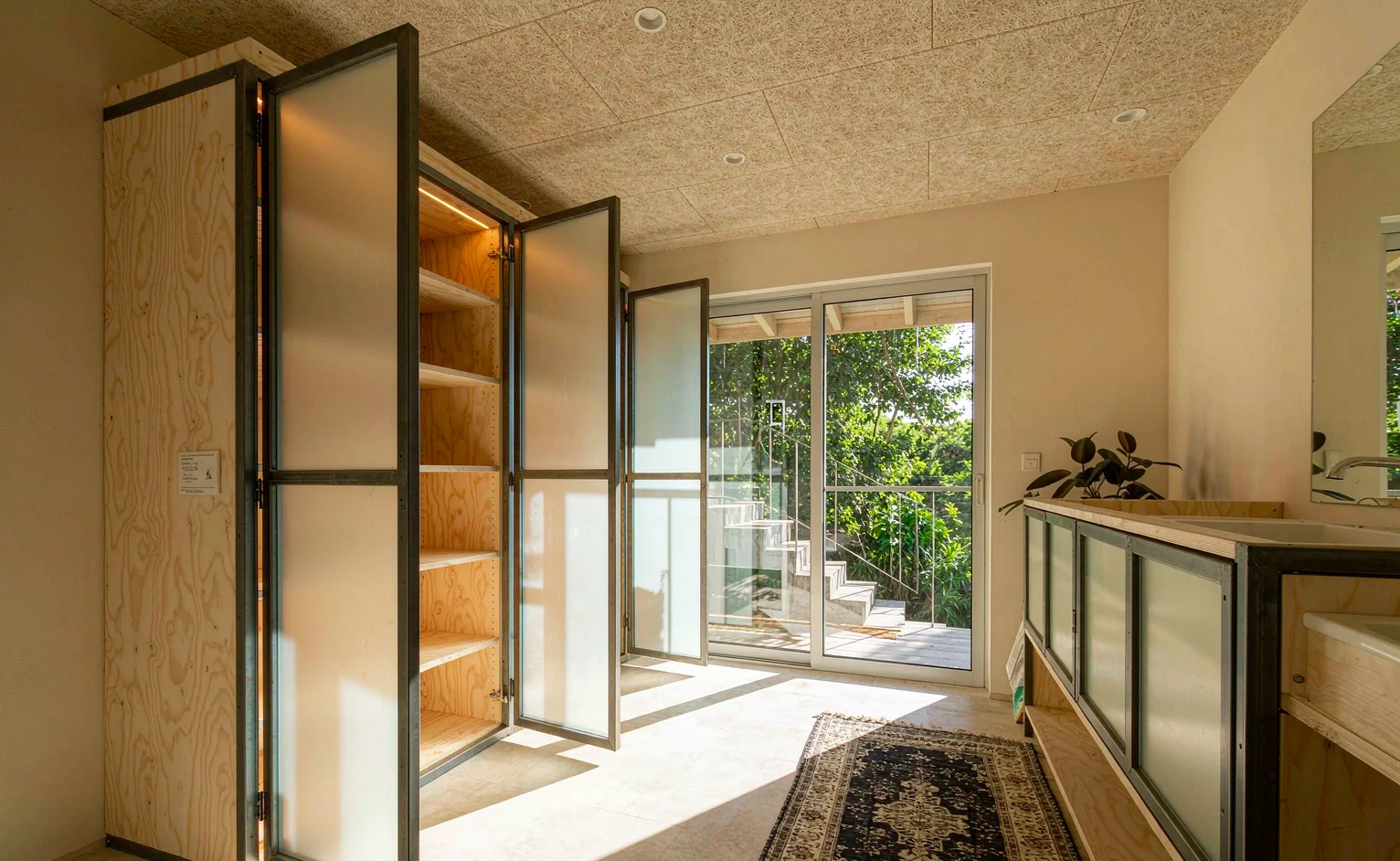
The region’s termite pressure is among the highest in Africa, and combined with long wet seasons it rules out several materials that look fine in a showroom. Solid-wood strip flooring, particle-board carcases and untreated MDF skirtings are the three most common failures we are called to fix. The substitutes are proven: SPC flooring (stone-plastic composite, typically 4–6 mm with a 0.3–0.5 mm wear layer) is dimensionally stable through the rainy season and simply not food for termites; WPC wall panels and external cladding survive humidity without rotting; and cabinetry is specified in marine-grade plywood or with an aluminium carcase, with all board edges sealed and hinges fixed through pre-drilled, sealed holes. On our projects the kitchen and wardrobe joinery is the single most termite-vulnerable package, so the carcase material is decided before the door finish — a lacquered MDF door on a particle-board box is a failure waiting for its first April. For the full flooring comparison, see Choosing Flooring for Tropical Climates.
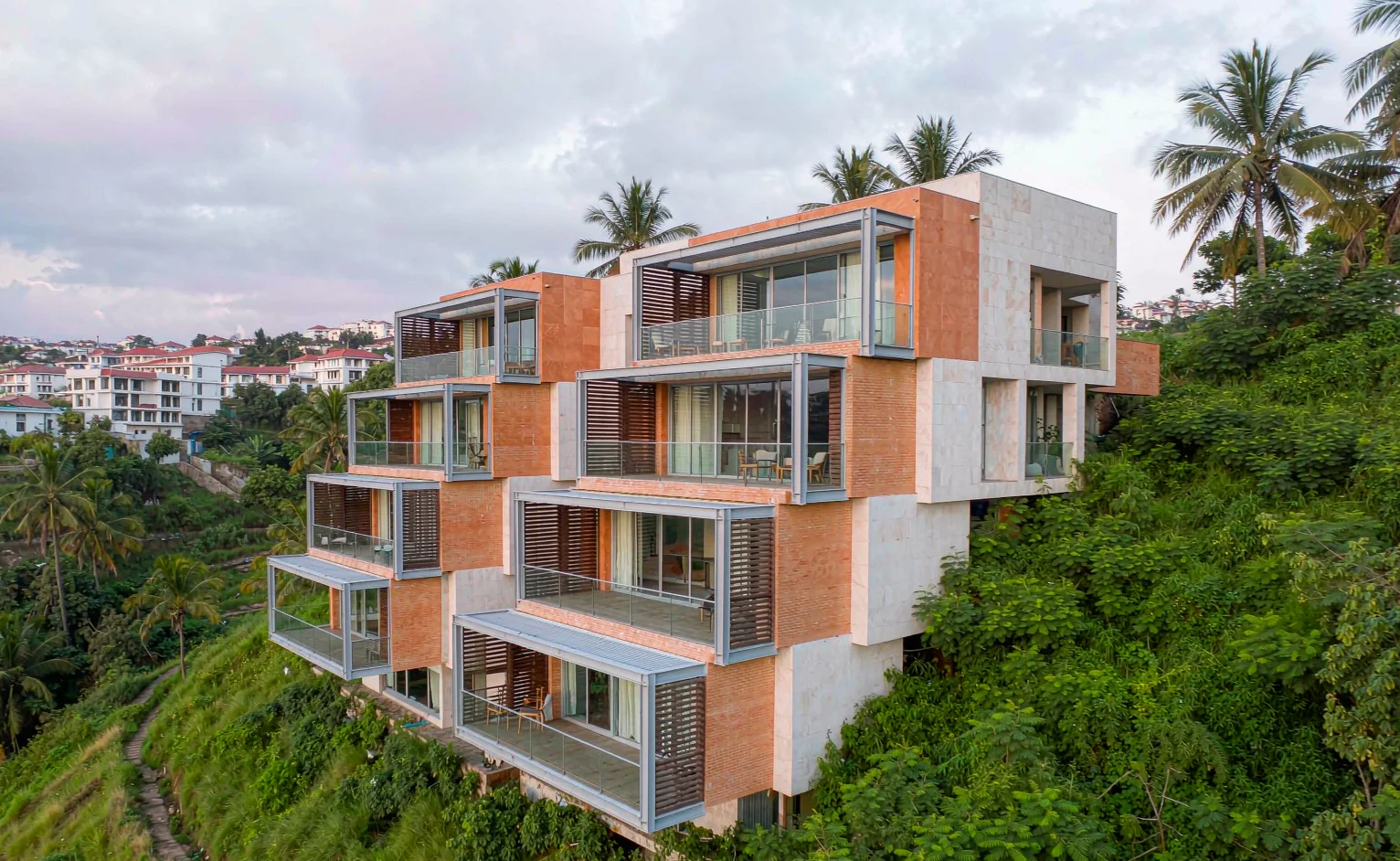
The demand pattern in our enquiry records has shifted visibly: alongside the usual villa and fit-out briefs, we now see 10-storey commercial and residential buildings from Rwandan clients — a building type that barely existed in Kigali a decade ago. Mid-rise changes the material conversation in three ways. First, structure and envelope dominate the budget, so cladding moves to cost-efficient systems such as ACP and WPC panels over rendered blockwork (Wall Panels for Hot Climates: WPC, SPC & ACP Compared). Second, fit-out happens floor by floor, so cabinetry and door packages must be repeatable and re-orderable — one approved sample, batch-reserved, shipped in phases. Third, lead time becomes a programme risk: a lift shaft waiting on imported stainless trim is a crane standing still. Our answer is a phased BOQ agreed before structural work starts, with long-lead items (aluminium, glazing, hardware) ordered first and fit-out items consolidated into later containers. Kampala enquiries tell the same story one segment smaller — kitchens, wardrobes and full-house packages — which is why we treat the two capitals as one supply corridor with two delivery addresses.
| Package | Coastal / Gulf default | Rwanda & Uganda adjustment | Driving factor |
|---|---|---|---|
| Flooring | Porcelain tile, marble in halls | SPC 4–6 mm (0.3–0.5 mm wear layer) in residences; tile kept for wet areas | Termite pressure + rainy-season humidity |
| Cabinetry carcase | Moisture-resistant MRF board | Marine-grade plywood or aluminium carcase, sealed edges | Termites destroy particle board |
| Window finish | Anodised or PVDF, heat-first glazing | Powder-coated aluminium + fibreglass mosquito screens; double glazing in villas | Malaria control + night condensation |
| External cladding | Ventilated stone or ACP | WPC/ACP with 15–20 mm drained cavity and flashed sills | Driving rain in two wet seasons |
| Tile & stone order qty | Net area + 5–8% cutting waste | Net area + 5–8% waste + 5% transit breakage allowance | 1,200–1,500 km road haul, multiple transfers |
| Delivery plan | Single consolidated shipment | Phased: long-lead first, fit-out consolidated per floor | Mid-rise programme risk |
Send us your drawings and we will return an itemized BOQ priced for the inland corridor — phased deliveries, breakage allowances and termite-safe joinery included — typically within one working day.
Request an Inland Corridor BOQ →What changes most when a project is landlocked — Rwanda or Uganda instead of a coastal city?
Freight and handling. A sea-freight container that lands in Dar es Salaam still faces roughly 1,500 km of road to Kigali, and Mombasa to Kampala is about 1,200 km. Every extra transfer multiplies breakage and delay risk, so we add a 5% transit breakage allowance on tiles and stone and consolidate the order into as few containers as possible.
Which flooring survives highland humidity and termites best?
SPC and WPC flooring outperform solid wood in both. SPC is dimensionally stable through the rainy season and termites do not eat it, which is why it is our default for Kigali and Kampala residences. See Choosing Flooring for Tropical Climates.
Do aluminium windows in Rwanda and Uganda need mosquito screens?
Yes, on every opening light. Malaria is endemic in the region and nights are cool enough that residents want windows open rather than air-conditioning running all night. A powder-coated aluminium frame with a fibreglass mesh screen solves both. See Specifying Aluminum Windows & Doors for Hot Climates.
How do you protect cabinetry from termites and humidity?
Marine-grade plywood or aluminium carcases, sealed board edges, and hinges fixed through pre-drilled, sealed holes. Particle board carcases are the first thing termites and moisture destroy in the region. See Kitchen & Cabinetry Materials Compared.
Related: South Sudan Building Materials: Specifying for Heat & Dust, Wall Panels for Hot Climates: WPC, SPC & ACP Compared, and Gulf vs East Africa: Two Material Baselines Compared.