Interior Design Company Checklist for Africa & Gulf Builds
Published: October 19, 2026
An interior design company is shortlisted on renders and remembered for what lands at the port. Nine checks that separate a studio with a material schedule from one with a mood board.
Shortlisting an interior design company for a project in Lagos, Juba, Dar es Salaam or Jeddah is a procurement decision before it is a creative one. The drawings decide how a room reads. The material schedule decides whether that room still reads the same way after three rainy seasons, and the packing list decides what condition it arrives in. Our enquiry log from East Africa now runs to 596 requests. Almost none of them argue about style. They argue about who owns the schedule, which absorption figure applies, and whether the joinery lands flat or warped after 40 days at sea.
So the checks below are not aesthetic. They are the nine questions we would ask if we were the client, each with a pass mark you can write into a contract.
1. What an interior design company is actually paid to deliver
Clients price the fee against the render pack. The fee really buys five documents, and only one of them is visual. Ask to see all five in the proposal, not after the deposit clears.
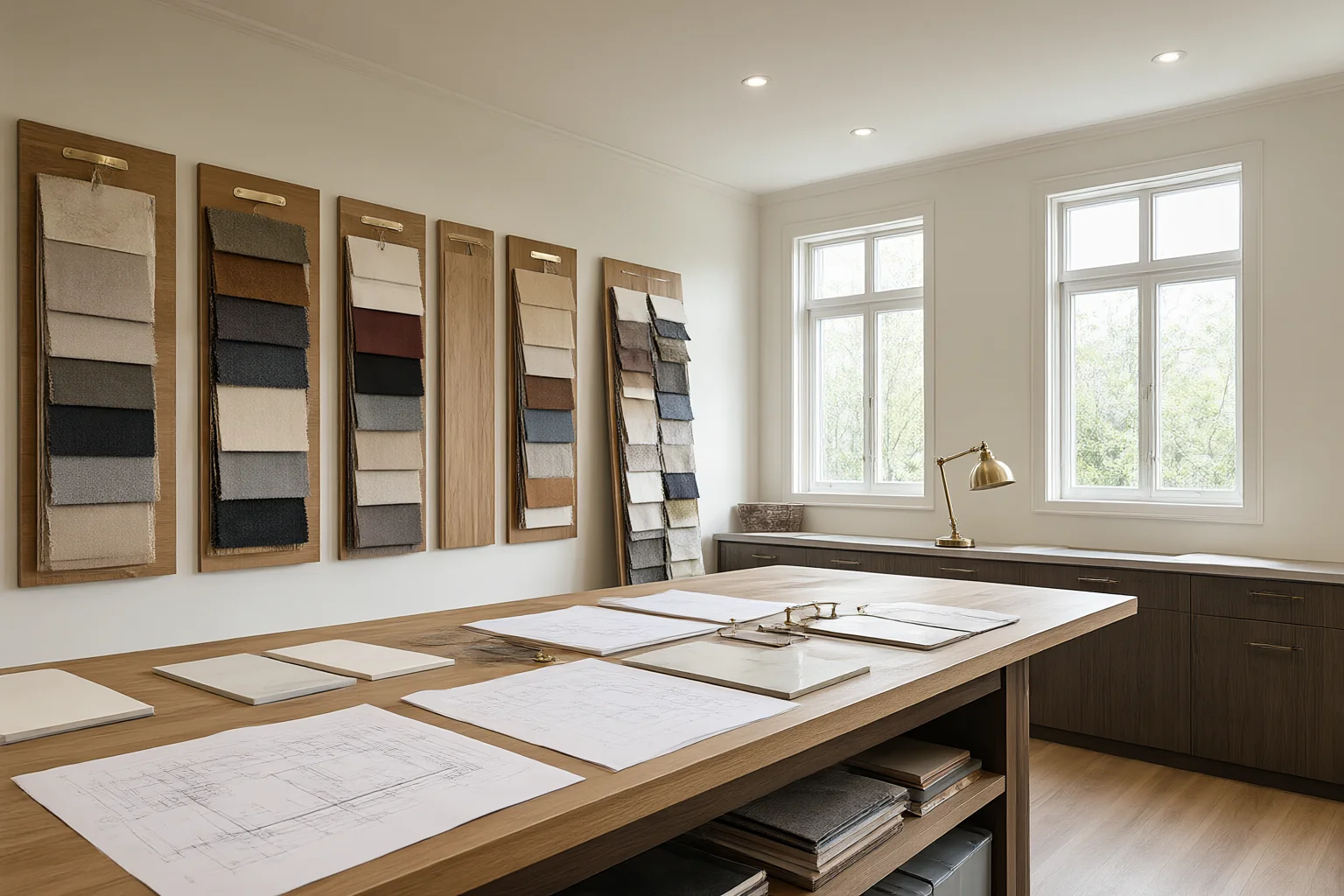
Concept direction sets the palette, the material family and the level of ornament. The room-by-room schedule is the working document: every floor, wall, ceiling, joinery item, textile and hardware piece, with grade, thickness and finish. Shop drawings carry real dimensions taken on site, not scaled off the architect's PDF. The physical sample set is the contract's colour reference, and it needs batch numbers on the back. The logistics plan covers crush protection, moisture barrier, container fill and the port of discharge.
A studio that hands over the first two and calls it a package is selling images. The last three are what make the images true eight months later, and they are also the part that most fee proposals quietly leave out.
2. Nine checks for an interior design company in a hot climate
Each row has a number attached, because a spec without a number cannot be enforced at handover. Run this table against every shortlisted firm and score the answers honestly.
| Check | Ask | Pass mark | Cost of a bad answer |
|---|---|---|---|
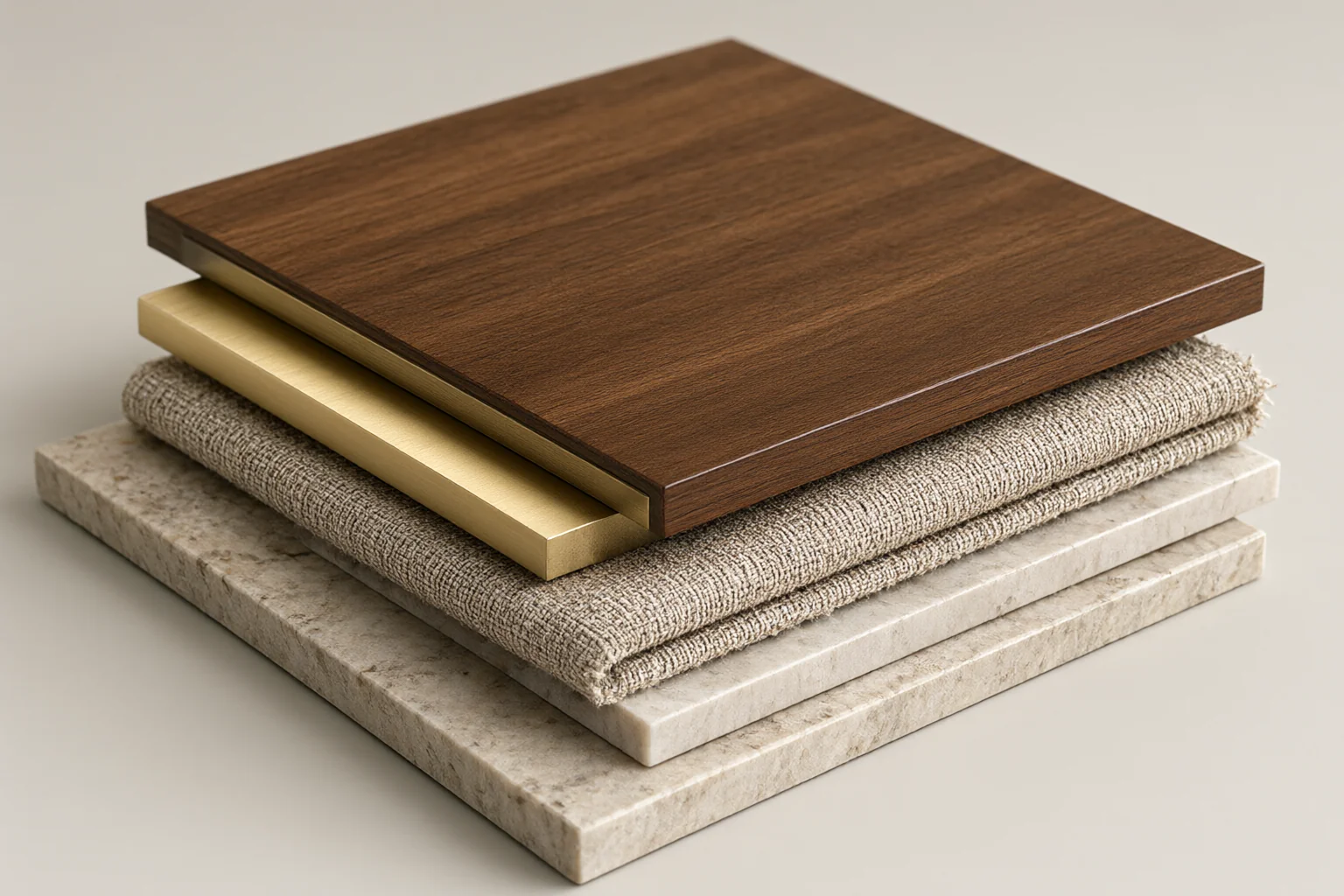
| Timber moisture | What moisture content do you specify for joinery in this city? | Kiln-dried to 8–10% MC, every cut edge sealed | Cupping and open joints in the first dry season |
| Tile absorption | What absorption and abrasion class goes on the floor? | Below 0.5%, PEI IV domestic, PEI V commercial | Stained grout, chipped edges at chair legs |
| Metal grade | 304 or 316 stainless on handles and balustrades? | 316 within 5 km of the coast, 304 inland | Tea staining and pit rust inside a year |
| Wall build-up | Is the wall panel ventilated behind? | 10–15 mm rear cavity on treated battens | Mould growing unseen behind the cladding |
| Textile rating | Is the upholstery solution-dyed? | Colour locked in the fibre, bleach-cleanable | Visible fade within 18 months of window UV |
| Sample control | Do I sign off physical samples before the PO? | Yes, with batch numbers and a retention set | Delivered colour that fights the approved render |
| Site measurement | Who takes the dimensions the joinery is built to? | The same team that details it, after screed | Units that cannot be fitted without cutting |
| Packing plan | How is the package protected for sea freight? | Flat-packed, edge-protected, moisture-barriered | Crushed corners and swollen board ends |
| Commercial terms | FOB, CIF or DAP, and who clears the port? | One named Incoterm per shipment, in writing | Demurrage billed to the party who assumed nothing |
Two of these checks catch more failures than the rest. Moisture content is the single most common cause of joinery complaints we see, because board dried to a European 6 percent equilibrium will swell the moment it meets 80 percent relative humidity. Site measurement is the second, and it is entirely organisational. A wardrobe detailed off an architect's PDF will not fit a wall that was skimmed twice.
3. Residential interior design and commercial interior design weight the list differently
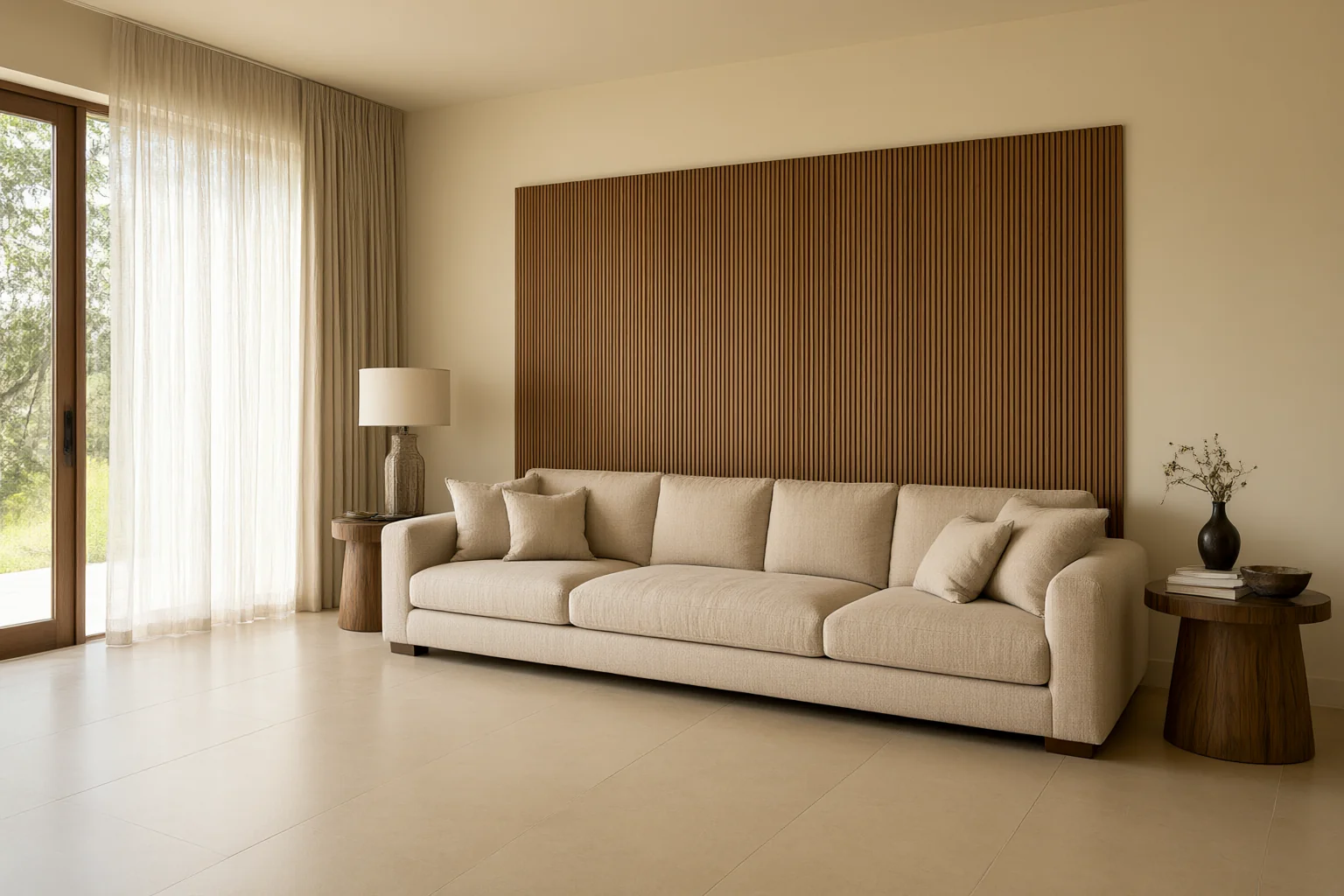
The nine checks apply to both. What changes is which rows carry the penalty. In residential interior design the client lives with the result daily and forgives nothing at eye level. Touch matters more than abrasion class. Door and drawer fronts need a finish that survives cleaning by staff who were not trained on it, and the light needs to be warm enough that timber and linen still read warm at nine in the evening. Bedrooms want 2700–3000 K at CRI 90 or above, not the 4000 K that a contractor installs by default.
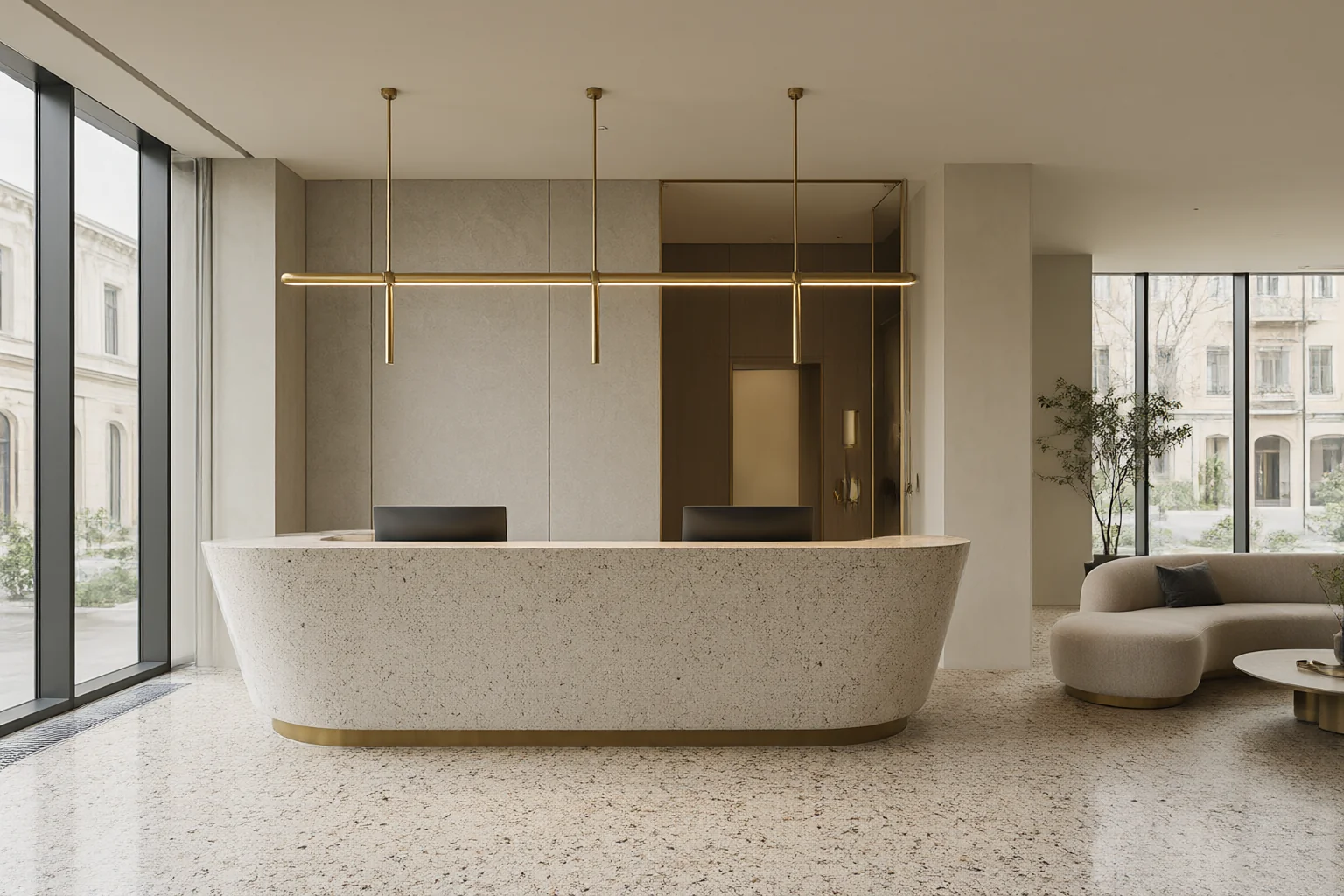
In commercial interior design the arithmetic flips. A hotel lobby, a clinic reception or a bank branch is judged by traffic, cleaning chemicals and the cost of closing a zone to repair it. Floors move from timber to terrazzo, stone or a high-grade porcelain with a PEI V surface. Wall systems become modular so a single damaged panel can be swapped overnight. Every specification should assume daily disinfectant on touch surfaces, because in a clinic it will get exactly that.
Both types share one failure point, and it sits between the schedule and the site. Furniture and joinery are the items most often bought outside the design package, and the gap shows. Our guide to Furniture Materials for Hot-Climate Interiors covers the substrate choices, and the wider palette logic is set out in Modern Interior Design: The Warm-Climate Spec Guide if you are still fixing the look.
4. Incoterms, packing, and the 30 to 45 day sea leg
Most disputes we see are not about quality. They are about who owned the goods at the moment they were damaged, and that question is answered by a three-letter term on the invoice. An interior package shipped FOB leaves the supplier's risk at the port of loading; CIF carries it to the destination port but not to your door; DAP puts it on site. Pick one term per shipment and write it into the purchase order, because the ICC Incoterms rules allocate cost, insurance and risk by that term alone.
Packing is the physical half of the same problem. Board and panel goods travel best flat-packed, with corner protection on every bundle and a moisture barrier inside the container, because a steel box crossing the Gulf in August condenses water on the underside of its roof. Ceramic and stone crates need to be stood on edge, never laid flat, and labelled by room so the site does not open all forty crates to find one vanity top. A packing list that matches the room schedule saves a week at handover.

Time is the third variable, and it is routinely underestimated in the programme. A 30 to 45 day sea transit is normal to East Africa, and port clearance adds one to three weeks depending on documentation. A design studio that has never shipped will build a programme that assumes a truck. Our analysis of East Africa Quote-to-Order: Why 135 Quotations Stall shows how often the delay sits in exactly this handover between design approval and freight booking.
- Timber at 8–10% moisture content, every cut edge sealed.
- Floor tile below 0.5% absorption, PEI IV or V.
- 316 stainless within 5 km of the coast, 304 inland.
- Wall panels on a 10–15 mm ventilated cavity.
- Solution-dyed upholstery on every window-facing piece.
- Signed physical samples with batch numbers before the PO.
- Dimensions taken on site after screed and skim.
- Flat-packed, edge-protected, moisture-barriered for transit.
- One named Incoterm per shipment, in writing.
Need the schedule before you sign with an interior design company?
Send the drawings and the city. We return a room-by-room material schedule with the climate figures filled in, a sample set, and one quoted package delivered to your port under a single Incoterm.
Request a Material Schedule →Frequently asked questions
What should an interior design company deliver besides drawings?
Four working documents: a room-by-room material schedule with grade, thickness and finish; shop drawings measured on site; a physical sample set with batch numbers that becomes the colour reference in the contract; and a packing and freight plan. Ask for all four in the proposal. A fee that covers only concept and renders leaves the procurement side of the project unowned.
How do I compare interior design company quotes for a hot climate?
Compare the numbers, not the page count. A serious quote states timber moisture content at 8–10 percent, tile absorption below 0.5 percent with a PEI class, stainless grade by distance from the coast, and a named Incoterm. If two quotes describe the same vanity unit with different board cores or different hardware grades, they are not the same price for the same product and the cheapest one is usually the thinner specification.
Should the interior design company also supply the materials?
One supplier owning the package removes the most common source of delay, because a single party answers for the schedule, the samples and the container. Split sourcing across a designer, a local fabricator and three importers and the interface becomes the project's critical path. A consolidated Whole-House Material Packages: What 63 Enquiries Ask For arrives as one shipment with one packing list, which is easier to clear and easier to claim against.
How long does a shipped interior package take to reach site?
Allow 30 to 45 days of sea transit to East African ports, plus one to three weeks for clearance and inland delivery, and add production time before that. Coastal West Africa and Gulf destinations vary with routing and transhipment. Build the programme backwards from the handover date and book freight at drawing approval rather than at production completion. If the style is still open, start with Interior Design Ideas for Warm Climates: 7 Material Moves before the schedule is fixed.