Ceiling Materials for Hot & Humid Climates: Spec Guide
Published: October 4, 2026
The ceiling is the surface closest to a 60 °C roof void and the first to sag, stain or grow mould. This guide compares gypsum, PVC, mineral fibre and aluminium for East African and Gulf conditions — with the grid spacings, board thicknesses and humidity limits we actually quote.
Floors get the tiles budget and windows get the glazing debate, but the ceiling is the most climate-exposed surface in a hot-country building: it faces the roof void, where trapped air can sit far above the outdoor temperature, and it hides every service run — wiring, air-conditioning, smoke detectors — behind a skin that nobody inspects until it sags. In our 596-record enquiry file, eight customers name a ceiling explicitly, and their demands split cleanly by climate: gypsum in the highlands, PVC in budget wet zones, and aluminium perforated tile where salt air or heat kills everything else. This guide sets out the four systems we quote, the humidity and temperature limits behind each, and the grid details that decide whether the ceiling is flat in year five or on the floor.
1. Why the ceiling fails first in a hot, humid build
Three forces act on a ceiling in the tropics and the Gulf, and all three are worse than anything the floor sees. First, heat. Under a metal or concrete roof with poor ventilation, the void above a ceiling in Djibouti, Juba or Dubai can hold 60–70 °C in mid-afternoon — hot enough to soften thermoplastic panels and to drive thermal movement into anything fixed rigidly to the structure. Second, moisture. Coastal East Africa runs 80%+ relative humidity for much of the year, and bathrooms and kitchens push the local vapour load higher; standard gypsum board absorbs that moisture slowly, gains weight, and sags between the furring channels within 12–18 months. Third, salt air. Within 5 km of the shoreline, chloride attacks unprotected steel suspension systems from below and galvanising from above — the same regime that pushes window and door hardware to 316 stainless, as set out in Specifying Aluminum Windows & Doors for Hot Climates. A ceiling that ignores all three fails as a system: staining first, then ripple, then sag.
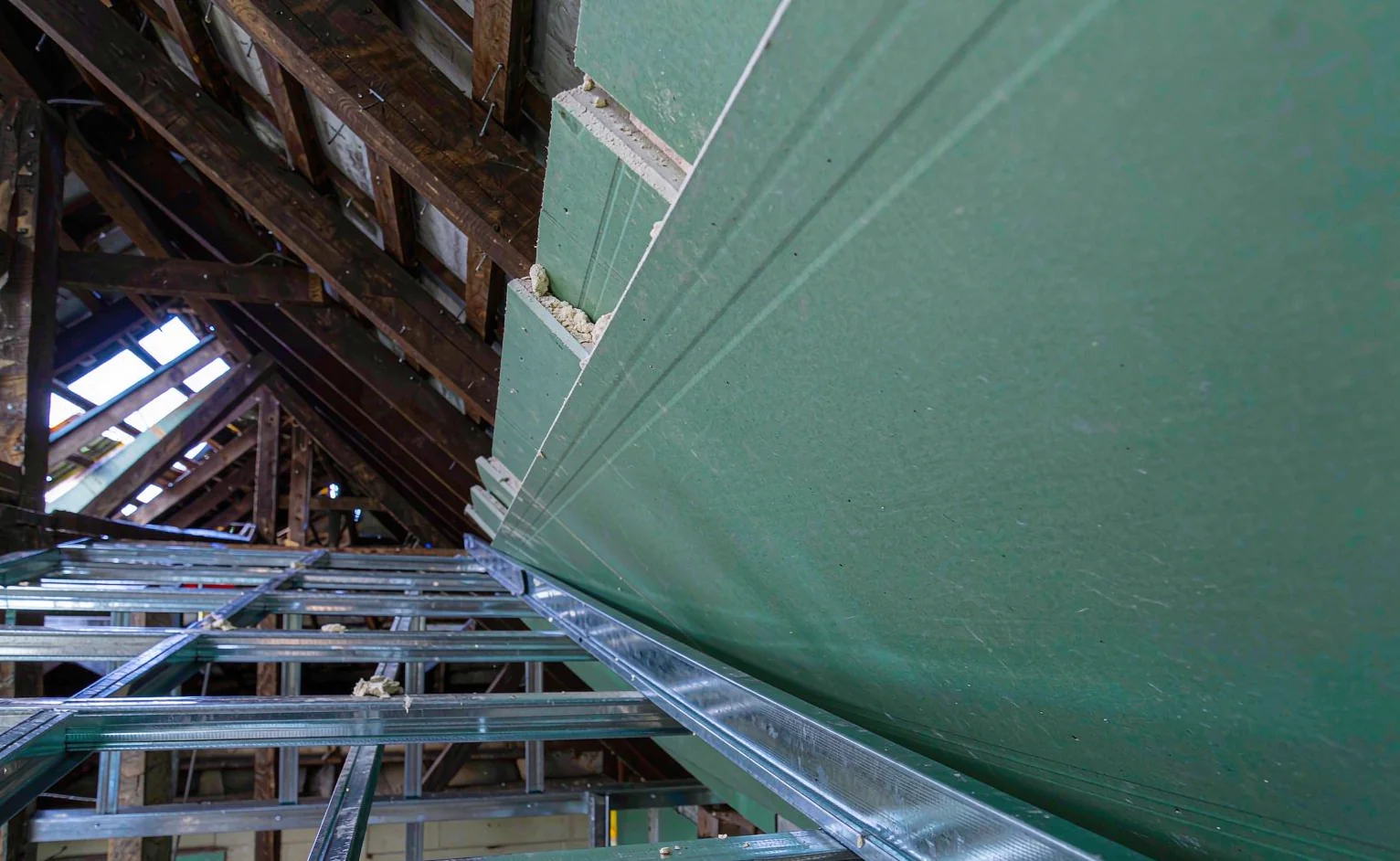
Moisture-resistant (green-core) gypsum board on a galvanised furring grid — the baseline spec for humid interiors, with 12.5 mm board and sealed edges doing the durability work.
2. The four ceiling systems compared
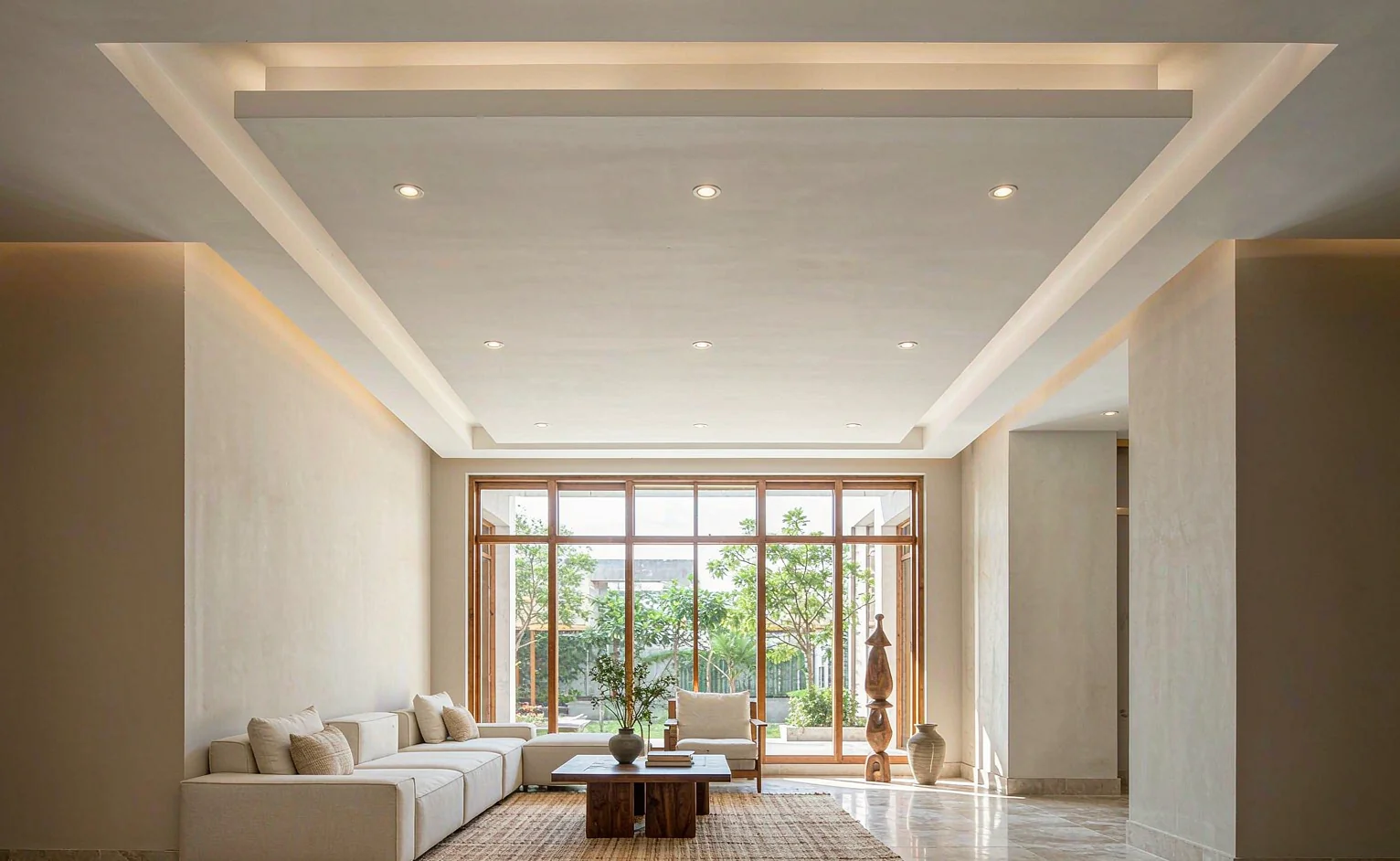
We quote four ceiling systems across East Africa and the Gulf, and the choice is decided by three numbers: service humidity, roof-void temperature and budget. Standard gypsum board at 9.5–12.5 mm gives the flattest, seamless finish and the best per-square-metre price in dry highland interiors — Addis Ababa, Nairobi, Kigali — where relative humidity stays moderate. Moisture-resistant (MR) green-core board raises the humidity ceiling for bathrooms and kitchens. Mineral fibre tile at 600 × 600 × 15 mm is the office standard: Class A fire performance, NRC 0.50–0.70 acoustics, and tolerance of up to ~95% RH with ventilation. Aluminium at 0.6–0.8 mm, formed into 600 × 600 clip-in or lay-in tiles, is the only option we trust in coastal salt air and unventilated roof voids — it cannot absorb water, so it cannot sag, and a perforated face with acoustic infill reaches NRC ~0.7 while staying washable. PVC planks at 8–10 mm are the budget wet-zone answer: fully waterproof and cheap, but they soften in a 60 °C void and carry a lower fire class, so we confine them to small rooms with ventilation — never long corridors or lobbies.
Ceiling systems for hot & humid climates — what we quote and where
System
Format / thickness
Max service RH
Fire class
Relative cost
Best for
Gypsum board (standard)
Board, 9.5 / 12.5 mm, seamless
≤70%
A2
1.0×
Dry highland interiors — Addis, Nairobi, Kigali
MR gypsum (green core)
Board, 12.5 mm, sealed edges
≤90%
A2
1.2×
Bathrooms, kitchens, humid interiors
Mineral fibre tile
600 × 600 × 15 mm lay-in
≤95% (ventilated)
A
1.4×
Offices, clinics — NRC 0.50–0.70 acoustics
Aluminium (incl. perforated)
0.6–0.8 mm, 600 × 600 clip-in
Unlimited; salt-air safe
A
2.2–2.8×
Coasts, lobbies, hot roof voids, washable zones
PVC plank
200–250 mm × 8–10 mm V-groove
100% (waterproof)
B/C
0.7×
Budget wet zones with ventilation — not lobbies
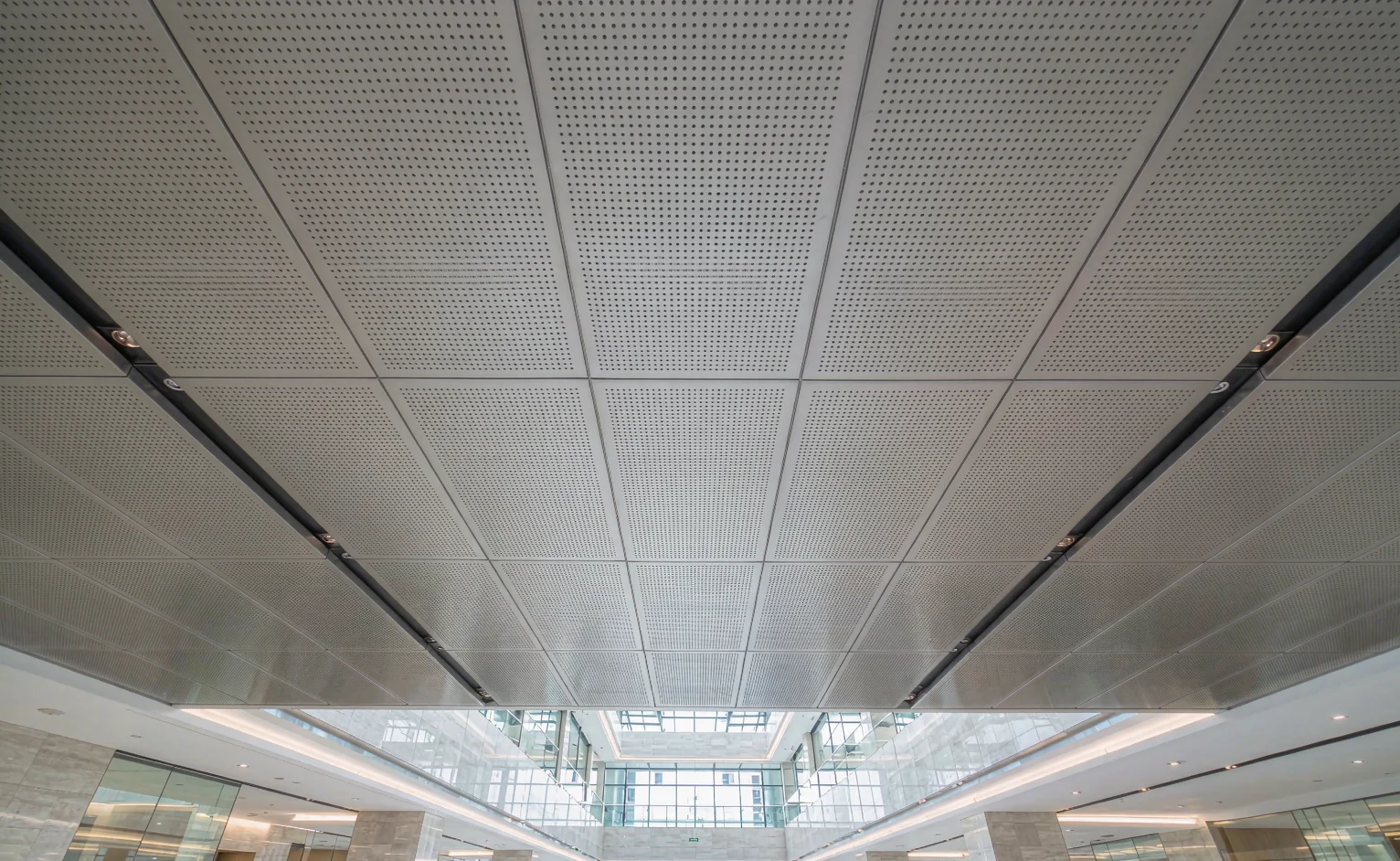
Perforated aluminium clip-in tile at 600 × 600 mm — the system an Ethiopian client specified as “aluminum perforated ceiling 600x600x0.6 m”, and the only one we trust in coastal salt air.
3. The grid details that decide the result
The board gets the blame, but most ceiling failures we are called into are grid failures. The spec we hold to in hot climates: hanger rods at no more than 1,200 mm centres, main channels at 1,200 mm, and cross-furring at 400 mm centres for gypsum (600 mm only where 12.5 mm MR board spans a dry interior); expansion joints every ~12 m so the slab and the ceiling can move separately through a 15–20 °C day-night swing; and a perimeter trim that carries the ceiling independently of the wall finish, so cracks do not telegraph into the paint. Above unventilated roof voids we add foil-faced insulation or a radiant barrier — cutting the void temperature also protects the PVC conduit and cabling run through it. And in wet zones, ventilation is a ceiling spec: an extractor sized to the room keeps the board on the dry side of its humidity limit, which is the same logic behind the bathroom packages in Specifying Sanitary Ware & Bathroom Fittings for Hot, Humid Climates. Wall finishes live under the same humidity regime — the panel options are compared in Wall Panels for Hot Climates: WPC, SPC & ACP Compared.
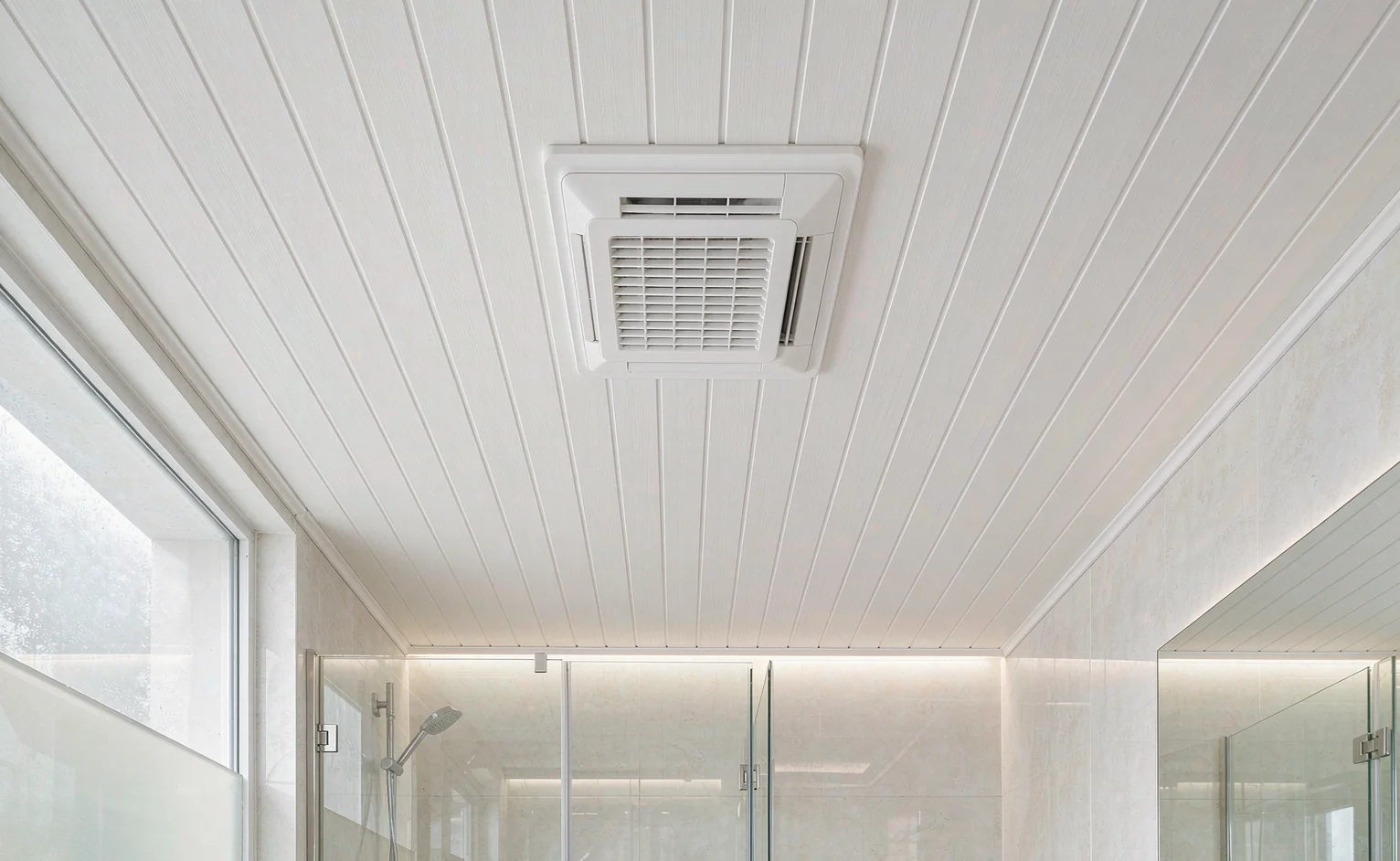
PVC V-groove planks with an extractor vent — waterproof and budget-friendly in a small wet room, but confined there: softening at 60 °C and a B/C fire class keep it out of lobbies.
4. What our enquiry file shows
Ceiling demand is a thin but sharp slice of our file: eight of 596 customer records name a ceiling explicitly, and every one maps onto the table above. A Kenyan four-bedroom enquiry lists gypsum alongside tiles, cabinets and doors — highland interior, standard board. An Ethiopian client specified “aluminum perforated ceiling 600x600x0.6 m” word for word — the clip-in system for a commercial fit-out. A Lebanese wholesaler asked for PVC ceiling boards by the container; hospital, villa and petrol-station jobs from Ethiopia and Nicaragua round out the file. Behind those quotes sits catalogue depth: 55 ceiling files across 4 sub-collections inside our 102,491-file / 74-category supplier library, quoted alongside the same client's windows, flooring and wall finishes so every ceiling arrives with one lead time. The climate logic behind these splits — highland versus coastal versus Gulf — is set out in Gulf vs East Africa: Two Material Baselines Compared and South Sudan Building Materials: Specifying for Heat & Dust.
Ceiling spec checklist for hot & humid projects
Match the board to the humidity: standard gypsum ≤70% RH, MR board ≤90%, mineral fibre ≤95% ventilated, aluminium unlimited.
Grid: hangers ≤1,200 mm, cross-furring 400 mm in gypsum, expansion joints every ~12 m, independent perimeter trim.
Coast: aluminium tile or perforated clip-in — no unprotected steel, standard gypsum only with dehumidified interiors.
Ventilate the void and the room: extractor in wet zones, radiant barrier above — heat and vapour kill ceilings faster than rain.
Planning a ceiling package?
Send us your room schedule, climate and port — Mombasa, Djibouti or a Gulf destination — and we will quote the ceiling system, grid and finishes alongside the rest of the fit-out as one schedule with one lead time.
Which ceiling material lasts longest in coastal humidity?
Powder-coated aluminium. At 0.6–0.8 mm formed into 600×600 clip-in or lay-in tiles it does not absorb moisture, cannot sag, shrugs off salt air within 5 km of the shoreline and is fully washable — the same reason we move coastal hardware to 316 stainless. Mineral fibre is the acoustic upgrade for dry interiors; standard gypsum is the one to avoid at the coast. See Specifying Aluminum Windows & Doors for Hot Climates.
Is gypsum board suitable for bathrooms in the tropics?
Only in its moisture-resistant form. Use 12.5 mm green-core MR board with sealed edges and set the grid at 400 mm cross-furring centres, or step up to PVC planks in shower zones. Standard 9.5 mm board above a tropical bathroom sags within 12–18 months because it slowly takes on moisture from the room below. See Specifying Sanitary Ware & Bathroom Fittings for Hot, Humid Climates.
What ceiling grid spacing do you specify for hot-climate projects?
Hanger rods at no more than 1,200 mm centres, main channels at 1,200 mm and cross-furring at 400 mm centres for gypsum (600 mm only for stiff 12.5 mm MR board in dry interiors), plus expansion joints every 12 m and a separate perimeter trim so the roof structure can move without cracking the ceiling. See Doors for Hot & Humid Climates: WPC, Aluminium or Steel? for the same thermal-movement logic on door frames.
What ceiling enquiries does INDECO actually receive?
Eight of our 596 customer records name a ceiling explicitly — an Ethiopian client quoting aluminium perforated ceiling 600x600x0.6 m, a Kenyan four-bedroom listing gypsum alongside tiles and cabinets, a Lebanese wholesaler asking for PVC ceiling boards, plus hospital, villa and petrol-station ceiling jobs. Our catalogue backs those quotes with 55 ceiling files across 4 sub-collections inside 102,491 catalogue files across 74 categories. See South Sudan Building Materials: Specifying for Heat & Dust.