Paints & Coatings for Hot Climates: Full Wall System
Published: October 6, 2026
A wall coating in Addis Ababa, Lagos or Riyadh fails for three different reasons: UV, humidity or heat. This guide sets out the four-layer exterior system, the elastomeric and heat-reflective upgrades we quote most, and the interior anti-mould specification — with the coverage and film-thickness numbers we actually put on quotations.
Paint is the cheapest material on a bill of quantities and the first one to fail when it is specified generically. In our client file of 596 enquiries, six markets — Ethiopia 252, Kenya 145, South Sudan 59, Rwanda 19, Saudi Arabia 16 and Uganda 12 — hold 84.4% of everything we track, and they span humid coast, 2,200-metre highland and 45°C desert in a single order book. Our product catalogue carries 102,491 files across 74 categories; the coating line alone holds 54 supplier files covering interior and exterior paint manuals, primers, topcoats, anti-crack anti-mould wall paint, heat-insulating glass coating, micro cement, washed epoxy stone and the stone-look family. This guide turns those files into a specification you can quote from — and it pairs with the panel-based facade alternative set out in Wall Panels for Hot Climates: WPC, SPC & ACP Compared.
1. What sun, humidity and salt actually do to a wall
Three climates, three failure modes. UV and thermal cycling dominate the highland and desert markets: on an Ethiopian highland site the wall surface can swing 30°C between afternoon and dawn, which opens hairline cracks in render and chalks any binder without UV-stable pigment. Humidity dominates the coastal file — our Ghanaian, Nigerian and Sierra Leonean enquiries, the markets mapped in West Africa Coastal Specs: Ghana, Nigeria & Sierra Leone, combine 80–95% relative humidity with driving rain, so the enemies are mould, alkali blush and adhesion loss on damp substrates. Salt spray adds a third failure layer within a few hundred metres of the ocean, attacking both the coating and the fasteners behind it. The practical consequence for quotation writers: never quote a paint by colour and price per litre alone. The same beige emulsion that survives in Nairobi will mould in Mombasa and chalk in Riyadh, and the client only finds out which one they bought about 18 months after handover.
2. The four-layer exterior system: primer, base, stone-look, topcoat
Every exterior package we quote is a system of four layers, specified by dry film thickness (DFT) and consumption rather than by brand talk. The build-up below is what goes onto a render or concrete substrate across our East and West African quotations; the numbers are the ones our spec sheets carry and the ones a site engineer can check on delivery.
Exterior wall coating system: four-layer build-up as specified on INDECO quotations
Layer
Product
Typical DFT / consumption
Function
1. Substrate
Render / concrete, max 10% moisture, 28-day cure
—
Adhesion depends on it; paint cannot fix a wet wall
Colour, texture, crack-bridging body of the system
4. Topcoat
Clear weatherproof / heat-reflective finish
8–10 m² per litre per coat
UV and rain shield; dust shedding; colour hold
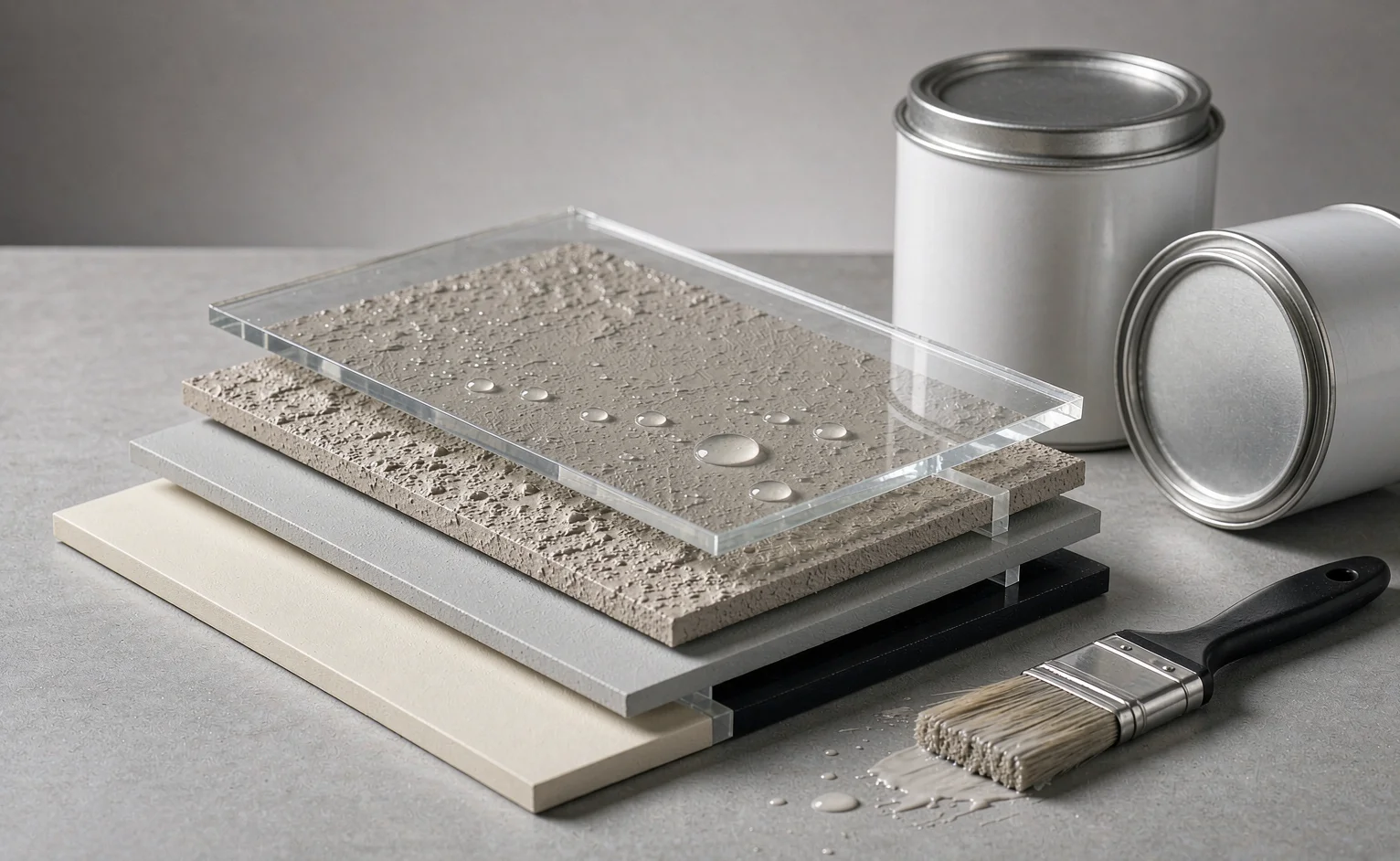
The four-layer system on a sample board: penetrating primer, textured stone-look base at 2.0–2.5 kg/m² and clear topcoat. Each layer is quoted by DFT and consumption, not by colour alone.
3. Elastomeric and heat-reflective: the two upgrades we quote most
Two upgrades account for most of the premium coatings in our file. The first is the elastomeric anti-crack mid coat: an acrylic film with elongation above 200% that bridges cracks up to 0.8 mm. On highland and desert projects where the render moves daily, this is the layer that decides whether the wall still looks new at year three, and it is why our exterior paint manual names the anti-crack anti-mould wall paint as a standard line rather than an option. The second is the heat-reflective package: a light-colour topcoat with solar reflectance of 0.80 or higher on the walls, combined with the heat-insulating glass coating from our catalogue on the glazing. In Saudi and UAE villa enquiries — the file carries 16 Saudi and 4 UAE records, and the same logic extends to the coastal heat mapped in West Africa Coastal Specs — the air-conditioning load, not the paint, is the running cost that decides satisfaction, so the reflective topcoat and glass coating are quoted together with the opening performance set out in Specifying Aluminum Windows & Doors for Hot Climates. Both upgrades are cheap against the rework they prevent: recoating a failed 300 sqm elevation costs more in scaffolding alone than the elastomeric layer cost on day one.
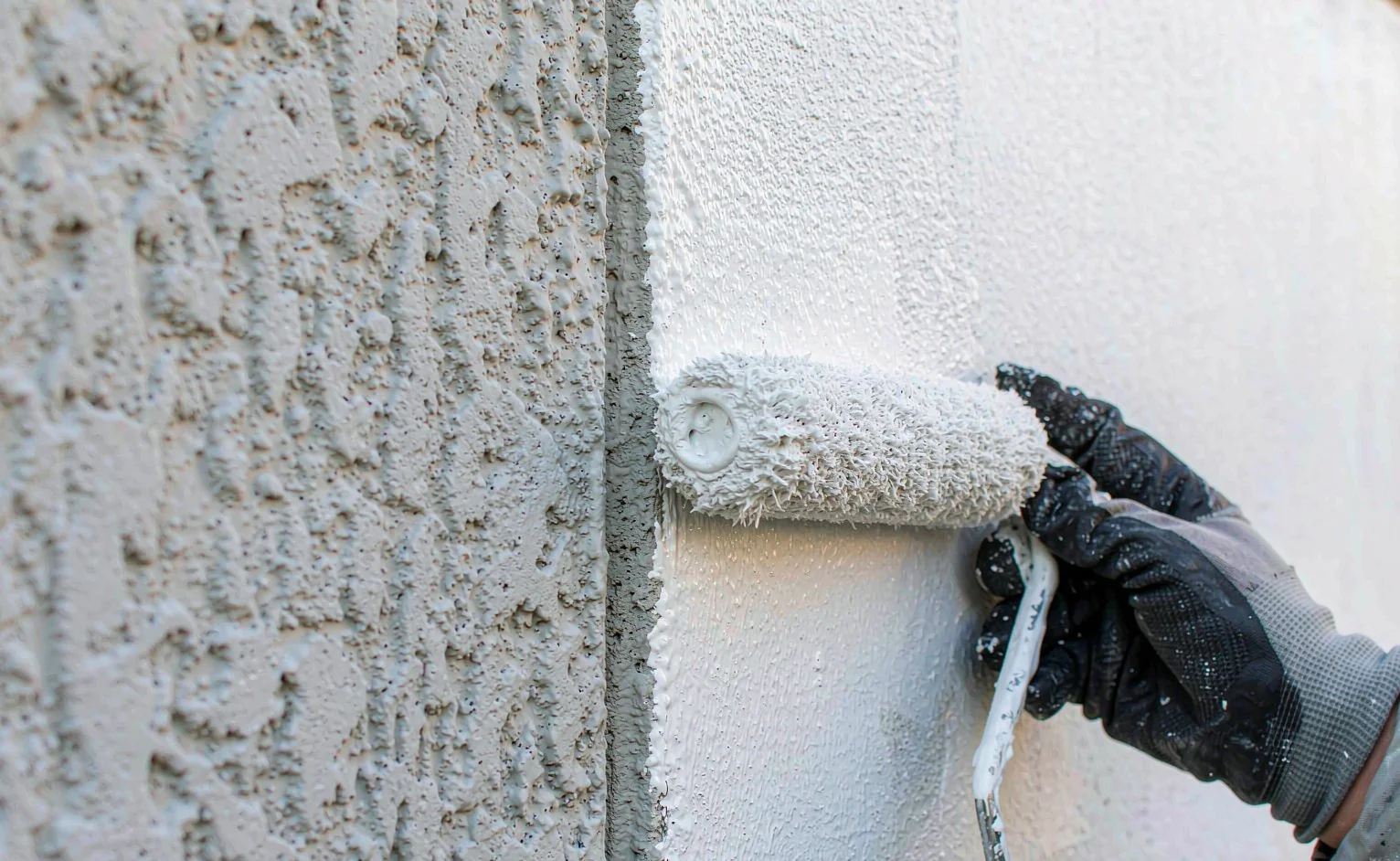
The elastomeric mid coat going on: elongation above 200% and crack-bridging to 0.8 mm make it the most quoted premium layer on highland and desert elevations.
4. Interiors: anti-mould paint, micro cement and washed epoxy stone
Interior specification follows the wet-room map. Bathrooms, kitchens and ground floors in humid markets get the anti-mould washable acrylic: mould-resistant per ASTM D3273-type testing, scrubbable past 5,000 wash cycles, VOC below 50 g/L, applied over a substrate dried below 10% moisture — the same moisture discipline we apply to the timber flooring compared in Choosing Flooring for Tropical Climates. Where the client wants a seamless mineral look, our catalogue carries micro cement at roughly 2 mm build for feature walls and wet areas, and washed epoxy stone for courtyard and podium surfaces — a decorative, free-draining finish whose construction process we document step by step for site crews. The artistic-paint line (5 kg packs) serves the hotel and penthouse projects in the file. The zone matrix below is how we compress all of this into one quotation decision per market.
Coating selection by climate zone across the six core markets (596-record file, 84.4% concentration)
Climate zone
Markets in our file
Dominant failure mode
Specified system
Humid coastal
Ghana, Nigeria, Sierra Leone, coastal Kenya
Mould, alkali blush, salt attack
Anti-mould acrylic + elastomeric + salt-tolerant primer
Highland UV
Ethiopia (Addis Ababa 2,200 m+), Rwanda
Chalking, thermal cracking
Flexible stone-look base + UV-stable reflective topcoat
Waterproof primer + anti-mould interior + washed epoxy stone outdoors
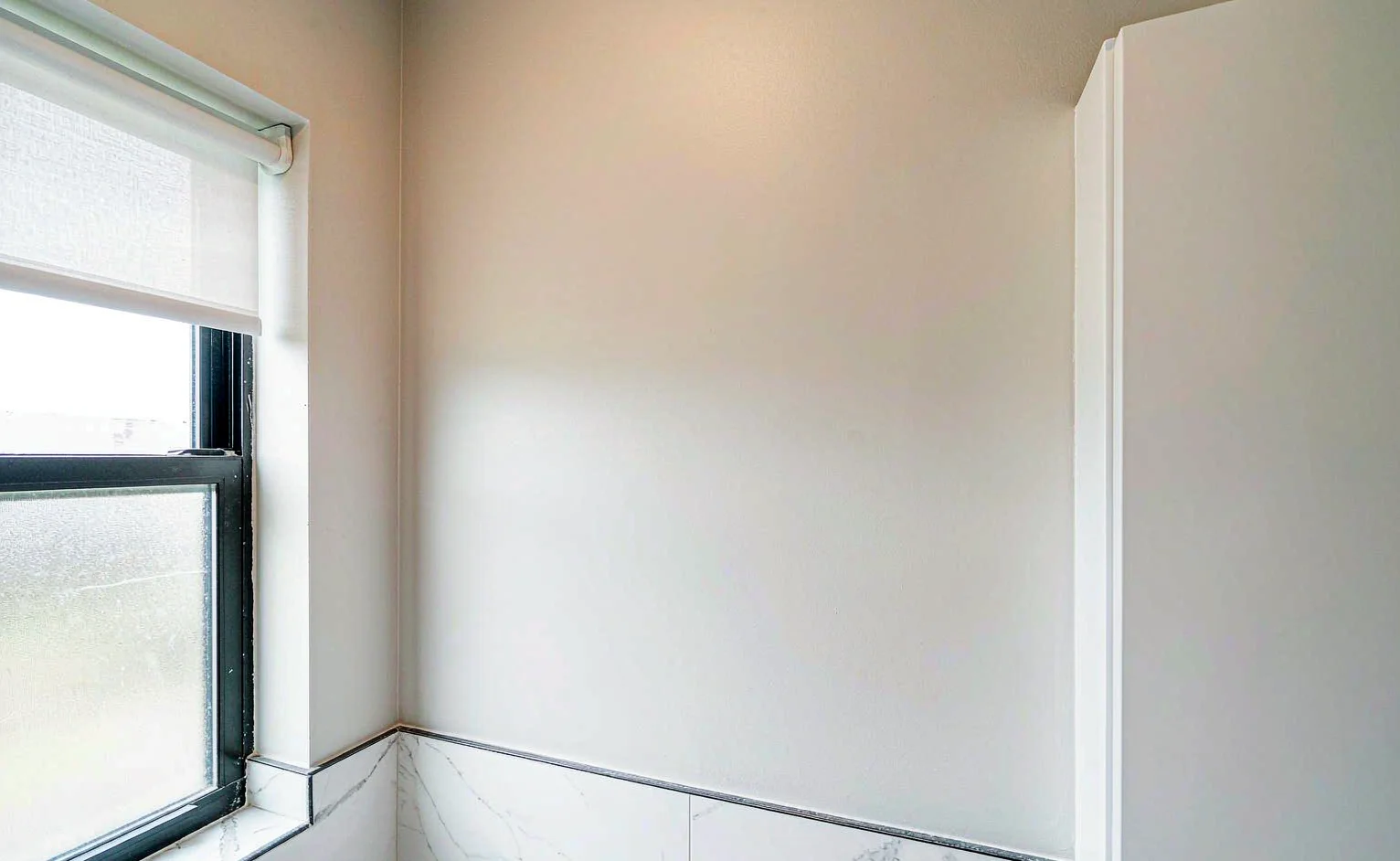
Interior wet areas get the anti-mould washable acrylic over a substrate dried below 10% moisture — the same moisture discipline that governs the timber flooring spec.The heat-insulating glass coating, quoted on Saudi and UAE villas alongside an SR≥0.80 wall topcoat: the pair attacks the AC load from both surfaces of the envelope.
How we quote a paint & coating package
Zone first: classify the site (coastal / highland / desert / landlocked) before naming a single product.
System, not tins: primer, main coat, topcoat each priced per m² with DFT and consumption on the sheet.
Substrate clause: moisture below 10% and 28-day cure written into the quotation as a handover condition.
Upgrades quoted explicitly: elastomeric crack-bridging and the heat-reflective + glass-coating pair, with their premiums separated.
Pack for the port: stone-look base in kg, liquids in litres, packed to survive one consolidated container leg.
Quoting a project in Africa or the Gulf?
Send us the elevation areas and the site location — city or coordinates are enough. You will get a coating package specified by climate zone, with primer, base and topcoat priced per square metre and packed for the port you ship to.
What is the best exterior paint system for hot, humid climates?
A four-layer system, not a single coat. In humid coastal zones such as Ghana, Sierra Leone and coastal Kenya, our coating file specifies an alkali-resistant penetrating primer, an anti-crack anti-mould acrylic mid coat, a stone-look or textured base at 2.0-2.5 kg/m2, and a clear weatherproof topcoat. The primer is the layer that decides the system's life: applied to a substrate below 10% moisture, it stops the alkali blush and adhesion loss that peel single-coat paint within two rainy seasons. The humidity-driven alternative of wall panels is compared in Wall Panels for Hot Climates: WPC, SPC & ACP Compared.
How do you stop exterior paint from cracking under strong sun?
Use an elastomeric mid coat and accept that movement must be absorbed by the film. On highland projects such as Addis Ababa at 2,200 m, daily wall-surface swings of 30 degrees C open hairline cracks that rigid paint cannot bridge. An elastomeric acrylic with elongation above 200% bridges cracks up to 0.8 mm and is the single most quoted upgrade in our exterior enquiries. Where the facade is stone rather than paint, the same movement logic applies to joints, as set out in Natural Stone for Hot Climates: Marble & Granite Guide.
Which coatings reduce indoor heat in Gulf and desert projects?
Two products work together. A light-colour topcoat with solar reflectance of 0.80 or higher cuts the heat the wall absorbs at all, and a heat-insulating glass coating applied to glazing cuts what comes through the openings; we quote it on Saudi and UAE villa enquiries where air-conditioning loads dominate the running cost. Shading and opening performance interact with the coating choice, which is why we specify them alongside the aluminum ranges described in Specifying Aluminum Windows & Doors for Hot Climates.
How much paint do I need per square metre?
Plan by layer, not per tin. Our spec sheets carry roughly 10-12 m2 per litre for the primer, 8-10 m2 per litre per coat for acrylic emulsions, and 2.0-2.5 kg/m2 for textured stone-look paint, which is applied in two passes. For a 300 sqm villa elevation that works out to about 25-30 litres of primer, 60-75 litres of topcoat and 700-750 kg of stone-look base, which is how we pack and ship it by container. Landlocked delivery planning for Uganda and Rwanda is covered in Rwanda & Uganda: Materials for Landlocked Projects.