Whole-House Material Packages: What 63 Enquiries Ask For
Published: October 7, 2026
One buyer, one order, one house. Inside our 596-enquiry file, 63 clients skip single products entirely and ask for the whole building — tiles to curtains. This is what they order, how it ships, and where they live.
Most building-material enquiries name one product: a tile, a window, a roof. But 63 of the 596 records in our enquiry book — 10.6 percent — ask for a whole house in a single breath: “whole house”, “whole house materials”, “whole house design”. Our catalogue behind them holds 102,491 files across 74 categories, from the 1,422-file tile library to the 22,304-file furniture archive, and the whole-house buyer is the one who needs all of it at once. Who these buyers are, what a package actually contains, and how a house worth of materials travels from a Chinese warehouse to an East African site is the subject of this analysis — a companion to Who Specifies Materials in East Africa: 596 Enquiries.
1. What “whole house” means in our file
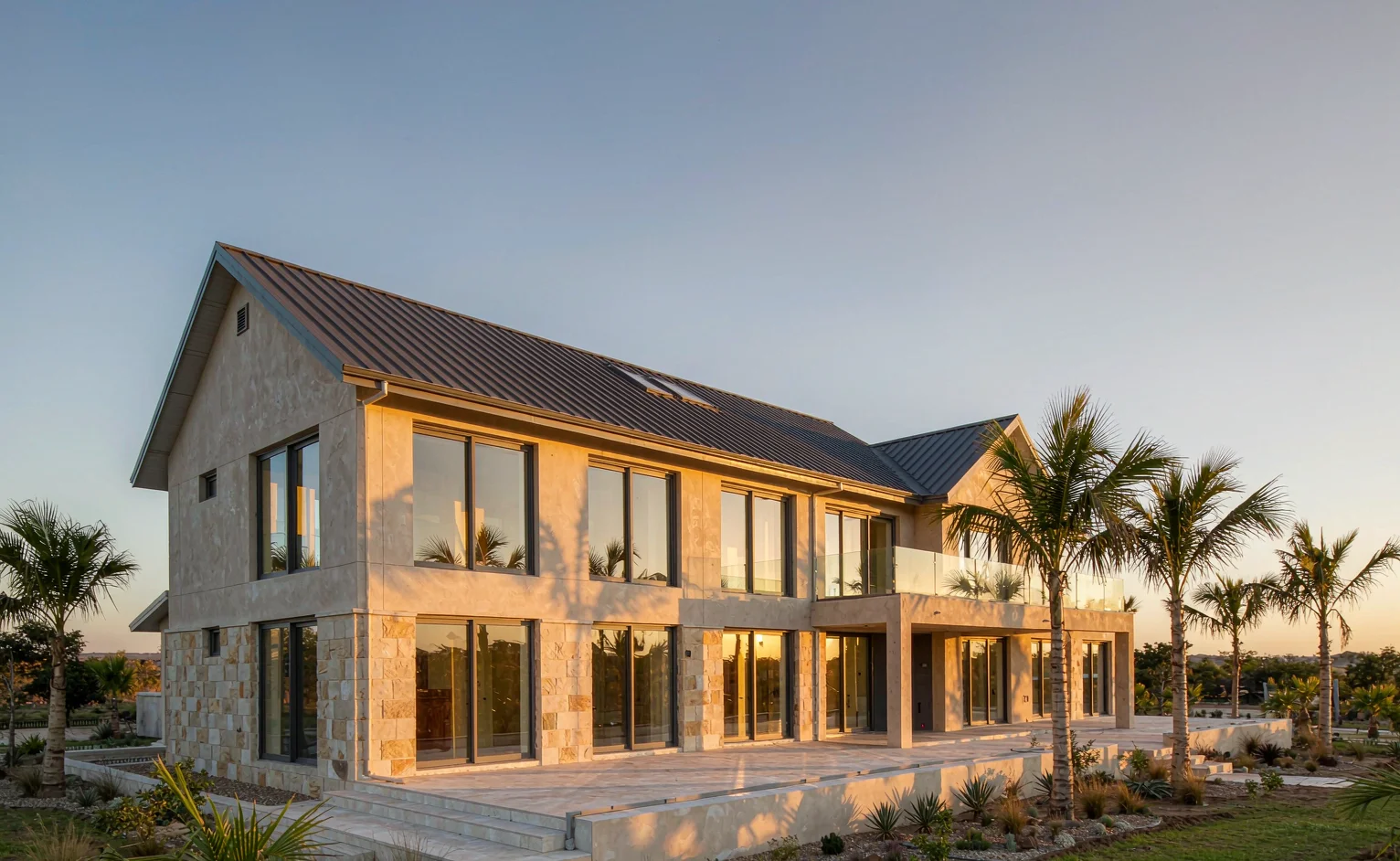
The 63 whole-house enquiries split cleanly by building type: 22 villas, 18 home fit-outs, 12 apartments and 11 others (a school, a hotel, a 350 m² home and a G+5 private house among them). The demand is overwhelmingly residential and owner-driven — these are people building or finishing their own property, not reselling. Two thirds of the segment is villa-led, which tracks the wider file: 106 villa enquiries and 86 home fit-outs make residential the backbone of our business, as profiled in Kenya Building Materials: What 150 Home Enquiries Ask For.
Channel matters too: 48 of the 63 — 76 percent — came through Facebook, with referrals contributing most of the rest. The whole-house buyer rarely starts with a specification; they start with a photo of a finished house and a question. And the segment is growing: 19 of the 63 arrived in 2025 and 8 more in the first months of 2026.
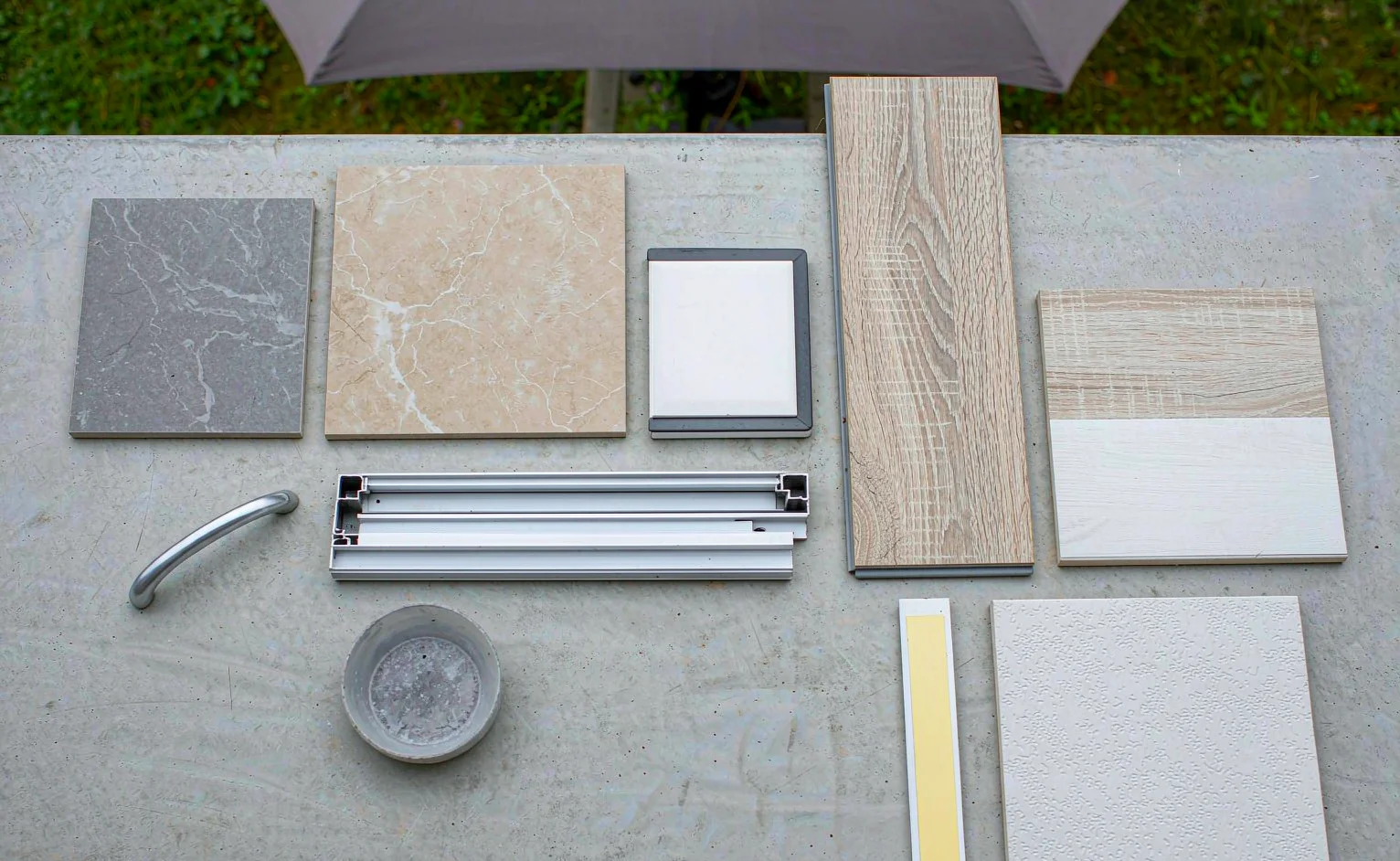
A whole-house order starts as one sample board: tiles, flooring, aluminium profiles, cabinet doors, paints and trims quoted as a single schedule instead of fourteen separate purchases.
2. The package: 14 categories under one order
When we unpack “whole house” into a quotation, it lands as 14 product groups. Each is a category we hold in depth — not a marketplace drop-ship. The table below shows the package alongside the catalogue depth backing each line, which is the single biggest credibility question a whole-house buyer asks.
The 14-category whole-house package and the catalogue depth behind it
Package group
Catalogue files on record
What the whole-house buyer orders
Porcelain & ceramic tiles
1,422
Floor and wall tiles for living areas, wet rooms and terraces
Wood / SPC flooring
790
Bedroom and upper-floor planking
Aluminium windows & doors
421
Sliding systems, casements, balcony doors
Kitchen & wardrobe cabinets
408
Fitted kitchen runs, bedroom wardrobes
Sanitary ware
148
WCs, basins, shower sets, mixers
Internal & entrance doors
72
Bedroom doors, security entrance door
Ceiling systems
55
Gypsum and PVC ceiling with cornice
Wall panels
878
TV feature wall, bedroom accents
Lighting & switches
716
Downlights, chandeliers, switch sockets
Stair parts
4,134
Balustrade, handrail and tread finishes for duplexes
Furniture
22,304
Sofas, beds, dining sets — the move-in layer
Soft decor
2,730
Curtains, rugs, bedding accents
Ironmongery
21
Handles, locks, hinges per door leaf
Skirting & trims
7
Skirting line, edge trims to close every junction
Two groups are ordered late but chosen first. Kitchen and wardrobe cabinets are dimension-critical: they are manufactured against site measurements, so the buyer confirms tile thickness and wall squareness before cabinet production starts — the interface is set out in Kitchen & Cabinetry Materials Compared. And sanitary ware is the group most often re-ordered when specified casually, because hot, humid bathrooms punish the wrong glaze and fittings, as documented in Specifying Sanitary Ware & Bathroom Fittings for Hot, Humid Climates.
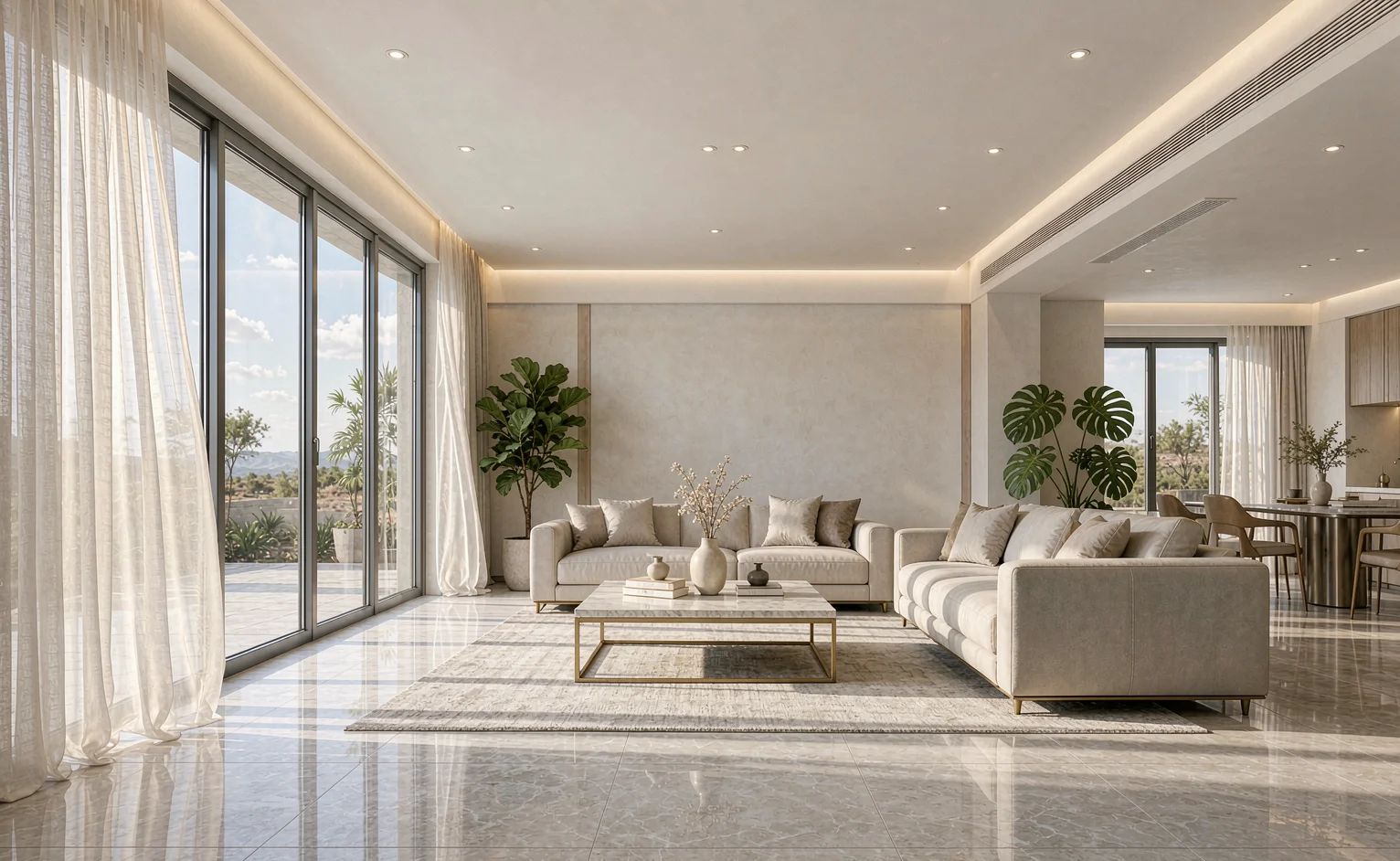
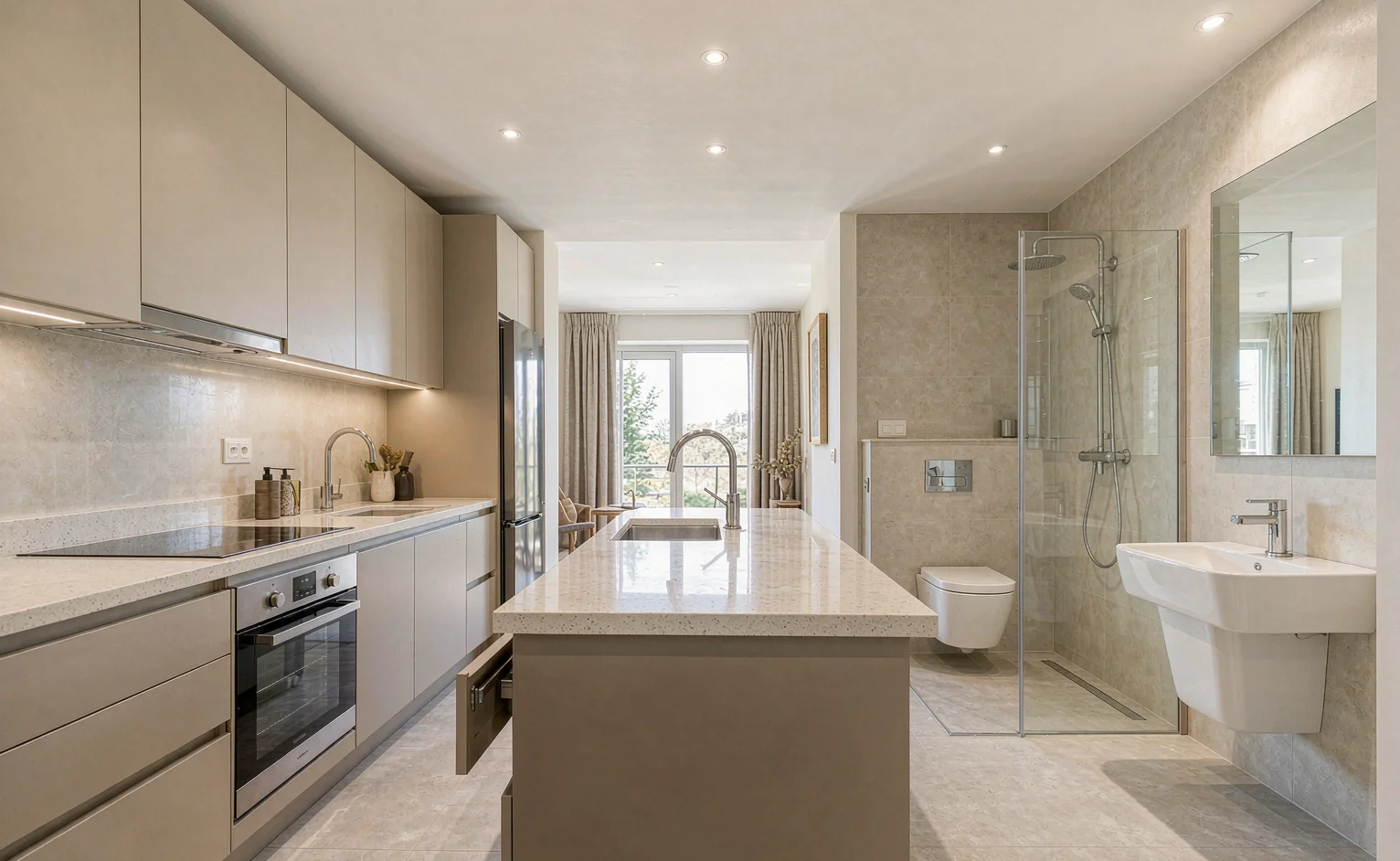
The finished result: tiles, windows, ceiling, lighting, furniture and soft decor arriving from one order instead of fourteen suppliers — the whole-house promise, delivered.
3. How a house travels: container logic and phasing
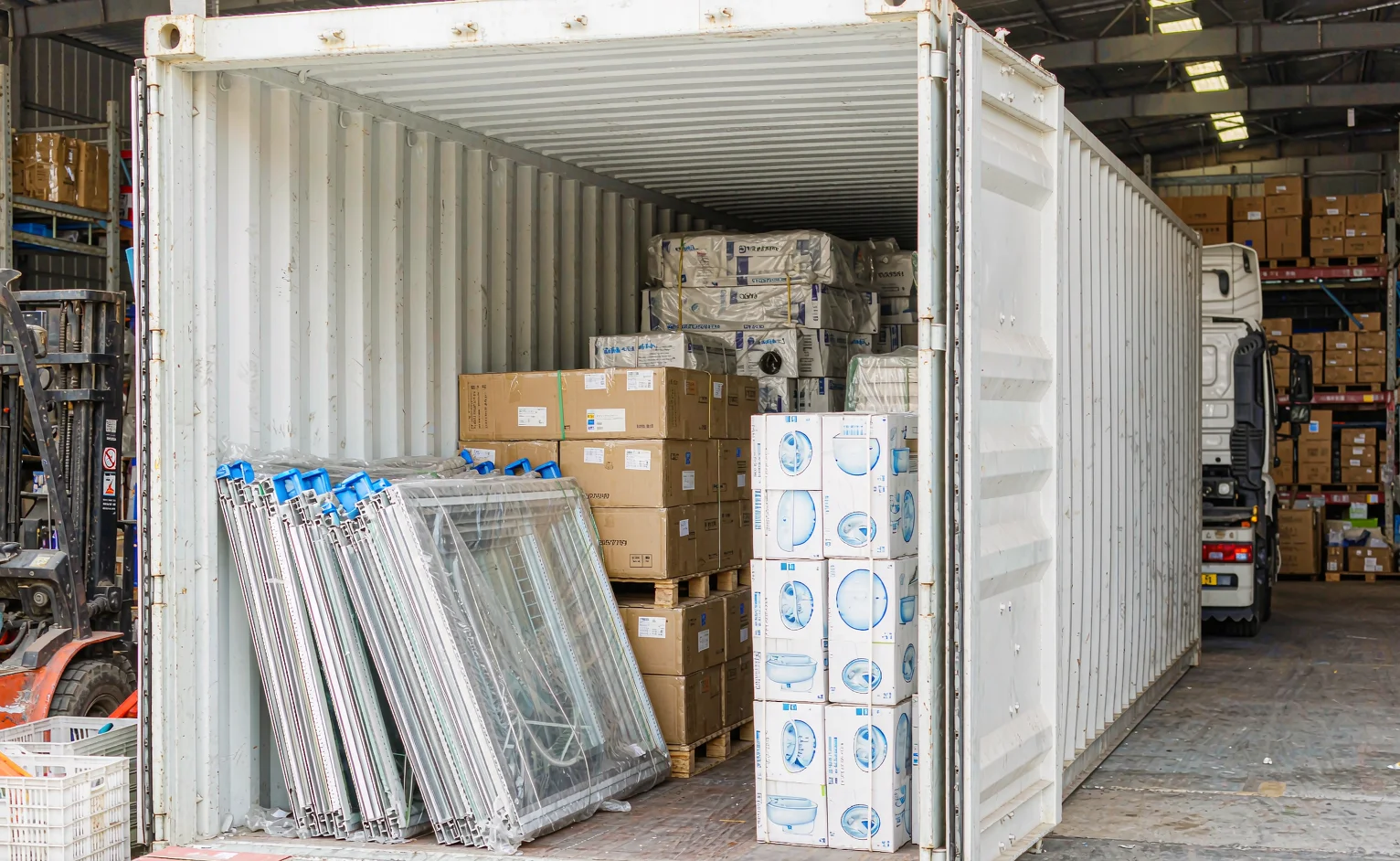
A whole-house package is a logistics product as much as a materials product. A 300–600 sqm villa typically ships in two to three 40ft high-cube containers, and the loading plan is decided by physics, not preference. Tiles and stone are dense and eat the weight allowance first, so they lead container one. Sanitary ware and doors ship boxed and mid-container. Cabinets, wall panels and furniture are light but bulky and crush-sensitive, so they load last and come out first. Get this sequence wrong and the kitchen arrives months after the walls that must receive it.
Phasing protects the buyer twice. Phase one is the shell: tiles, windows, doors, ceiling and electrical roughing-in, shipped while the site is still under construction. Phase two is the fit-out: cabinets, sanitary ware, lighting, panels and furniture, ordered once the shell is closed and dimensions are verified on site — the same measure-twice discipline we apply when Installing Cabinetry, Wardrobes & Metal Screens. Phasing also spreads duty payments and cash flow across the build instead of front-loading the entire project into one invoice.
Container one going in: tile cartons at the floor, boxed sanitary ware stacked, aluminium window frames braced upright — a whole house compressed into 76 cubic metres of high-cube steel.
4. Where the whole-house buyer sits
Geography is the clearest signal in the segment. Ethiopia owns it: 29 of the 63 whole-house enquiries — 46 percent — sit inside the Ethiopian file of 247 records, concentrated in villa and apartment projects around Addis Ababa. Kenya follows with 9, South Sudan with 6, Rwanda with 5 and Ghana with 3, with single enquiries from Iraq, Saudi Arabia, the US and Peru showing the pattern travels. The Ethiopian concentration matches what we saw in What 200+ East African Project Enquiries Reveal About Material Specification: the market with the deepest relationship sends the broadest briefs, because whole-house buying is a trust decision before it is a price decision.
Whole-house enquiries by market, within the 596-record file
Market
Whole-house enquiries
Total records on file
Dominant project type
Ethiopia
29 (46% of segment)
247
Villa and apartment, owner-led
Kenya
9
141
Home fit-out
South Sudan
6
59
Villa, full-design briefs
Rwanda
5
19
Villa and apartment
Ghana
3
8
Coastal residential
Others (Iraq, Saudi, US, Peru)
5
—
Villa, apartment, one school
The fit-out phase on site: cabinets, worktops, sanitary ware and tiled wet rooms arriving in phase two, once the shell is closed and site dimensions are verified.
The whole-house enquiry checklist we run before quoting
Confirm the building: floor area, storeys, and whether the roof and structure are already on site.
Fix the shell list first: tiles, windows, doors, ceiling, electrical — the items that cannot change later.
Hold dimension-critical items: kitchen, wardrobes and stair parts wait for verified site measurements.
Plan containers by weight and fragility, not by product family.
Agree the phasing and payment schedule per container, so cash flow follows the build.
Quoting a whole house, not a single product?
Send us the floor area, the city and the building type — a plan sketch is enough to start. You will get the 14-group package priced as one schedule, a phased container plan that follows your build, and one point of contact from tiles to curtains.
In our file it means 14 product groups quoted as one order: porcelain tiles, wood and SPC flooring, aluminium windows, internal and entrance doors, kitchen and wardrobe cabinets, sanitary ware, ceiling systems, wall panels, lighting and switches, stair balustrade, ironmongery, skirting and trims, furniture and soft decor. Our catalogue holds 102,491 files across 74 categories, so every group is specified from a real product line rather than a generic promise. The wet-area groups are covered in detail in Specifying Sanitary Ware & Bathroom Fittings for Hot, Humid Climates.
How many containers does a whole-house order need?
A 300 to 600 sqm villa typically ships in two to three 40ft high-cube containers, phased shell first and fit-out second. Tiles and stone are dense and consume the weight allowance early, so they lead the first container; sanitary ware and doors ship boxed mid-container; cabinets, wall panels and furniture are light but bulky and crush-sensitive, so they load last. Loading order is planned per container, not per product, or the heavy goods arrive months after the fittings that need them.
Which markets ask for whole-house packages most?
Ethiopia leads by a wide margin: 29 of our 63 whole-house enquiries, 46 percent of the segment, sit in the Ethiopian file of 247 records. Kenya follows with 9, South Sudan with 6, Rwanda with 5 and Ghana with 3, plus single enquiries from Iraq, Saudi Arabia, the US and Peru. Two thirds of the whole-house buyers are villa owners, which matches the villa-led demand pattern described in What 200+ East African Project Enquiries Reveal About Material Specification.
Can a whole-house package be ordered and delivered in phases?
Yes, and most of our clients do exactly that. Phase one is the building shell: tiles, windows, doors, ceiling and electrical roughing-in. Phase two is the fit-out: kitchen and wardrobe cabinets, sanitary ware, lighting, wall panels and furniture, shipped once the site is closed and dimensions are confirmed on site. Phasing protects the client from paying duty twice on damaged goods and lets cabinet dimensions be verified against the built shell, the same sequence we follow when Installing Cabinetry, Wardrobes & Metal Screens.