Turnkey Interior Design: One Contract From Brief to Handover
Published: October 24, 2026
What a single-contract interior package covers, how the money splits, and the checks that keep week fourteen quiet.
Most interior projects in Africa and the Gulf do not fail on taste. They fail at the interfaces: the designer blames the supplier, the supplier blames the installer, and the owner pays for the same gap three times. Turnkey interior design removes that gap by placing concept, documentation, material supply, freight, installation and snagging under one contract with one accountable party. We have run this model on villas, resorts and offices from Nairobi to Muscat, and the pattern holds. A single scope document agreed in week one kills most of the variations that would otherwise surface in month three. For the material thinking behind these packages, start with our interior design ideas for warm climates.
What Turnkey Interior Design Actually Covers
A turnkey contract is not a design contract with delivery bolted on. It is a delivery contract with design inside it, and the difference shows up in the scope document. We list every room, finish, fitting and fixing, then price the lot as one package with a unit rate attached to each line. Six blocks belong in it: concept drawings and renders, a room-by-room finish schedule, a BOQ priced by unit rate, factory production slots, freight and customs clearance, and installation with site supervision. Anything missing in week one returns as a variation in month three, and variations eat margin on both sides of the table. On a 480 m² villa in Dar es Salaam the final schedule ran to 214 line items across 11 rooms. Seventeen of those were locked in the first week, and those seventeen drove the other 197. The client-side version of the same boundary sits in our interior design company checklist, which sets out what to fix before you sign anything.
One BOQ, One Price, One Accountable Party
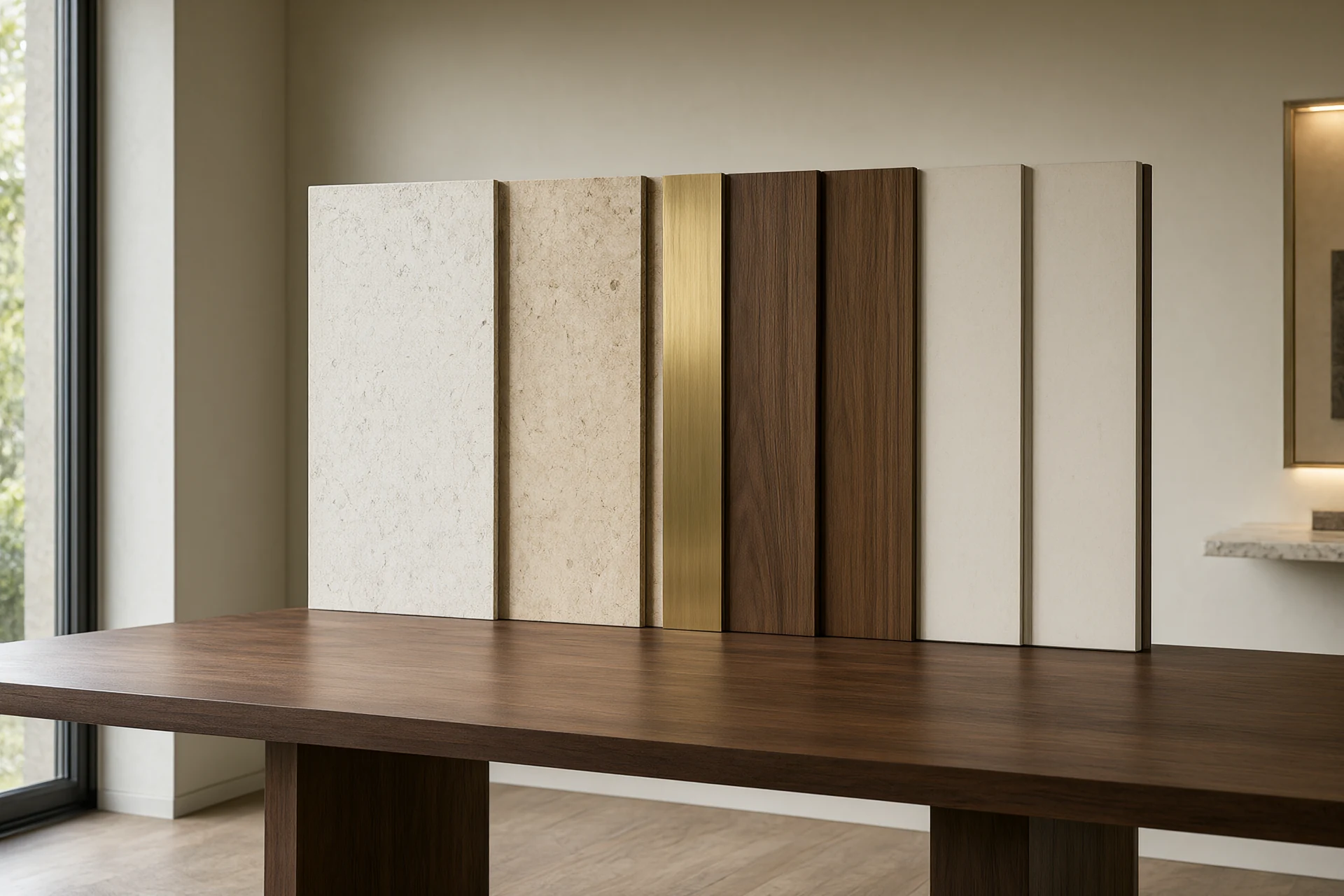
Splitting a job across four contractors looks cheaper on paper and rarely is. Each party prices its own risk, then prices the other three parties on top of it. A single BOQ does the opposite. Unit rates stay visible, so changing 60 m² of travertine is repriced in minutes instead of reopening a negotiation. In our packages materials carry 55 to 65 percent of contract value, installation 15 to 20 percent, freight and customs 10 to 15 percent, and documentation the remaining 8 to 12 percent. We hold a fixed price for 30 days and put the currency, the payment schedule and the named delivery term on page one, because a quotation without a delivery term is incomplete no matter how detailed the finishes are. The volume logic behind those percentages is unpacked in our whole-house material packages breakdown.
| Stage | Share of contract value | Typical duration | Who carries the risk |
|---|---|---|---|
| Design and documentation | 8 to 12 percent | 3 weeks | Designer |
| Material supply and packing | 55 to 65 percent | 4 weeks production | Supplier |
| Freight, customs and haulage | 10 to 15 percent | 30 to 45 days | Set by the delivery term |
| Installation and supervision | 15 to 20 percent | 5 weeks | Installer |
| Snagging and 12-month check | Included (3 percent retention) | 1 week plus 12 months | Single contractor |
Sequencing: The Install Calendar Behind a Turnkey Job
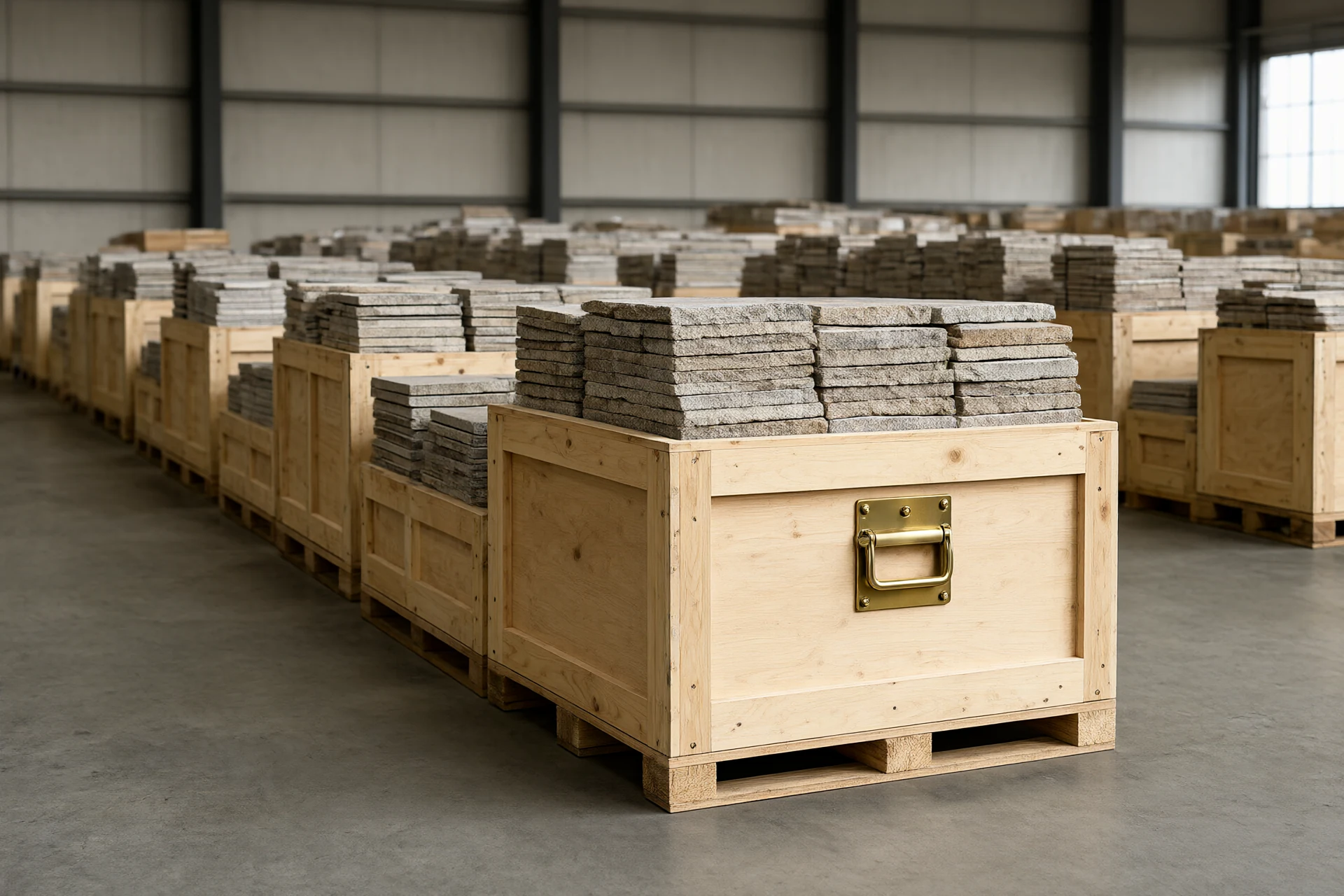
Fourteen weeks is realistic for a villa of 480 m²: three weeks of documentation, four weeks of factory production, 30 to 45 days of sea freight to Mombasa or Dar es Salaam, five weeks of installation and one week of snagging. Those weeks overlap on purpose. Long-lead items such as bookmatched stone slabs, brass sections and bespoke joinery enter production in week one while the site finishes waterproofing, screeds and MEP first fix. Joinery lands only after wet trades are signed off, since a walnut panel fitted against a damp wall is a claim waiting to happen. Stone is templated after the screed is dry, never before. Timber arrives at 8 to 10 percent moisture content and acclimatises on site for 72 hours. On commercial fit-outs, public-zone finishes also have to meet ASTM fire and smoke ratings, which is a week-one documentation task rather than a week-ten site conversation.
Handover, Snagging and the 12-Month Check
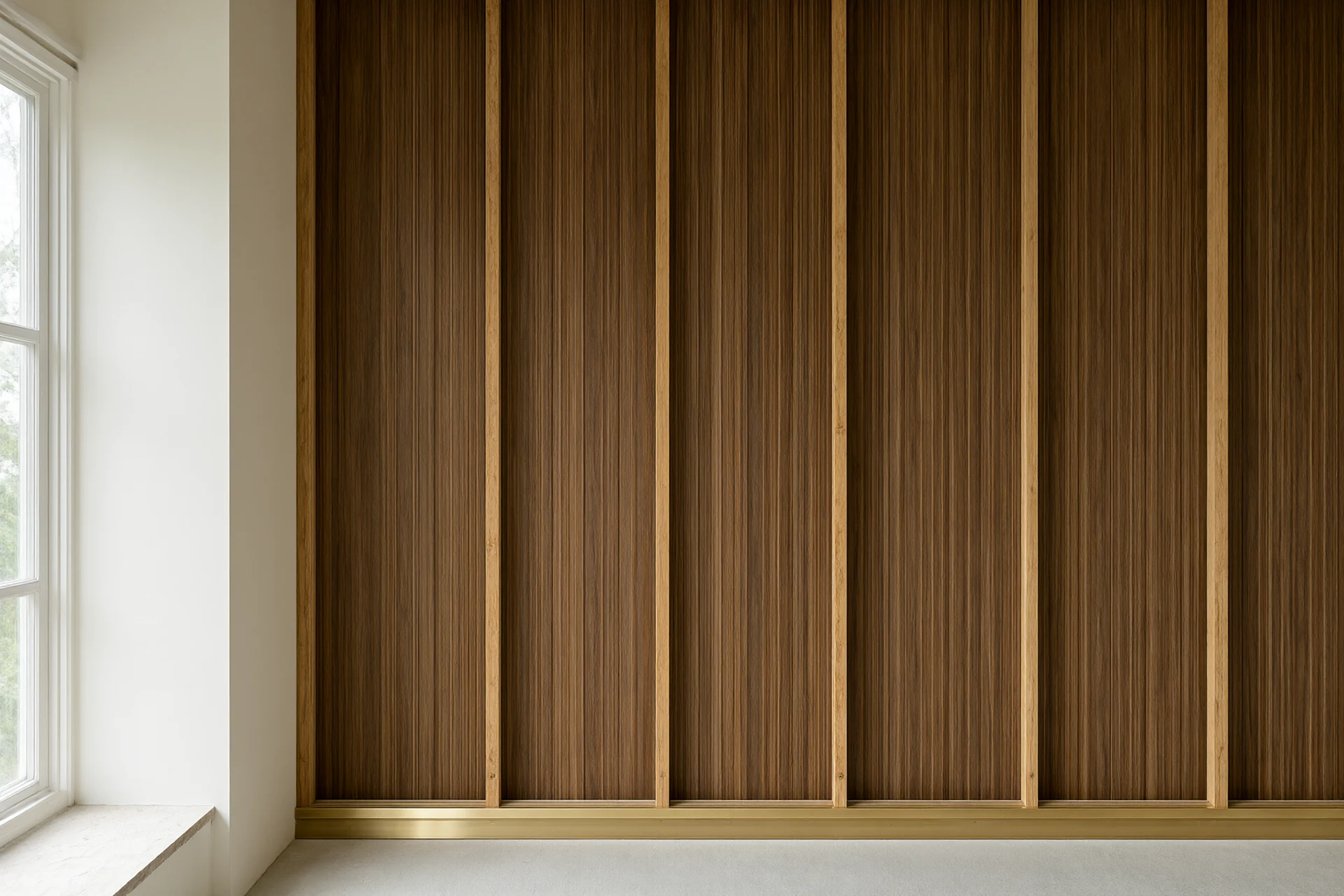
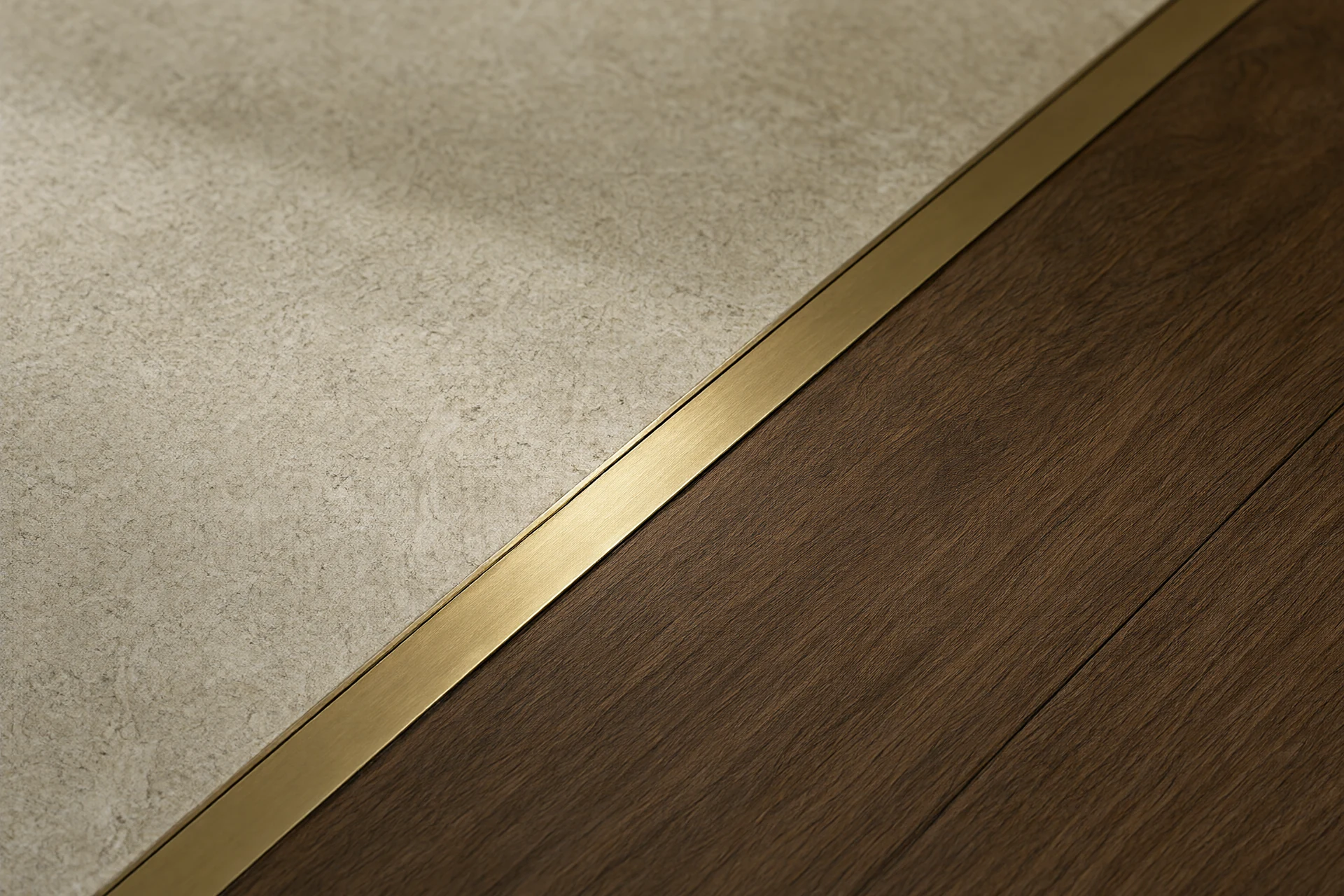
Handover is a process, not a day. We walk the site with the client and write the snag list together, then close it within 10 working days. Anything agreed verbally and without a photograph tends to return as a dispute. Three percent of contract value stays as retention until the 12-month visit, and that visit is where the real check happens: movement joints that have opened, silicone that has yellowed under UV, brass that has lost its lacquer, stone that needs resealing. Heat and humidity accelerate all four, which is why the return visit matters more in Mombasa than in Munich. The pack we leave behind holds the finish schedule, 2 to 3 percent spare tile and stone from the same batch, and a short list of cleaning agents that will not etch the surfaces.
Climate-Proofing a Turnkey Package for Africa and the Gulf
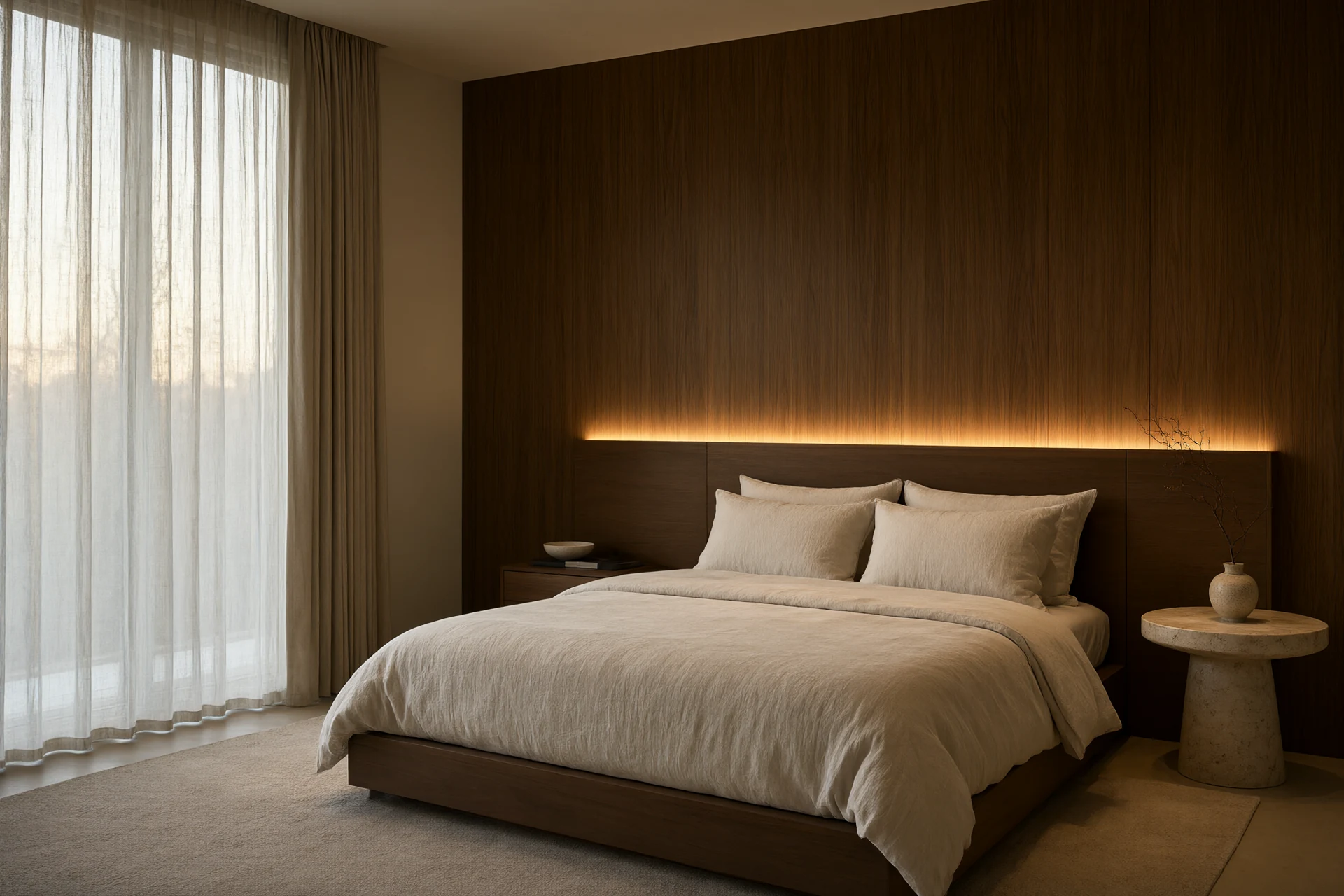
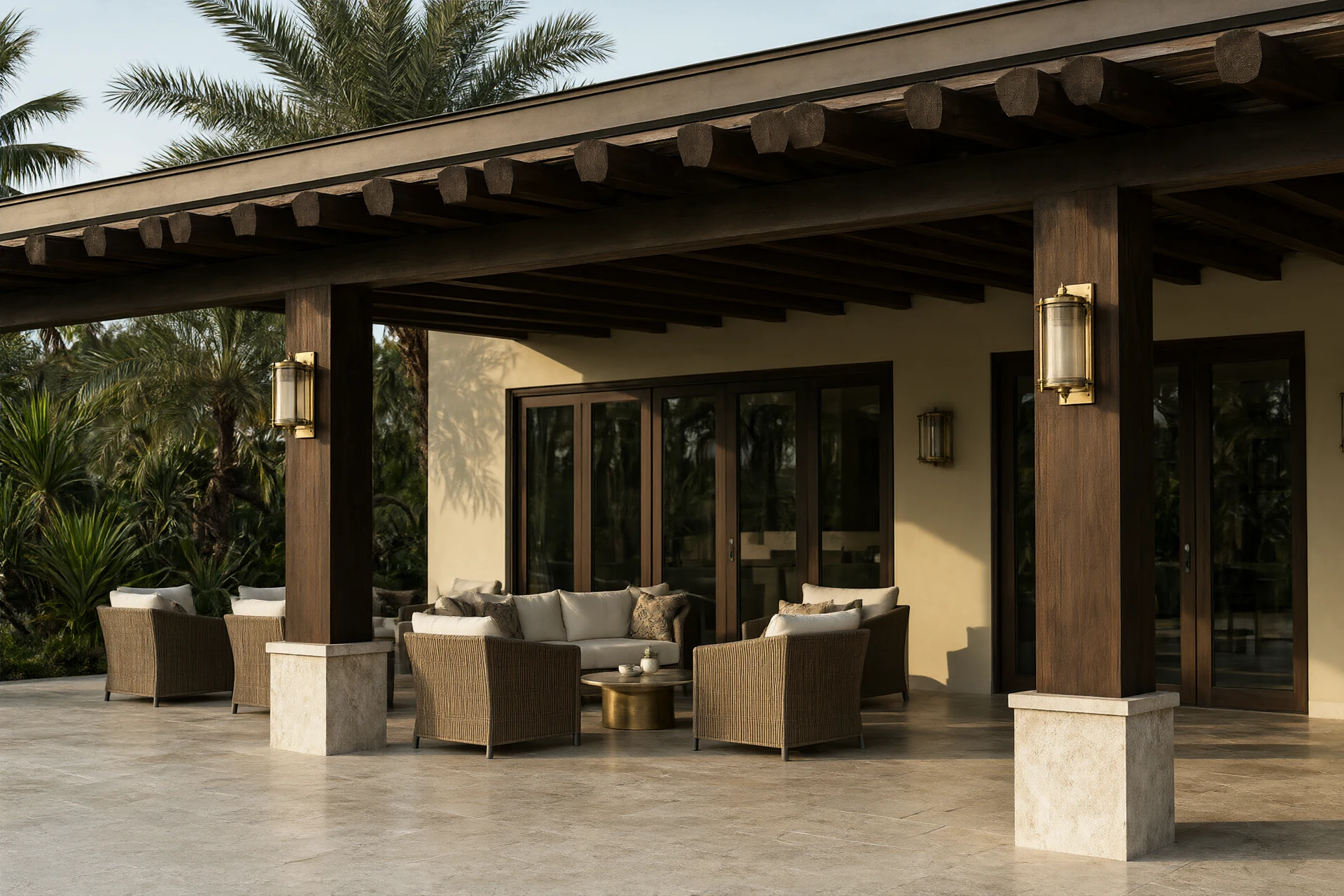
Single-contractor delivery earns its keep most in hot climates, because climate failures appear at the junctions rather than inside the materials. A stone floor can be flawless and still tent up when the expansion joint was drawn by another party. We hold water absorption below 0.5 percent on every tiled and stone surface, use UV-stable lacquer on timber, specify brushed brass instead of polished for coastal air, and pair low-SHGC glazing with external shading where cooling loads run high. A 40-foot high-cube container carries roughly 26 tonnes, so packing order follows installation order: adhesives and screeds first, joinery last. Desiccant and a vapour barrier go in as standard on any sailing longer than 20 days. The same palette logic drives our modern interior design specifications for homes in these markets.
- Scope document lists every room, finish and fitting, priced by unit rate.
- Currency, payment schedule and delivery term appear on page one.
- Long-lead items enter production in week one, not week six.
- Joinery lands only after wet trades are signed off.
- The snag list is written with you and closed within 10 working days.
- Three percent retention is held until the 12-month return visit.
Planning a turnkey project?
Send us the floor plans, room schedule and target handover date. We return an itemized BOQ with finish options, factory slots, a freight estimate and an install programme, usually within one working day. For the room-by-room version of the same scope, read our residential interior design checklist.
Request a Turnkey BOQ →Frequently asked questions
What does turnkey interior design include?
Concept drawings and renders, a room-by-room finish schedule, a BOQ priced by unit rate, factory production slots, freight and customs clearance, installation with site supervision, a written snag list and a 12-month return visit. Our residential interior design checklist breaks the same scope down room by room.
How long does a turnkey interior package take?
Plan 14 weeks for a villa of about 480 square metres: three weeks of documentation, four weeks of factory production, 30 to 45 days of sea freight to Mombasa or Dar es Salaam, five weeks of installation and one week of snagging.
Is turnkey interior design cheaper than hiring separate contractors?
The headline price runs 6 to 10 percent higher because one party carries the interface risk. The final price usually lands lower, since variations, re-ordering and idle site time are priced into one contract instead of arriving as extras. Our interior design company checklist shows what to lock before you sign.
What should be in a turnkey handover pack?
A signed snag list with a 10-working-day close-out date, the room-by-room finish schedule, 2 to 3 percent spare tile and stone from the same batch, a list of cleaning agents that will not etch stone, and a scheduled 12-month return visit. Our modern interior design guide covers the finishes most often listed.