Interior Decoration Ideas: The Finishing Layer That Survives Heat
Published: October 26, 2026
Fabric rub counts, three lighting circuits, brass that resists salt air, and where the money goes room by room.
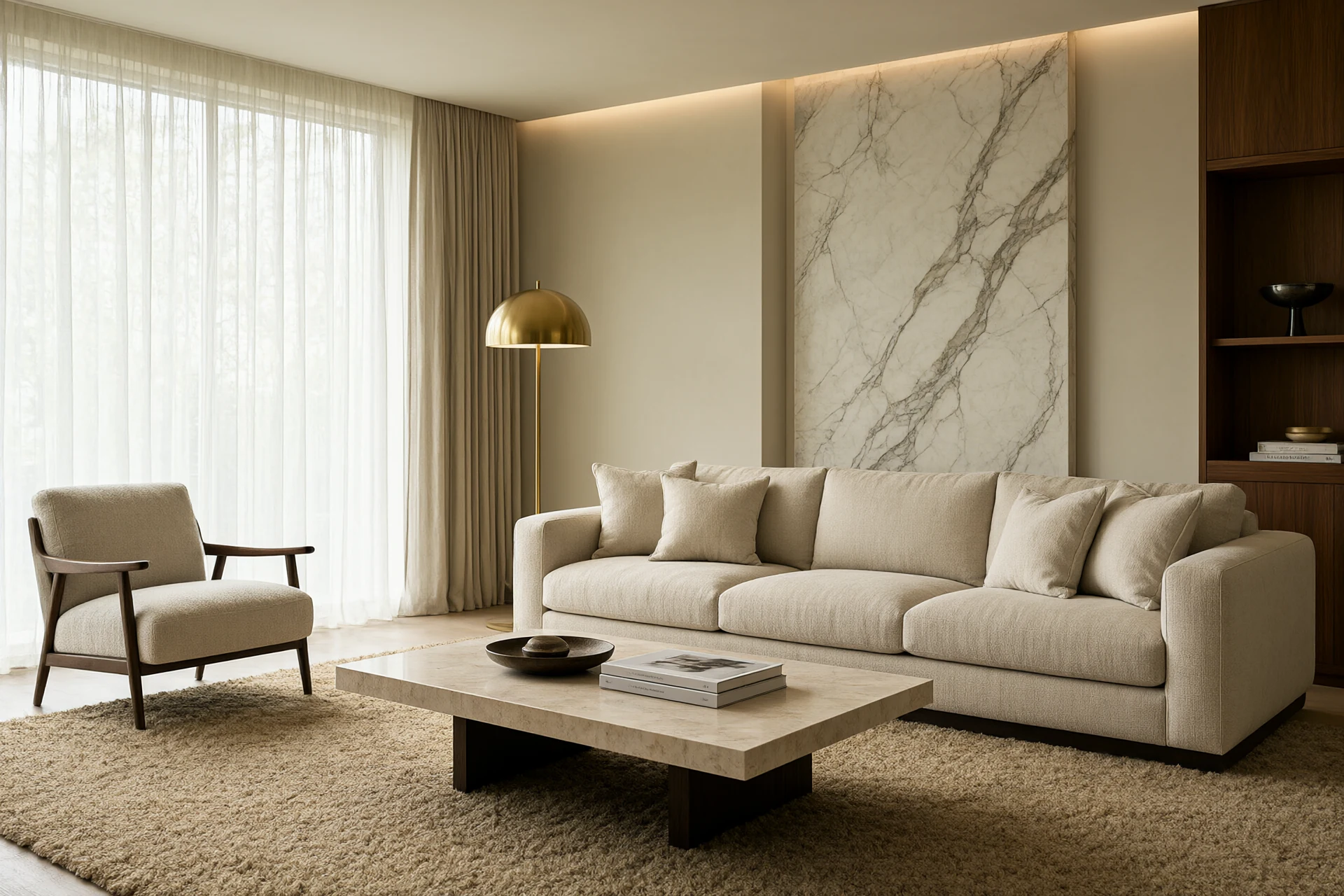
Most interior decoration ideas reach a client as a photograph. A linen sofa against a plaster wall, a brass lamp on a stone console, a rug the colour of dry sand. None of them mention what that sofa looks like after two years of 34 degree afternoons and a split unit running fourteen hours a day. INDECO specifies the decoration layer on villas and hotels across East Africa and the Gulf, and the rooms that still look right in year three share six numbers: abrasion cycles, light fastness, colour temperature, chloride exposure, wash cycles and budget split. Interior decoration ideas only survive a hot climate when each of those six is written into the order, so this guide sets them out room by room with the figures we put in a specification. The shell underneath that layer is covered in our interior design ideas for warm climates.
What Interior Decoration Ideas Have to Survive
Decoration is the last 12 to 18 percent of an interior budget on our projects and the first thing a client sees when the door opens. It is also the layer with the shortest life, because five forces act on it every day. Ultraviolet light is the loudest. Clear 6 mm float glass passes about 85 percent of visible light and more than half of the near infrared, so a dyed cotton next to an unshaded west window loses a full blue wool grade within eighteen months in Mombasa and inside a year in Muscat. Humidity comes second, with coastal interiors sitting at 65 to 80 percent RH for months at a time, which is where unlined linen hems grow mildew and low density foam cushions lose a fifth of their height. Air conditioning is third: it dries the air to roughly 35 percent RH by mid afternoon, pulls dust through every return grille and leaves a grey film on the top of any horizontal surface. Airborne chloride is fourth, measured at 2 to 5 milligrams per square metre per day on a Dar es Salaam seafront balcony, enough to pit unlacquered brass inside a season. Cleaning is fifth and self inflicted, since most site teams wipe every surface with a chlorine based product that strips a lacquer in a month. Specify the decoration layer for the room at three in the afternoon in August, not for the photograph taken at handover.
Fabric, Curtains and Rugs That Hold Their Colour
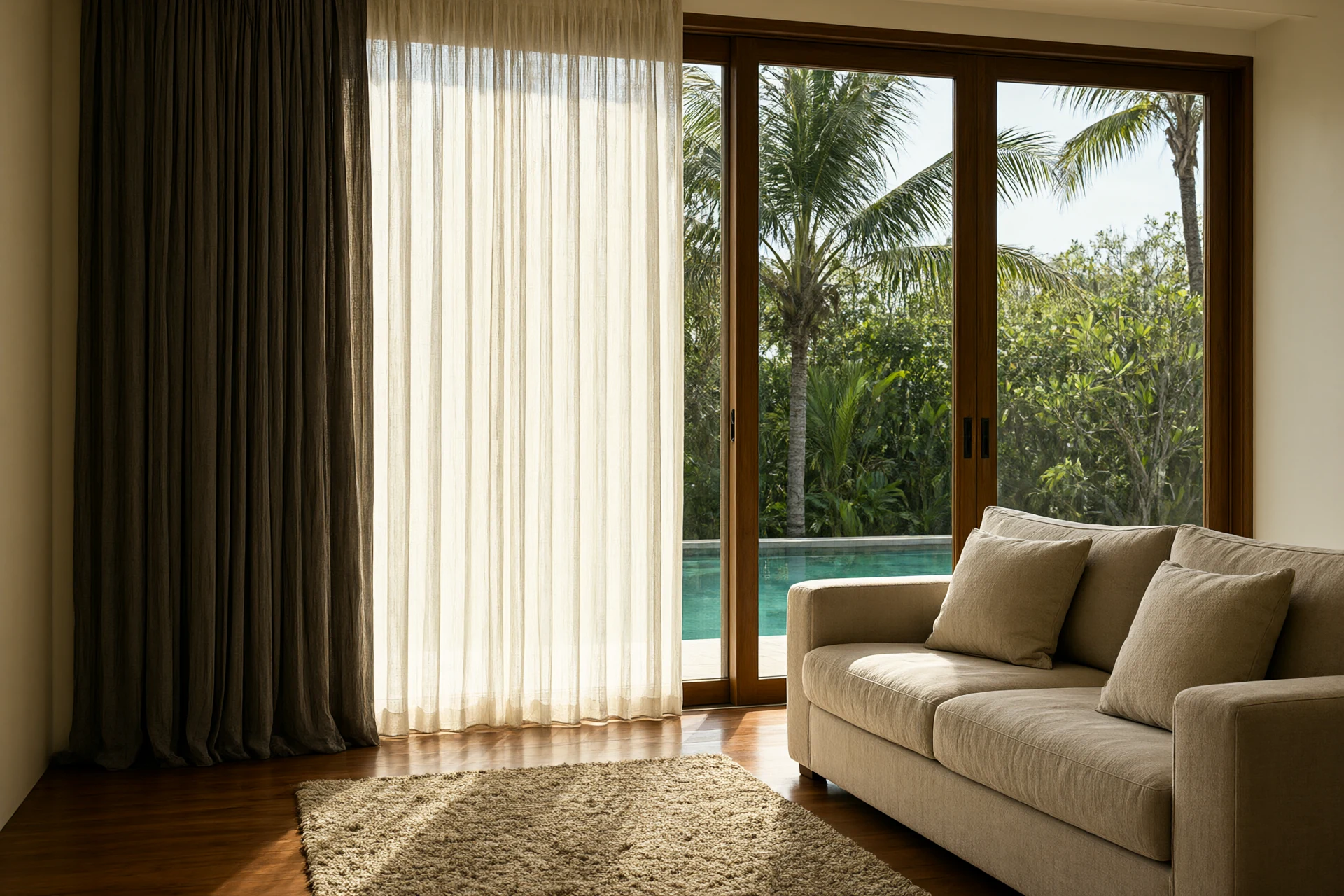
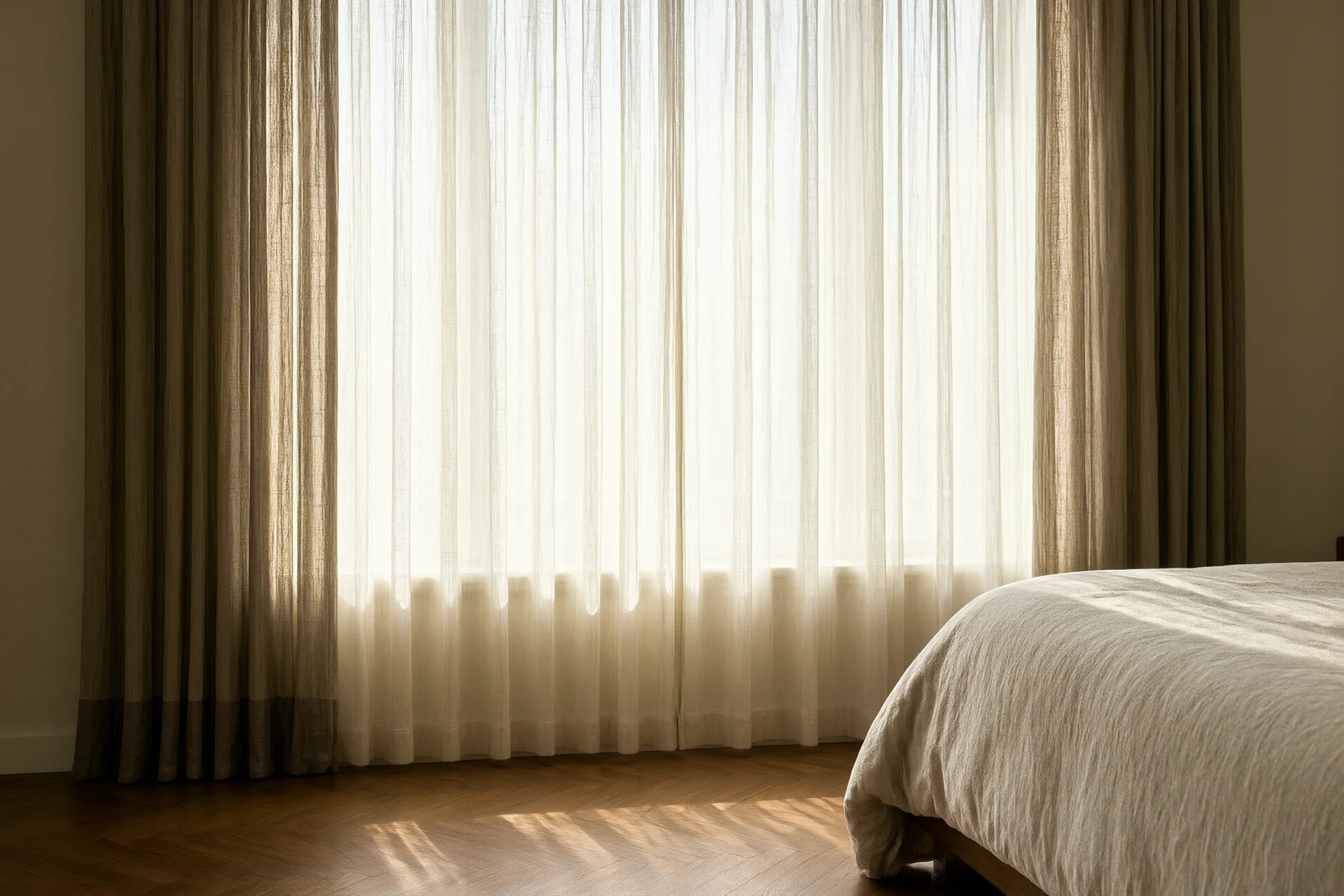
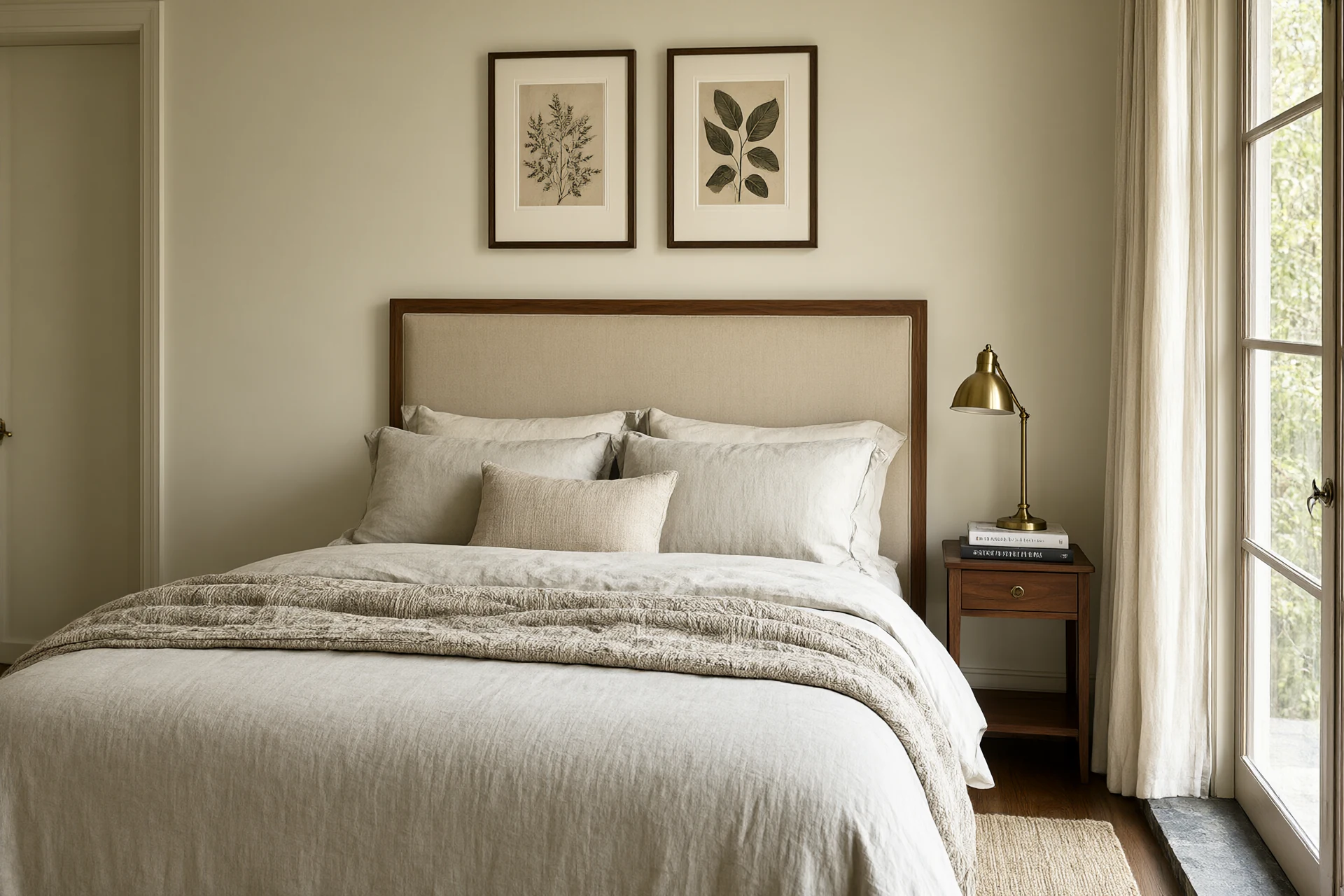
Upholstery sets the tone for the whole layer. We hold a Martindale result of 25,000 cycles for occasional seating and 40,000 for a sofa used every day, and we ask the mill for the Wyzenbeek figure alongside it, since 30,000 double rubs is roughly 25,000 Martindale. Below those marks a cushion front edge goes bald within two years. The test method matters as much as the number, which is why we reference the abrasion standards published by ASTM when a mill quotes a figure we cannot reproduce. Covers come off and wash at 30 degrees with shrinkage held under 2 percent across five cycles. Curtains need two layers rather than one. A sheer at 5 percent openness does the daytime work, and a lined drape with blackout interlining cuts visible light by more than 99 percent in a bedroom while dropping solar gain at that window by close to 40 percent. Colour fastness to light is the number that decides complaints: blue wool grade 5 for a living room, grade 6 wherever the glass faces west. We use heading tape rather than eyelets on any track that has to pull across a 4 metre span without snagging. Rugs follow the room. Hand tufted wool at 8 to 10 millimetre pile for bedrooms, flatweave with 20 percent nylon for a family room vacuumed twice a week, and nothing made of jute within 30 kilometres of the coast, because jute takes up moisture, smells, and then stains the floor under it. The full window treatment side of this sits in our soft furnishings for hot climates guide.
| Item | Spec we write | What fails if it is skipped |
|---|---|---|
| Sofa upholstery | Martindale 40,000, removable cover, wash at 30 C | Pile wears bald at the cushion front edge in 24 months |
| Curtain | Sheer 5 percent openness plus blackout lined drape, blue wool 6 | Panels fade unevenly and the bedroom sits at 300 lux at 6 am |
| Rug | Hand tufted wool 8 to 10 mm, or flatweave 80/20 wool nylon | Jute mildews near the coast and stains the floor beneath it |
| Terrace cushion | Solution dyed acrylic, 1,500 hours xenon, quick dry foam | Colour goes from pink to beige inside one season |
| Bed linen | Combed cotton 300 thread count, shrinkage under 2 percent | Pilling after ten washes and a loose fit on the mattress |
Light: Three Circuits and One Colour Plan
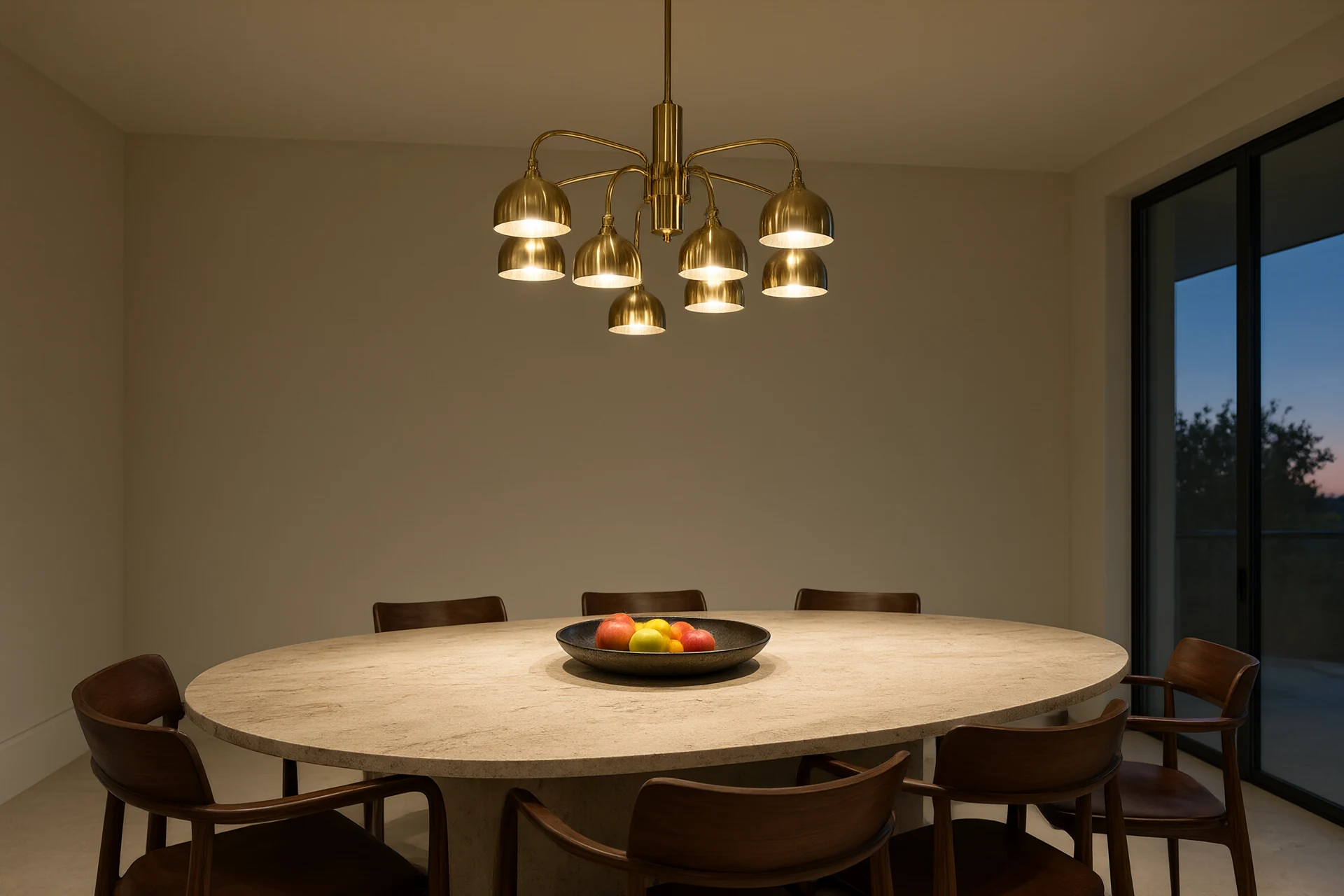
Decoration lighting is a circuit plan, not a fixture list. We run three layers in every room. Ambient from a cove or a downlight ring at 100 to 150 lux in a living room, task at 300 lux where somebody reads, and accent at a 3 to 1 contrast ratio on the object being lit. Everything on one circuit fights itself, so the three go on separate ways with a trailing edge dimmer that falls to 5 percent without flicker. Colour temperature is decided once per floor and then enforced: 2700 K in bedrooms and living rooms, 3000 K in kitchens and bathrooms, 4000 K only in a garage or a back of house corridor. Mixing 4000 K downlights with 2700 K table lamps is the most common reason a finished room photographs badly. Sources carry CRI 90 or better with an R9 above 50, because a low red value turns walnut joinery grey and makes every skin tone look unwell. Warm climates add one more rule. The sun outside sits at 5500 to 6500 K at midday, so a room lit at 4000 K reads cold against the window in the afternoon and then warm after dark. We settle on 2700 K at the dimmer and let the window do the rest. Fixtures, drivers and switchgear are specified in our lighting and switches spec guide.
Brass, Stone and Wood Accents That Age Well
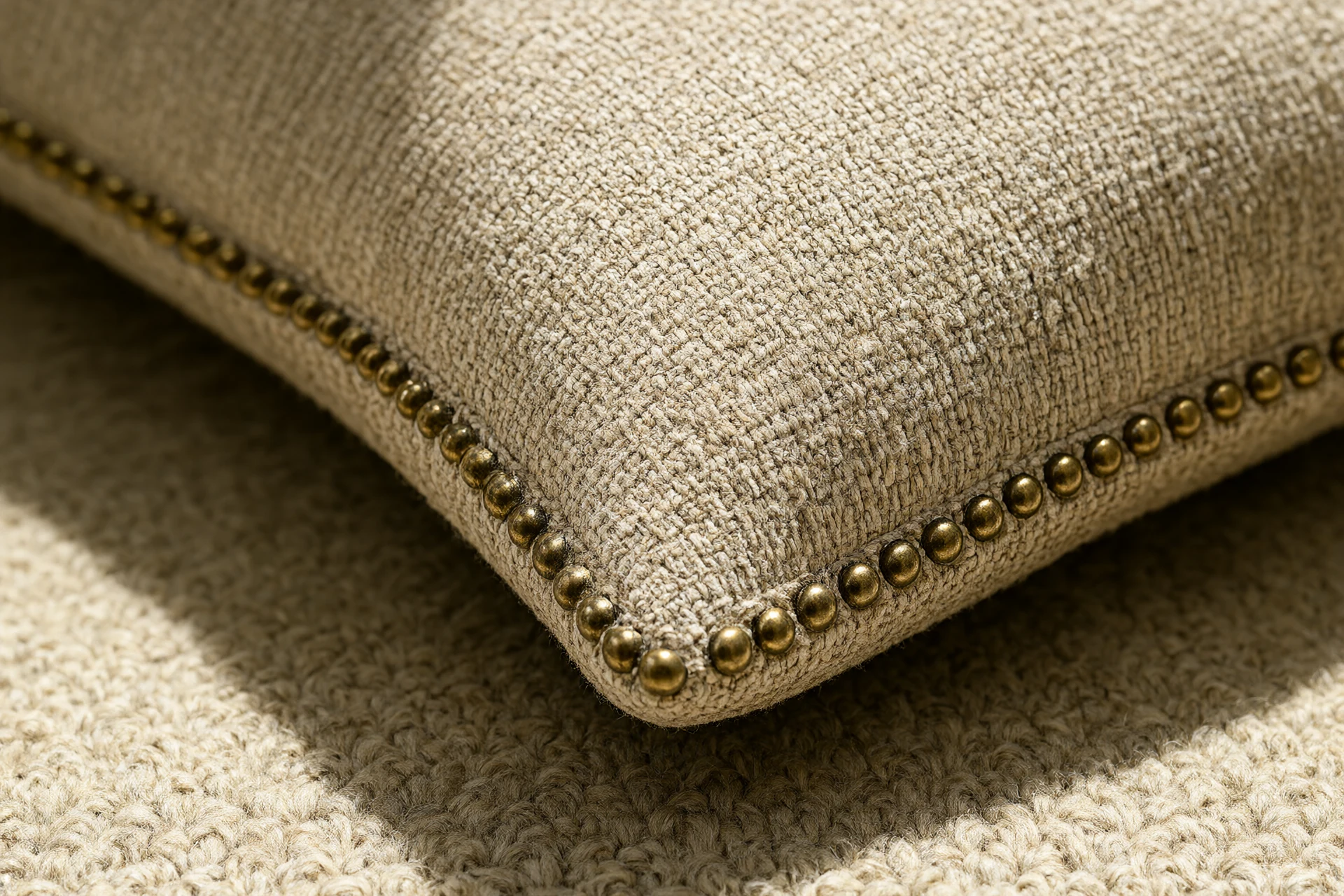
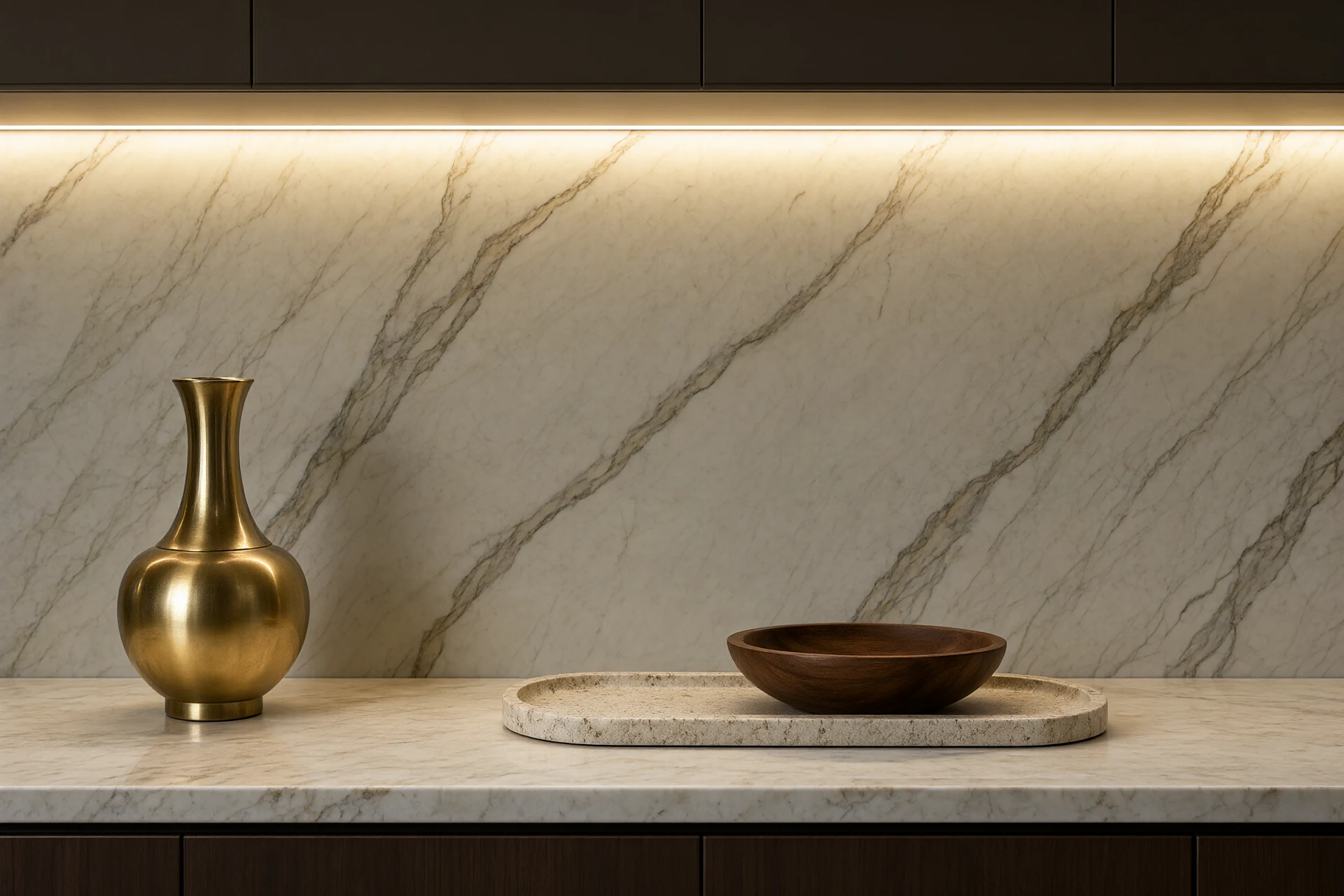
Accessories carry a room and they fail fastest, because nobody thinks to write a spec for a bowl. Brass comes first. Unlacquered brass takes an even patina inland and goes blotchy within a year on a seafront balcony, so we use PVD lacquered or 240 grit brushed brass with a clear topcoat within two kilometres of salt water, and we hand the client a dry cloth instruction rather than a polish. Stone comes second. A travertine tray or a marble coaster gets a penetrating sealer before it reaches the room, since one glass of citrus juice or one pass with a bathroom cleaner etches an unsealed surface permanently. Wood comes third, walnut or white oak at 8 to 10 percent moisture content finished with a hardwax oil a site team can refresh in place, and never placed directly under a west window where the surface temperature passes 50 degrees on a summer afternoon. Mirrors and art come last. Framed paper under glass fogs behind the glazing above 70 percent RH, so a coastal bedroom gets canvas or a conservation mount with a 2 millimetre air gap. Plants need 200 to 500 lux to hold their leaves, which rules out most internal corridors unless the lighting plan provides for them. The surface reasons behind those choices are set out in our modern interior design spec guide.
Room-by-Room Decoration Budget
On a 320 square metre villa in Dar es Salaam the decoration package runs between USD 28,000 and 46,000, which is 12 to 18 percent of the total interior spend. The split we hold is textiles 32 percent, light fixtures 24 percent, rugs 14 percent, art and mirrors 12 percent, accessories 10 percent, plants and styling 8 percent. Lead times decide the order of purchase rather than the room list. A hand knotted rug takes 12 to 16 weeks, a custom sofa 8 to 10, brass light fixtures 6 to 8, cushions and bedding 3, art framing 2. Anything faster than that is stock, and stock is what makes a finished room read like a showroom. Freight is the quiet saving. The package for that villa fills 18 to 25 cubic metres, and shipping it inside the same container as the joinery and stone order cuts 20 to 30 percent off the freight line compared with a separate LCL shipment. Installation order matters as much as the order form. Paint and silicone first, then stone and joinery, then light fixtures, then rugs and curtains last, because textile is the only layer that cannot be cleaned once dust has settled into it. Room level counts for the same scope are listed in our residential interior design checklist.
- Martindale 40,000 on any sofa used daily, 25,000 on occasional seating.
- Curtains lined, blue wool grade 6 on west facing glass.
- Three lighting circuits per room, one colour temperature per floor.
- CRI 90 with an R9 above 50 on every lamp in the package.
- PVD lacquered brass within 2 km of the sea.
- Stone accessories sealed before they enter the room.
- Textiles installed last, after every wet trade has cured.
- Decoration shipped in the same container as the material order.
Need a decoration package that survives the climate?
Send the floor plan, the window schedule and the room list. We return a room by room decoration schedule with fabric specs, a lighting circuit plan, a fixture list and a packed order that fits one container. Furniture bodies and frames are specified separately in our furniture materials for hot-climate interiors guide.
Request a Decoration Package →Frequently asked questions
What does a decoration package include?
Textiles, rugs, light fixtures, mirrors and art, accessories and plants, specified and supplied as one order. Joinery and stone stay in the shell package set out in our residential interior design checklist.
How long does a decoration package take to arrive?
Between 10 and 16 weeks from approved order, set by the slowest item, usually a hand knotted rug or a custom sofa. Shipping it inside the same container as the material order saves two to three weeks against a separate shipment.
Which fabrics survive strong sunlight?
Solution dyed acrylic rated at 1,500 hours xenon for terraces, and a lined drape rated blue wool grade 6 on west facing glass. Indoor upholstery needs a Martindale result of 40,000 and a removable cover, which our furniture materials guide explains in detail.
Can I reuse soft furnishings from a previous home?
Check the abrasion result, the colour fastness rating and the moisture content first. Rugs and curtains from a temperate house usually fail coastal humidity and light levels, and our modern interior design guide lists the replacements we order most often.