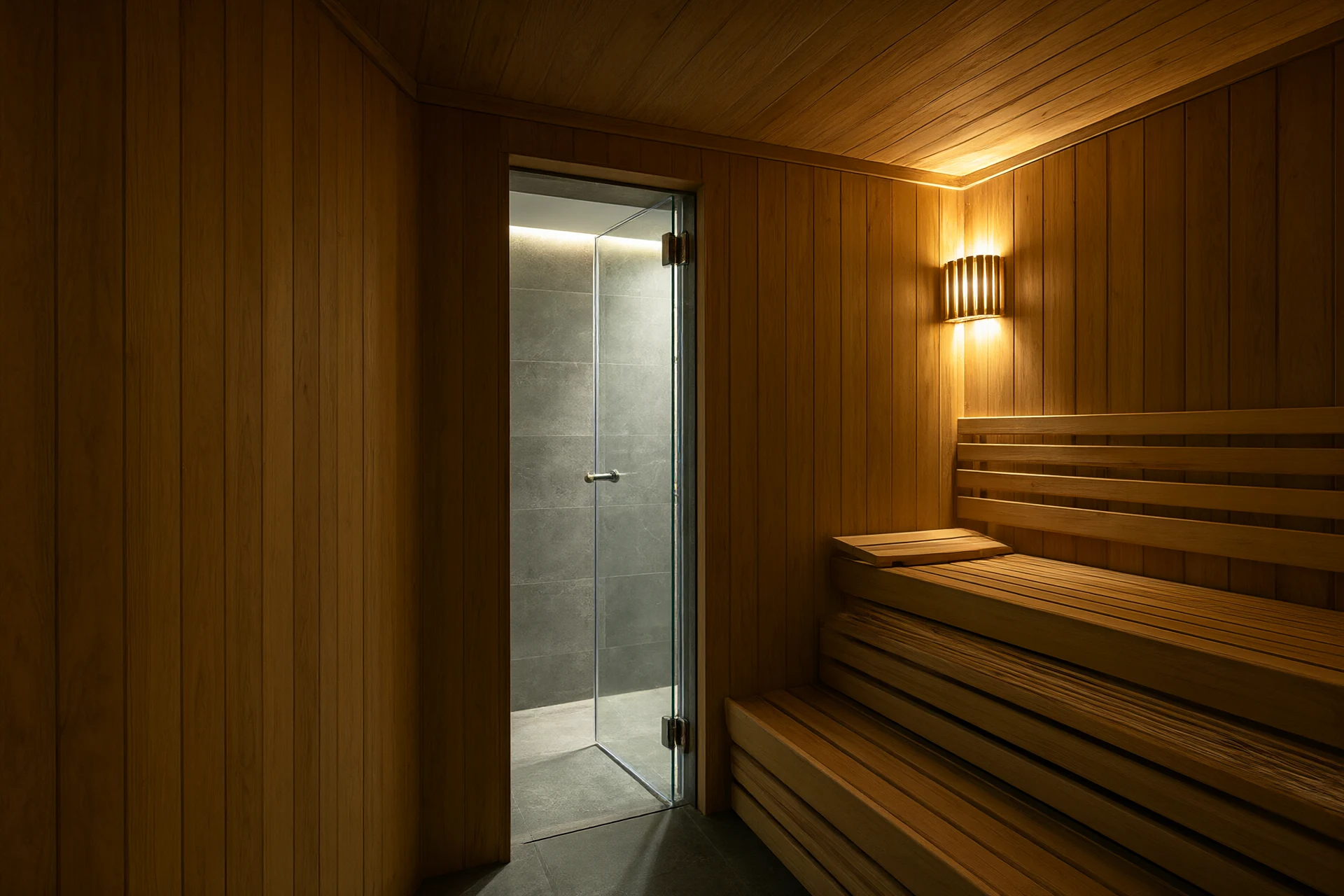
Sauna Rooms & Steam Rooms for Hotels, Resorts & Wellness Projects in Thailand
Published: October 24, 2026
A Thailand sauna room and steam room have moved from optional luxury to a standard wellness line item for hotels, resorts and serviced residences from Bangkok to the coast. We break down a CE-certified combined dry-wet room, the material spec behind it, and what contractors, designers and developers should put on the bill of quantities.
Five years ago a Thai resort treated a sauna as a one-off indulgence. Today the same operator lists a combined dry-wet room as a fixed wellness asset, because guests now expect it the way they expect a pool. The procurement question is no longer "should we" but "what spec, what certificate, and who commissions it."
This note walks the three people who actually sign a wellness fit-out off the hook: the developer who owns the budget, the designer who owns the drawing, and the contractor who owns the install. We use a CE-certified combined dry-wet room as the reference product, because it is the configuration most Thai hotel and resort projects now ask for by default.
1. Why Thai hotels and resorts are standardising on sauna and steam rooms
Guest expectations have shifted. A Thailand sauna room is no longer a spa-only feature; it is bundled into the wellness floor of serviced apartments, the health club of a provincial hotel, and the retreat wing of a coastal resort. The driver is simple: wellness is now a rated amenity in OTA listings, and a dry-wet room delivers two experiences from one enclosed footprint.
For the developer, the appeal is yield. A combined room priced as a single plant item returns two bookable experiences. For the designer, the appeal is control: one tempered-glass enclosure, one control panel, one drainage detail to coordinate with the wet-core. The Hotel Interior Design: Specs for Africa & Gulf guide covers how wellness spaces sit inside the wider guest-floor material plan.
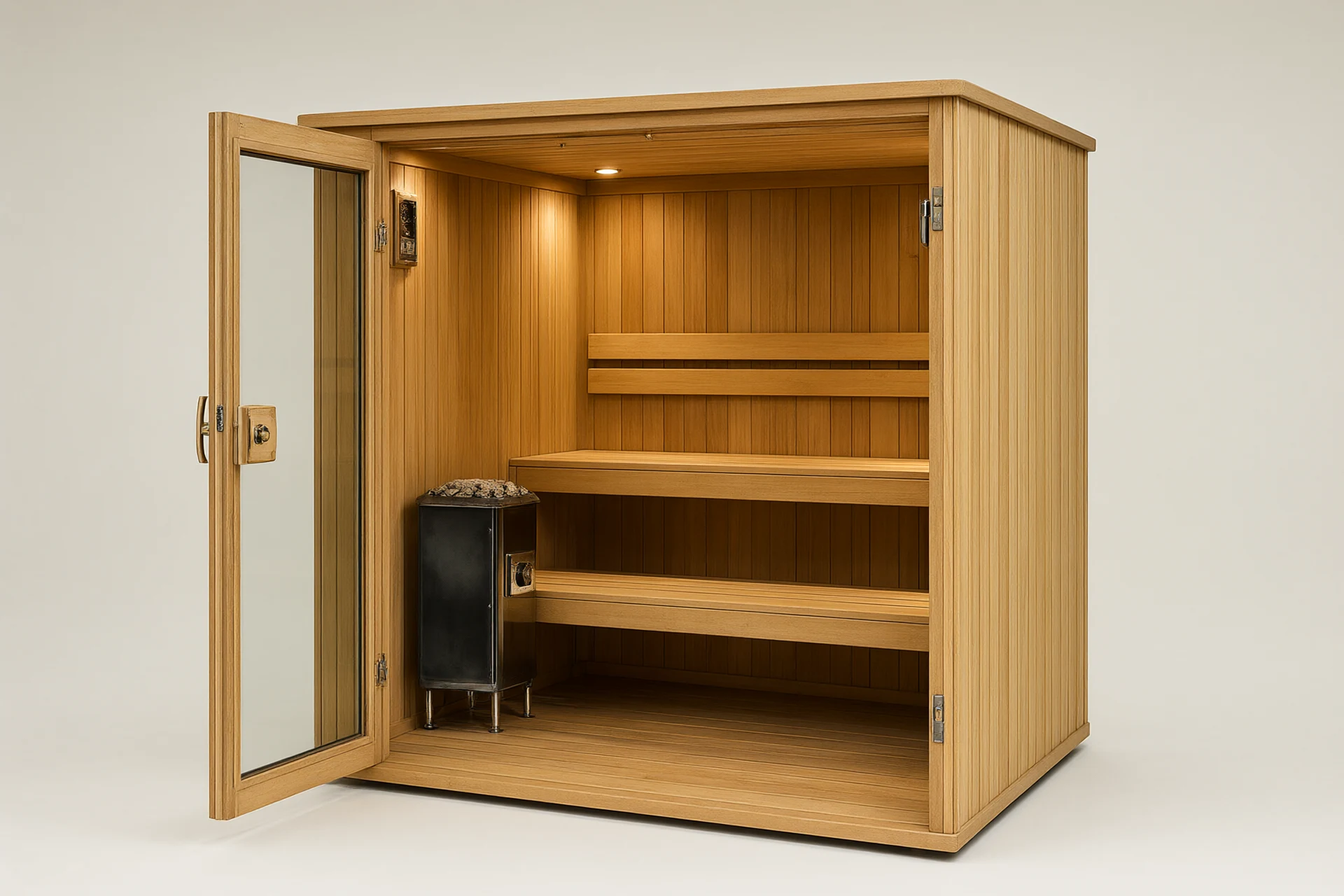
2. Sauna room vs steam room: what each space actually requires
A sauna room runs dry heat from an electric or wood stove at 80 to 100 degrees Celsius and very low humidity. The materials must be heat-stable softwood (hemlock or Canadian spruce), knot-free and low-resin so they do not odour or warp. A steam room holds near-100-percent humidity at 40 to 50 degrees Celsius, so its surfaces move to stone, tile or a sealed panel system, and the steam generator becomes the core plant.
A combined dry-wet room puts both behind one enclosure: the stove serves the dry function, the steam generator serves the wet function, and a single control panel lets the user switch modes. For a Thailand sauna room in a humid climate, the enclosure's vapour barrier and tempered glass are the details that separate a room that lasts from one that peels within a season. The broader material language is covered in Luxury Interior Design: The Warm-Climate Material Spec.
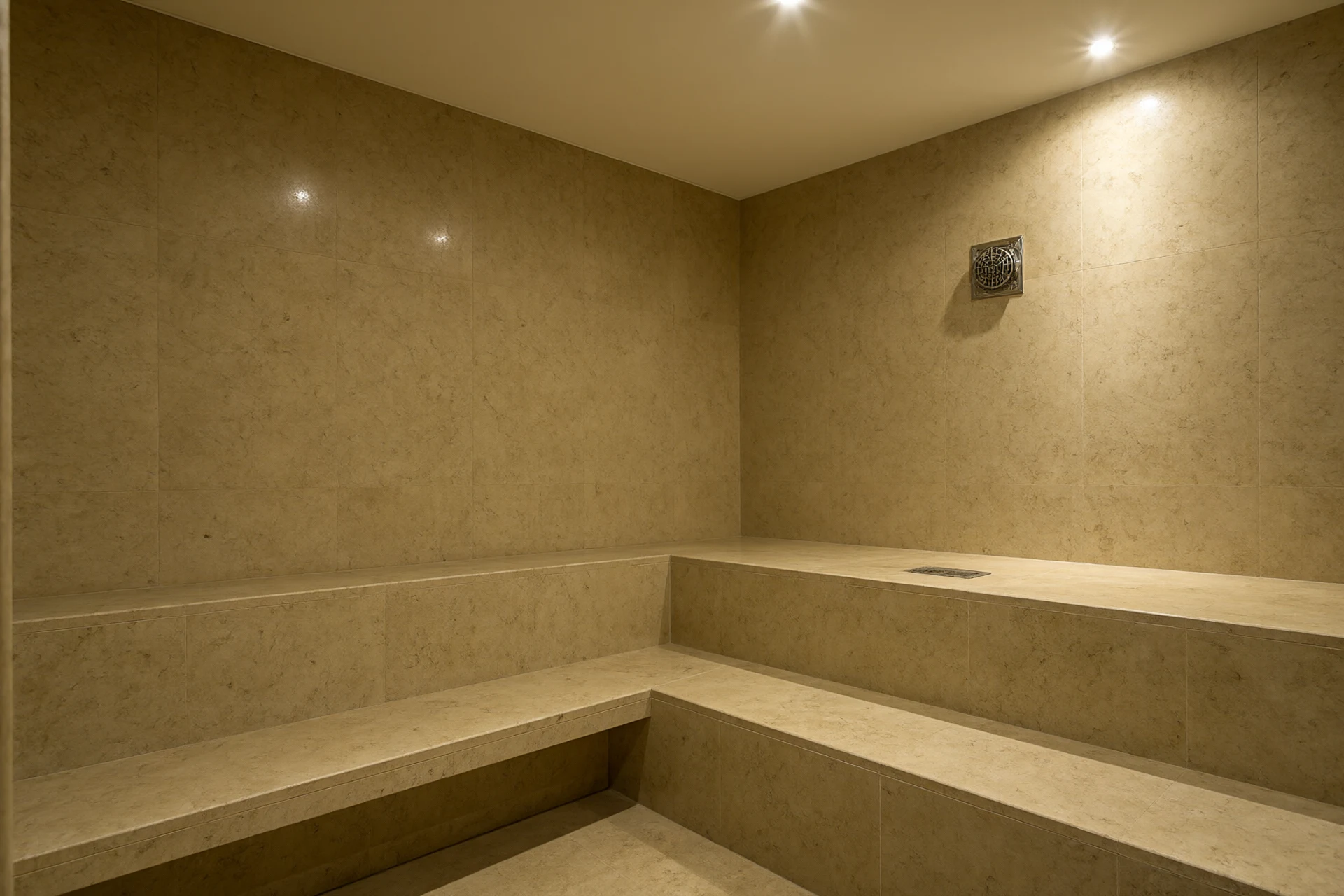
3. Product breakdown: a CE-certified combined dry-wet room
The reference unit below is a combined dry-wet room built to the European wellness standard, CE-certified (the CE certificate for this dry-wet room series is referenced as STUESO). Two sizes cover male and female wings or a duplex suite and a communal floor. The component set is what a contractor should receive as a single delivered package.
| Item | Type | Dimensions (mm) | Key specification |
|---|---|---|---|
| WS-1816 (Type A) | Combined dry-wet room | 5400 x 3000 x 2050 | Hemlock wood, 3 kW sauna stove + steam generator, tempered glass, control panel |
| WS-1816 (Type B) | Combined dry-wet room | 6000 x 2500 x 2050 | Same spec set, larger bench volume for communal use |
| Sauna stove | Electric heater | Unit | 3 kW, sauna stones, overheat protection |
| Steam generator | Wet function | Unit | Paired with stove, automatic fill, safety valve |
| Wall panel system | Enclosure | Imported panels | Tempered glass front, vapour barrier, aluminium frame |
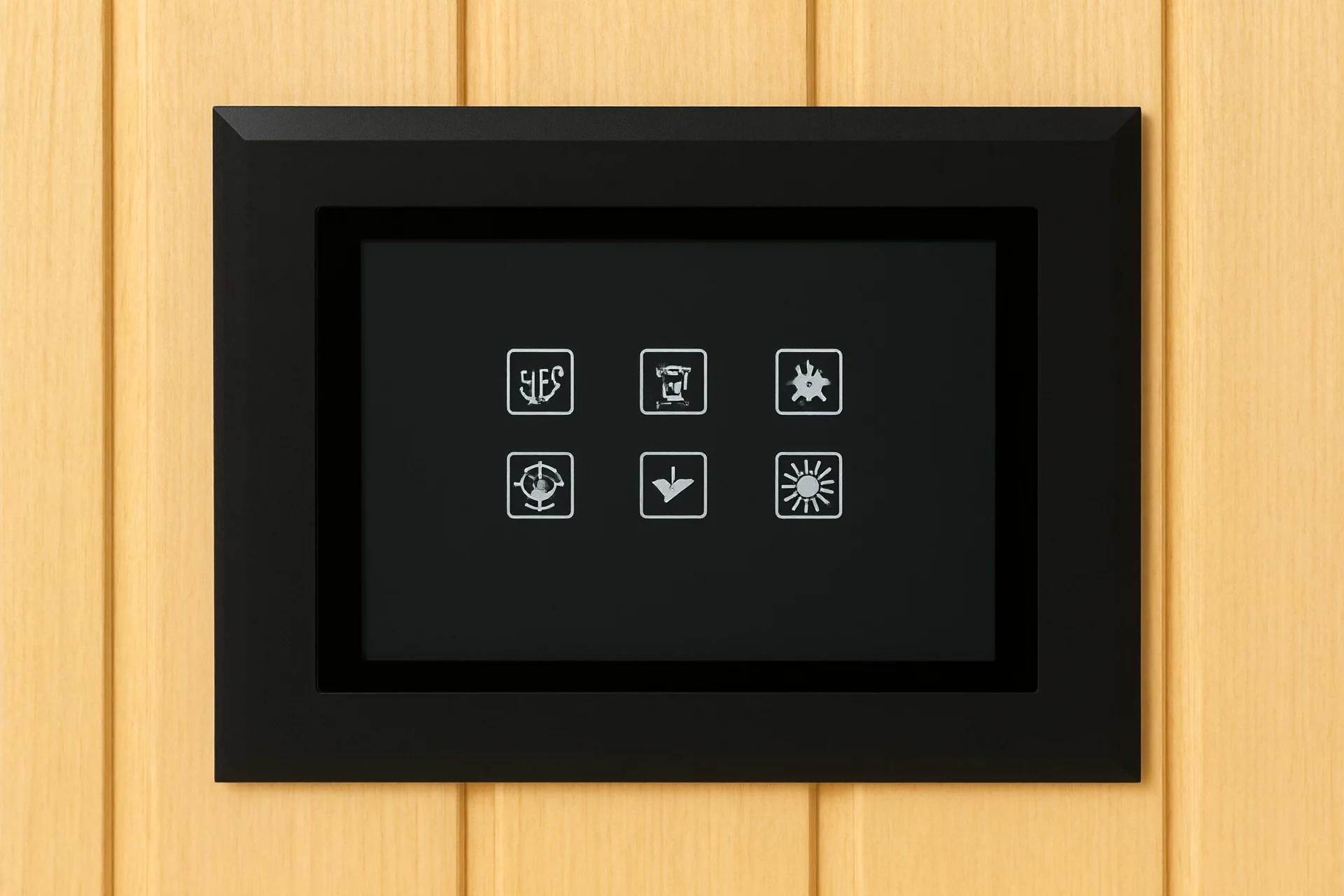
| Control panel | User interface | Wall mounted | Mode switch, timer, lighting, temperature |
| Accessories | Fittings | Set | Acrylic bench, wooden bucket and ladle, hourglass, thermometer, sauna stones |
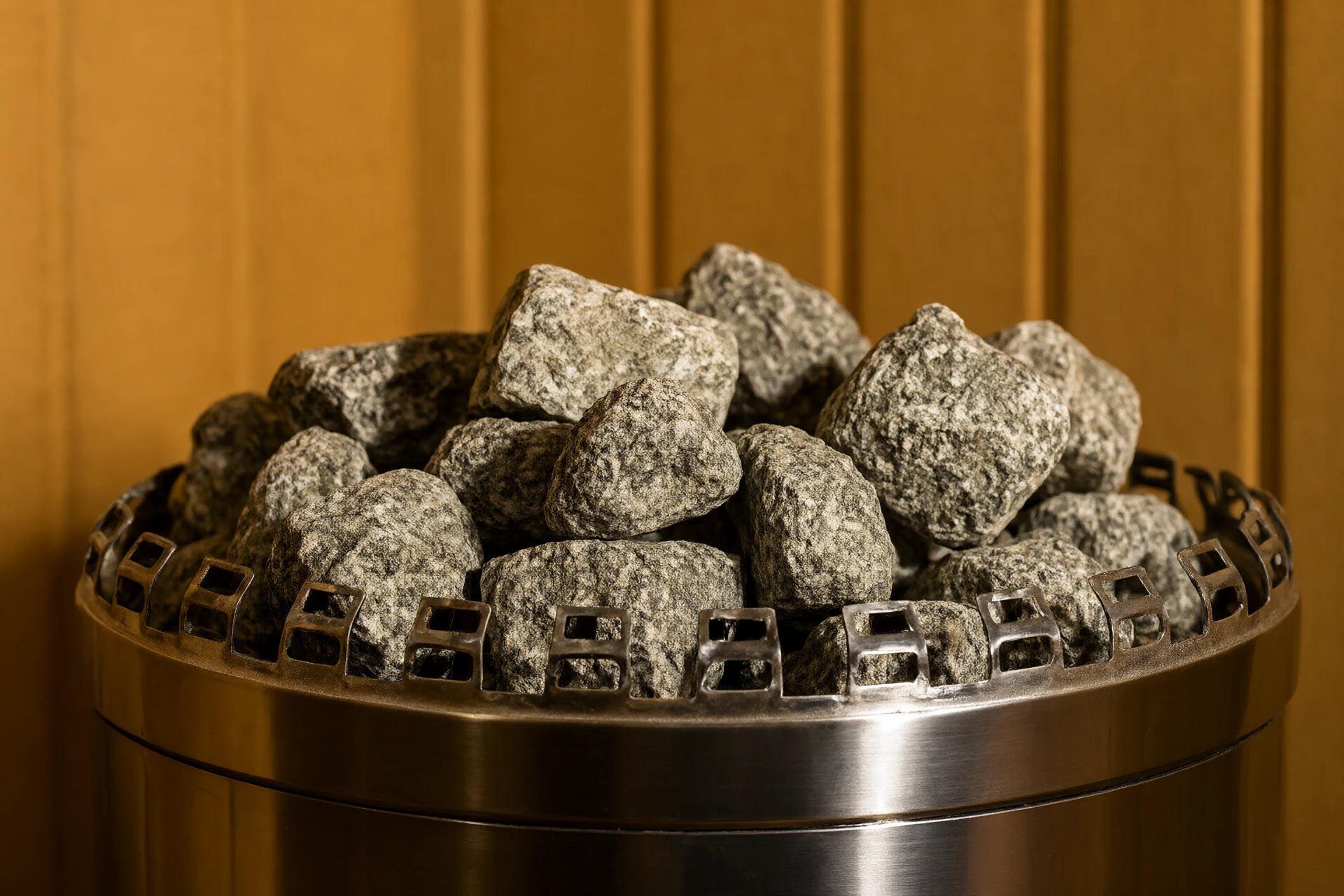
Note the accessories are not decoration. The wooden bucket and ladle, the hourglass, the thermometer and the sauna stones are the operating kit a hotel staff member needs to run the room correctly between guests. A Thailand sauna room specification that omits them ships an incomplete product.
4. Specifying a sauna and steam room for contractors, designers and developers
The three roles ask for three different things, and a good specification answers all three on one sheet. The developer wants the unit price, the certificate, and the lead time. The designer wants the envelope dimensions, the bench Layout, the electrical load, and the drainage connection. The contractor wants a single delivered package with a local technical contact for commissioning.
For a Thailand sauna room the last point is the one that gets missed. A combined dry-wet room arrives as a kit; it needs a trained installer for the vapour barrier, the glass, and the electrical sign-off. Sourcing from a manufacturer that offers factory-direct supply with in-country technical support turns a risky fit-out into a scheduled one. The procurement framing is the same one used for a Turnkey Interior Design: One Contract, Zero Gaps delivery.
- Room type stated as dry, wet, or combined dry-wet, with internal volume and bench layout.
- Stove and steam-generator power (typically 3 kW each) with overheat and pressure safety.
- CE or equivalent certification on the electrical and pressure equipment, plus local electrical compliance.
- Factory-direct supply with in-country commissioning support and Thai-language documentation.
5. Why source a Thailand-facing sauna room from a local-support manufacturer
The cheapest sauna room and the most expensive one can look identical on a quote. The difference shows up at handover: does the vapour barrier install correctly, does the glass seal, and is there a technician who can fly to the site when the steam generator throws a fault during the soft opening. For a resort on the coast, that local footprint is the real product.
Sourcing from a manufacturer that already ships to Thai projects shortens lead time from weeks of import to days of dispatch, keeps spare parts inside the country, and travels with Thai-language commissioning documentation. The wellness floor then opens with the rest of the building instead of a quarter behind it. The wider commercial-material thinking behind a compliant Thai development is collected in Commercial Interior Design: Office, Retail & Hotel Specs, and the residential angle in Residential Interior Design: Room-by-Room Spec Checklist.

Frequently asked questions
What is the difference between a sauna room and a steam room?
A sauna room uses dry heat from an electric or wood stove (typically 80 to 100 degrees Celsius at low humidity) for a hot, dry session; a steam room uses a steam generator to hold near-100-percent humidity at around 40 to 50 degrees Celsius. A combined dry-wet room puts both behind one tempered-glass enclosure so a hotel or resort gets both experiences from a single plant footprint.
What materials are used in a commercial sauna room?
A commercial sauna room is built from a stable softwood such as hemlock or Canadian spruce for the benches and wall lining, a certified electric sauna stove with sauna stones, a steam generator for the wet function, tempered glass front, an imported wall panel system, a control panel, and safety-rated lighting. The wood must be knot-free and low-resin so it does not odour or warp under heat.
What should a developer specify when adding wellness facilities in Thailand?
A developer should specify the room type (dry, wet, or combined), internal volume and bench layout, stove and steam-generator power, the control and safety set, CE or equivalent certification, and the supply model (factory-direct with local technical support). For a Thailand sauna room the lead-time and in-country commissioning support matter as much as the unit price.
Are combined dry-wet sauna rooms CE certified?
Yes. A combined dry-wet room built to the European wellness standard carries CE certification (for example the CE certificate referenced as STUESO series for dry-wet rooms), which covers the electrical and pressure-equipment aspects of the stove, steam generator and enclosure. CE marking is the certificate most Thai resort and hotel operators ask for alongside local electrical compliance.