 INDECO material
Bioclimatic Pergola: Louver Roof Spec Guide
Published: November 22, 2026 · By Mr.Jankin
What the louver roof actually does, how water leaves the structure and which specifications survive a hot coastal season.
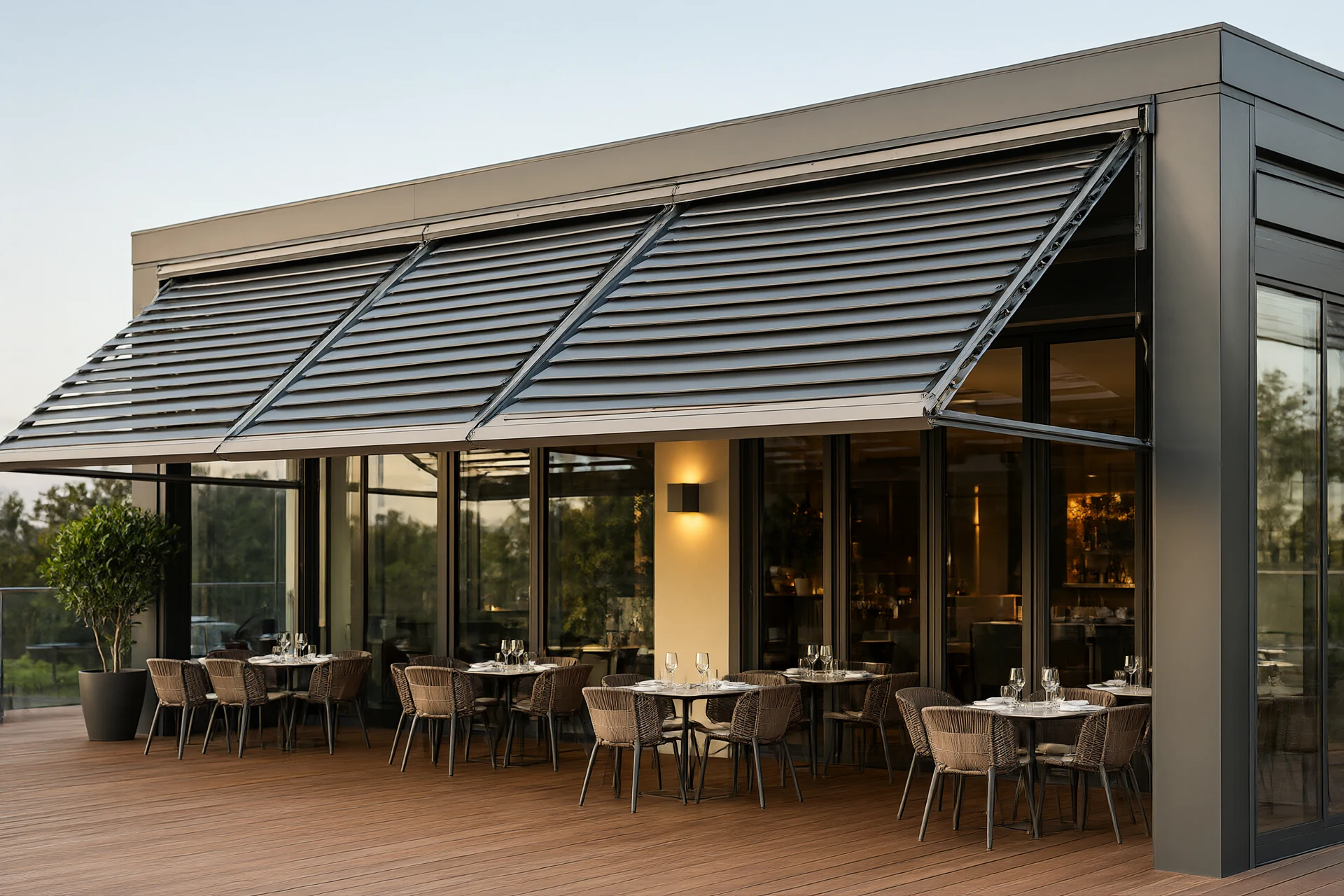
A bioclimatic pergola is an outdoor room with a roof that changes its mind. The aluminium blades rotate from open to closed, so a terrace can be sunlit in the morning, filtered at lunch and dry after a shower without any change to the furniture below. The word is used loosely in the market, and that is where orders go wrong: a fixed louver canopy, a fabric shade and a genuine adjustable pergola are three different products. This guide sets out the specification we work from when we quote a louver roof for a villa, a hotel or a restaurant, from blade overlap to the way rain is carried out through the posts.
1. What makes a pergola bioclimatic
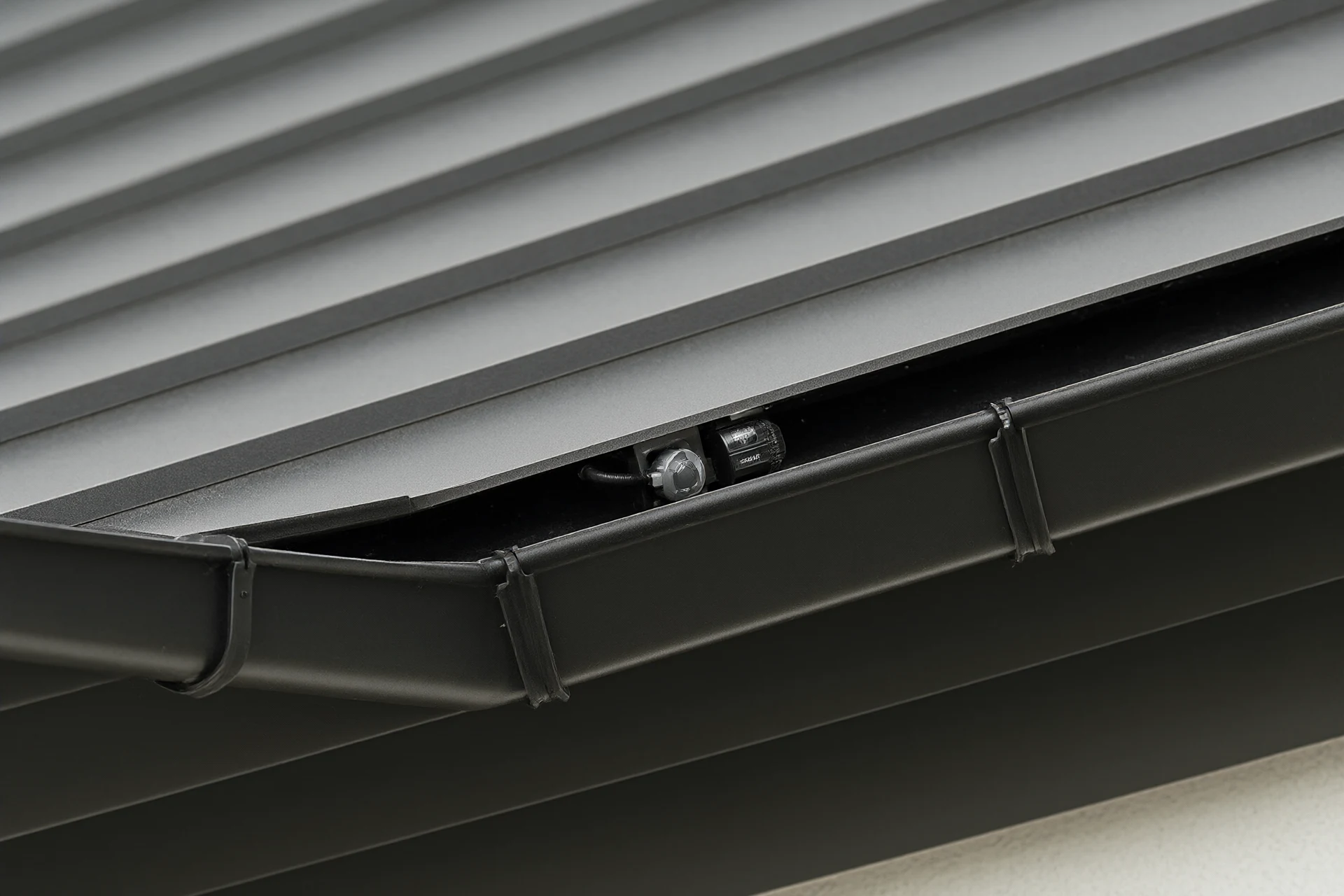
The defining part is the roof. Adjustable extruded aluminium blades rotate through roughly 0 to 135 degrees on a motorized drive, so the same structure delivers open sky, filtered daylight and a sealed roof. A fixed canopy cannot do that, and a fabric awning does not drain. When the blades close, their edges overlap and the water runs into a channel inside the beam and down through the posts. Nothing drips at the joint above the table, which is the difference a guest notices.
The second part is control. A wall switch or remote sets the blade angle, and a rain or wind sensor can close the roof before a storm arrives. That matters on a hotel terrace where nobody is checking the sky at service time. The same climate logic runs through our hot-climate shading and furnishing guide: the roof controls the sun before it reaches the seating, and the textiles finish the job at the edges. In historical terms the pergola is an old structure, but the adjustable louver roof is a recent addition that turns a shaded walkway into a weather-sealed room.
Three blade positions cover a day on a hot terrace. Fully open at breakfast gives sky and a cooling breeze. A partial tilt at midday keeps the light without the direct beam on the table. Fully closed in the late afternoon turns the roof into a solid surface and sends the rain into the beam channel. The motor makes those three states repeatable, which is what a restaurant manager needs: a defined setting for each service rather than a device that depends on whoever is on shift. Without that repeatability, an expensive roof ends up left in one position all season.
2. Blade, drainage and the rain test
Ask three questions before you compare prices. How deep is the blade and what is its overlap when closed? Where does the water go? What is the drainage capacity? A blade of 150 to 250 mm with a positive overlap will seal against a normal downpour; a shallow blade with a butt joint will leak at every seam. The water then needs a real fall in the beam channel and an outlet sized for the local storm intensity, discharged inside the post so no external pipe spoils the elevation.
Request the water-penetration result for the closed position, not just a generic profile certificate. A coastal site adds another requirement: within a few kilometres of the sea the finish should be a marine-grade PVDF coating or a quality anodize, and the fixings should be 316 stainless, the same rule we apply to aluminium openings. A pergola has more moving parts than a window, so it has more places for salt to sit.
| Item | Inland / dry | Coastal / humid |
|---|---|---|
| Frame and blade alloy | 6063-T5 aluminium | 6063-T5 aluminium |
| Finish | Powder coat or anodize, 25 µm | Marine-grade PVDF, 25 µm minimum |
| Fixings | 304 stainless | 316 stainless |
| Drainage | Internal channel, out through posts | Internal channel, larger outlet for storm intensity |
| Side closure | Optional zip screen | Zip screen or glass, corrosion-rated hardware |
3. Where the system pays for itself
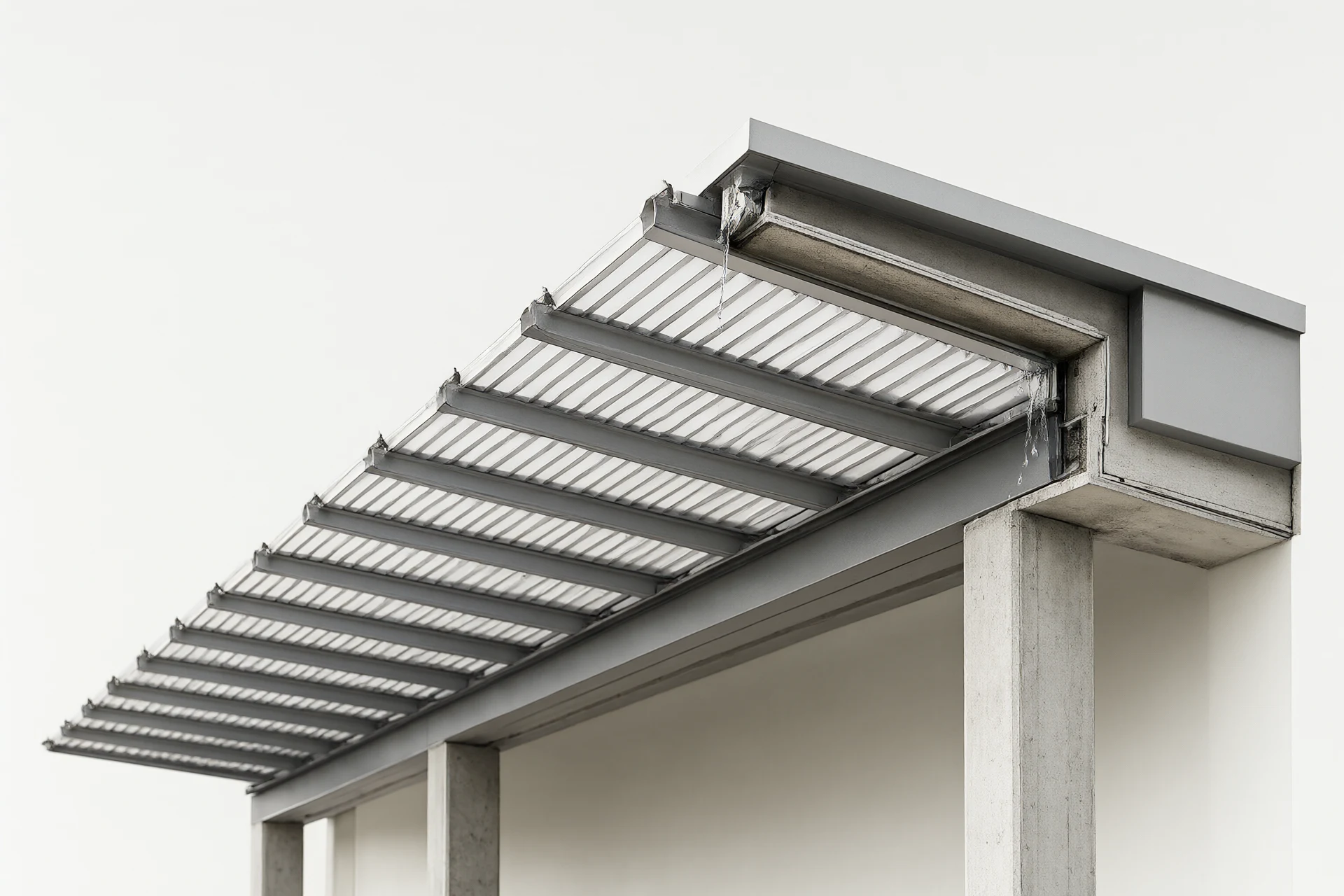
The business case is measured in usable hours. A restaurant terrace in a hot city loses the lunch and early-evening seatings to sun unless it is shaded, and loses them again in the wet season unless it is covered. An adjustable louver roof recovers both. A villa gains a room that can be used through the year instead of a deck that is empty from eleven until sunset. A hotel can sell the terrace as a function space with a defined rain plan.
The same structure also protects the finishes underneath. Furniture, timber decking and the flooring specified for humid climates all last longer when the sun and rain are intercepted above them rather than absorbed below. That is why we quote the pergola with the adjacent materials in one bill: the roof, the deck, the doors and the shading are one environment, not four separate purchases.
Sizing is the other common mistake. A pergola is quoted by bay, and the bay width sets the blade length, the beam section and the motor torque. Stretch a bay beyond the profile's tested span and the blades will sag at the centre, breaking the seal that keeps rain out. Ask for the maximum clear span per blade profile and the number of supports for your width, then check the headroom you lose to the beam depth. On a retrofit over an existing terrace the finished floor level and the door head often decide the layout before the roof design does, so measure those first. The number to put against the quotation is the count of usable hours. A terrace in a tropical or Gulf city can lose four to six hours of every hot day to direct sun and another stretch to rain. A louver roof that opens, tilts and seals recovers most of that time. For a restaurant with forty covers, even a part recovery of two services changes the payback calculation more than any claim about energy efficiency. For a hotel it changes whether the rooftop is a photograph or a revenue line. Ask for the closing speed and the sensor settings in writing; a roof that takes a minute to shut is a roof that gets rained on while the staff are still deciding.
4. Ordering, shipping and assembling the roof
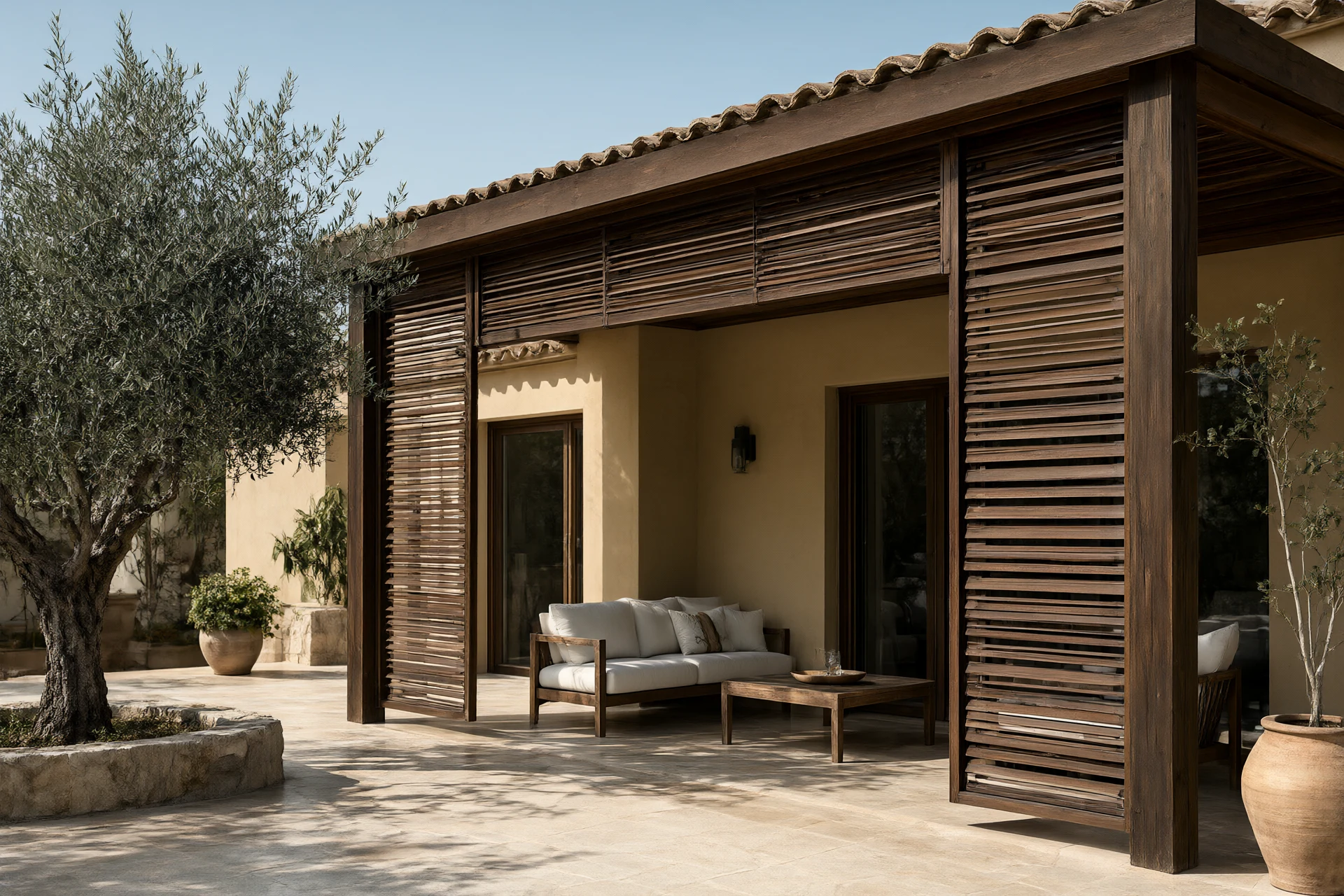
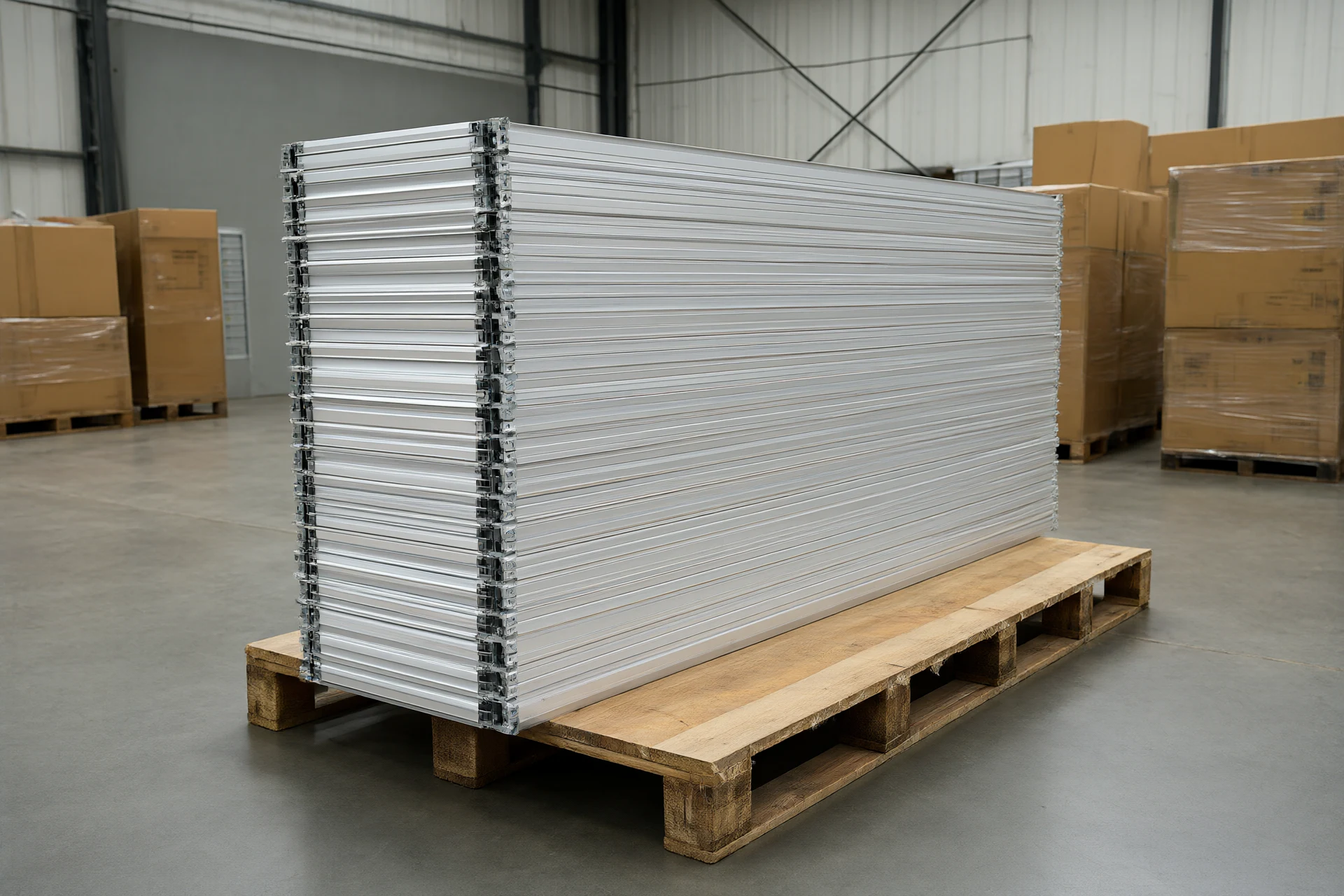
A bioclimatic pergola is built from modules. Posts and beams are cut to the bay widths, and the louver cartridges are assembled in the factory with their motors and end caps in place. The site crew sets the posts to an anchor template, levels the beams, drops the cartridges into the rails and connects the low-voltage loom. Lead time runs six to ten weeks from drawing approval to ex-works, plus freight and a short installation window. Send the terrace plan, clear height, fixing positions and wind zone and the quotation can hold those dates.
Packing is part of the design. Beams and blade stacks travel in protected crates, motors and sensors ship in a separate marked box, and the installation sequence is issued with the packing list so a local crew can work in order. A typical 6 by 4 metre restaurant pergola loads into one 40-foot container with the screens and fixings included, and the longest beam is kept under 12 metres so it never needs a special carrier. Confirm the discharge plan at the destination port before the crate dimensions are fixed: a narrow site with a single access lane often decides whether the beams arrive as full lengths or bolted halves. If the pergola is part of a larger hospitality fit-out, it can be consolidated with the hotel material package and the whole-house supply so one container plan covers the outdoor and indoor scopes.
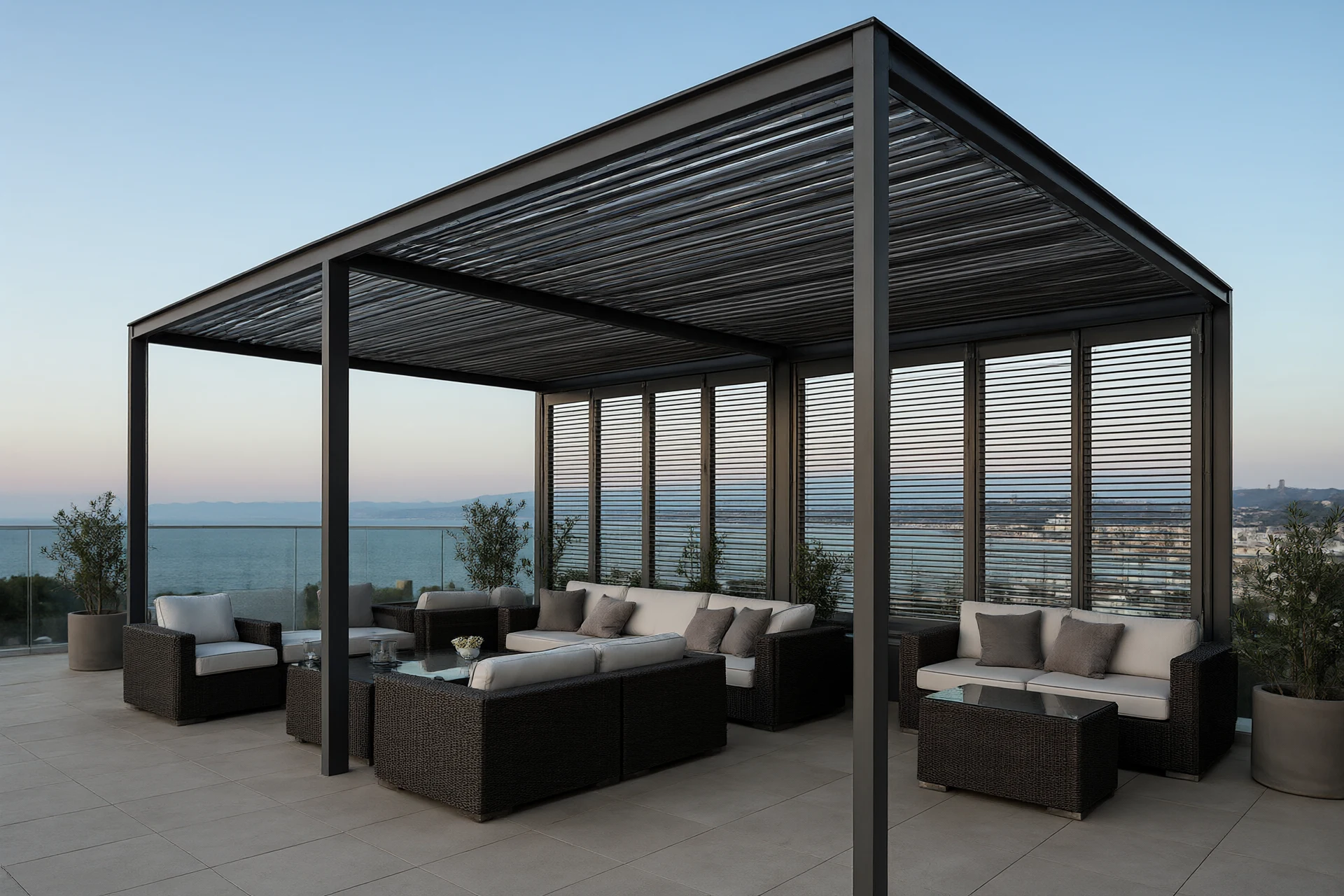
- Blade geometry: 150 to 250 mm depth with positive overlap and a defined fully closed position.
- Drainage: internal beam channel, sized outlet, discharge through the posts with no visible external pipe.
- Water test: ask for penetration results in the closed position, not a generic profile certificate.
- Exposure finish: marine-grade PVDF and 316 fixings within reach of salt spray; anodize is enough inland.
- Control: low-voltage motor, manual override, rain and wind sensor where nobody watches the sky.
- Side closure: zip screens or glass for low-angle sun and wind-driven rain at the terrace edge.
How to assemble a motorized pergola, step by step
- Confirm the layout — Send the terrace plan, the clear height, the fixing positions and the local wind zone; the quotation returns bay widths, blade orientation and the drainage run.
- Set the posts — Numbered posts are set to the anchor template by a competent local crew; the first post alignment is the critical step for the whole roof.
- Level the beam frame — Beams are leveled with the correct fall on the drainage channel so rain leaves through the posts and the roof never holds water.
- Drop in the louver cartridges — Cartridges arrive pre-assembled with motors and end caps and are dropped into the rails in order.
- Connect the control loom — The low-voltage 24 V actuator loom, wall switch or app control and the rain and wind sensor are connected, with a manual override specified for outages.
- Test and hand over — Run the rain test and travel-limit sheet issued with the shipment; the erection sequence and test sheet come with every order.
Planning a bioclimatic pergola?
Send the terrace plan, the clear height, the fixing positions and the local wind zone. You will get a bay layout, a blade and finish specification, the motor and sensor schedule, a container count and a factory-direct price from Foshan.
Request a Bioclimatic Pergola Quotation →Frequently asked questions
Is a bioclimatic pergola a worthwhile upgrade for a restaurant?
For a restaurant it is usually the fastest-paying outdoor item, because the terrace becomes bookable through the hot part of the day and through light rain. A louver roof opens for sun and air, tilts to cut glare at lunch, and closes into a sealed surface with water running through the posts. The gain is measured in covers per service, not in energy curves. Ask the supplier for the blade pitch, the drainage capacity in millimetres per hour and the wind-closed position, then price the terrace area against the seasons you actually lose.
What UV protection do restaurant outdoor pergola louvers need?
Specify the blade as a closed system, not a set of loose slats. Interlocking extruded aluminium blades with a continuous overlap and a sealed end cap block direct UV when closed, and a powder-coated or anodized finish holds up to coastal salt. Check that the blade profile has been tested for water penetration in the closed position, and ask for the drainage path: rain should leave through the posts, not drip at the beam joints. Fabric screens can be added at the perimeter when low-angle sun comes in sideways.
What UV protection do villa outdoor pergola louvers need?
A villa terrace is used at the edges of the day, when the sun is low and comes in under a roof that only looks closed. Ask for side screens or drop-down blinds as part of the same order, and specify the louver overlap so no light line runs between blades. Anodized or PVDF-coated aluminium will not rot or fade the way a timber canopy does in a hot climate. If the terrace is over a living space, add a drip edge at the wall interface so water cannot track back into the interior finishes.
Can I order a bespoke pergola sized to my restaurant terrace?
Yes. Bioclimatic pergolas are built from modular aluminium sections, so the span is set by the number of posts and bays rather than by a fixed catalogue size. Send the terrace plan, the desired clear height, the wall or post fixing positions and the local wind zone. We return a layout with bay widths, blade orientation, the motor and sensor schedule, and the drainage run. Typical lead time is six to ten weeks from drawing approval to ex-works, with export packing and freight quoted in the same order.
How do I assemble a motorized pergola on a hotel site?
The structure arrives as numbered posts and beams, with the louver cartridges pre-assembled in the factory. A competent local crew sets the posts to the anchor template, levels the beam frame, then drops the cartridges into the rails and connects the motor loom. The critical steps are the first post alignment and the fall on the drainage channel; get those wrong and the roof will hold water no matter how good the blade is. We issue the erection sequence and a test sheet for rain and travel limits with every shipment.
What is a bioclimatic pergola and how does it differ from a fixed canopy?
A bioclimatic pergola has an adjustable louver roof that opens, tilts and closes, so the same structure gives sun, filtered light and rain cover through the day. A fixed canopy gives one condition all the time. In a hot climate the difference is usable hours: the adjustable roof can be opened at night for cooling, tilted to block high summer sun, and closed into a gutter when it rains. The best systems drain through the posts, leaving the terrace free of visible downpipes.
Do bioclimatic pergolas need electricity?
The blade movement does. A motorized pergola uses a low-voltage actuator, usually 24 V, with a wall switch, remote or app control, and an optional rain and wind sensor that closes the roof automatically. Power is a single small circuit, not a heavy installation, and a manual override is worth specifying so the terrace remains usable during an outage. The passive alternative is a fixed louver canopy, which shades but cannot close against rain.
How much does a bioclimatic pergola cost per square metre?
Price depends on span, blade specification, motorization and the number of side screens, so a square-metre figure quoted without those details is not useful. As a working range for an export order, an anodized aluminium louver pergola with motorized blades lands well below a comparable European-branded system built on the same profile, because the extrusion and assembly happen in the same Foshan facility. Send the plan and the wind zone and we will return a line-item quotation with the blade, frame, motor, screens and freight separated.