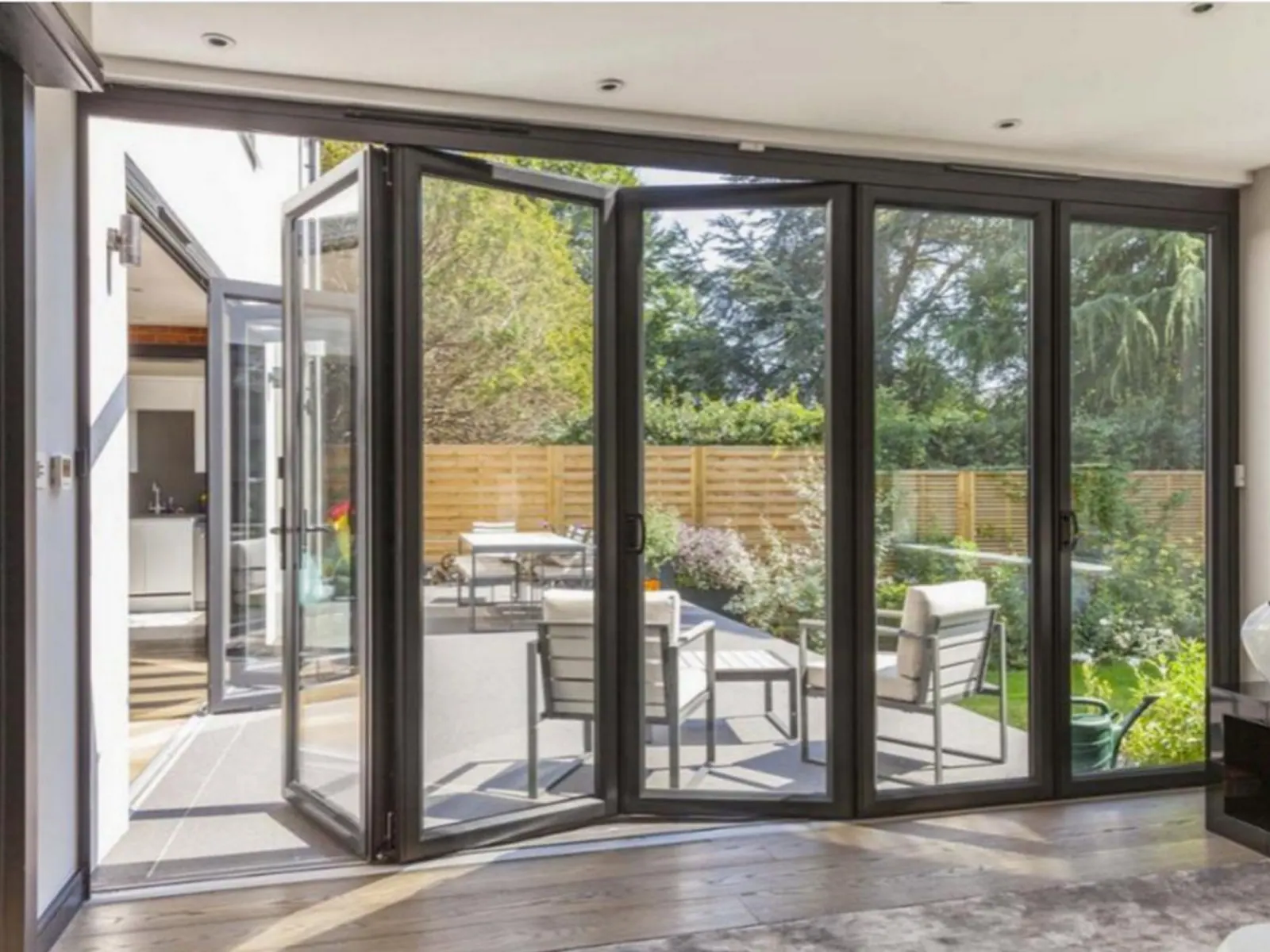
Doors & Windows
Aluminium and uPVC doors and windows built for tropical heat, dust and storms: thermal-break profiles, low-E glazing and marine-grade hardware, made to size in Foshan.
Openings take the building's worst exposure.
Sun load, wind-driven dust, salt air and storm gusts all arrive through the same square metres of frame. An aluminium system that performs through a German winter can leak at a Lagos or Juba rainy season within a year, usually at the corners where the thermal break was underspecced and the hardware was chrome-plated steel.
INDECO supplies door and window systems chosen for that exposure: thermal-break aluminium for spans and coastal sites, uPVC for wet interiors and budget-driven housing, and hardware in 304 or 316 stainless depending on how far you sit from salt spray. Every unit is made to your site dimensions before it leaves the factory, not cut down on site by an installer with a hacksaw.
What we supply
Six lines from the frame to the glass to the handle, specced for the climate the building sits in.
Thermal-Break Aluminium Windows
Casement, sliding and tilt-and-turn units with PA66 GF25 thermal breaks, keeping the inside face cool and cutting the heat the air conditioning has to fight.
Aluminium Doors
Bi-fold, sliding and French door systems with multipoint locks and threshold options for villas, resorts and apartment terraces.
uPVC Doors
Multi-chamber uPVC and WPC doors for bathrooms, kitchens and service areas, where swelling and termites finish cheaper timber doors first.
Glazing
5–6 mm clear, tinted or low-E glass, tempered where size and position demand it, with sealed units that survive the differential heat of a west-facing facade.
Hardware & Locks
304 stainless inland, 316 within coastal spray range: friction stays, multipoint locks, hinges and handles rated by cycle count, not by catalogue photo.
Screens, Sills & Flashings
Insect screens, extruded sills, sub-sill drainage and flashing profiles, so the opening sheds water instead of storing it behind the finish.
The numbers we specify to
Frame performance is a set of figures, and these are the ones that decide whether an opening survives five rainy seasons.
Where these openings go
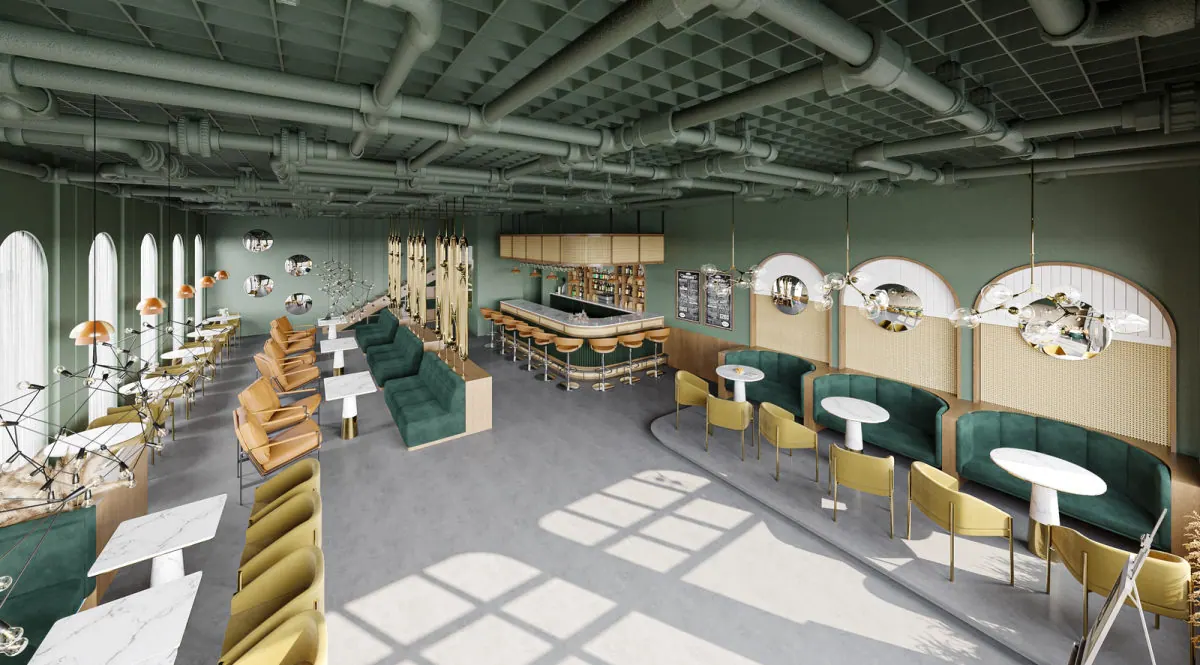
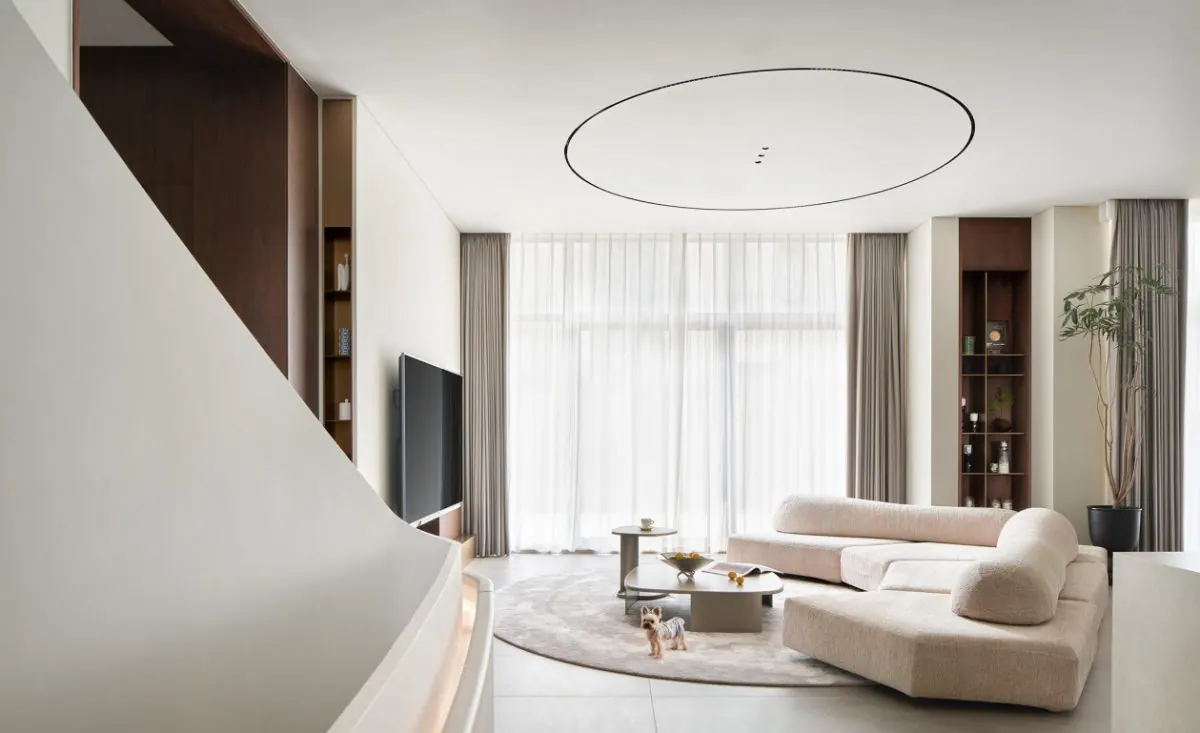
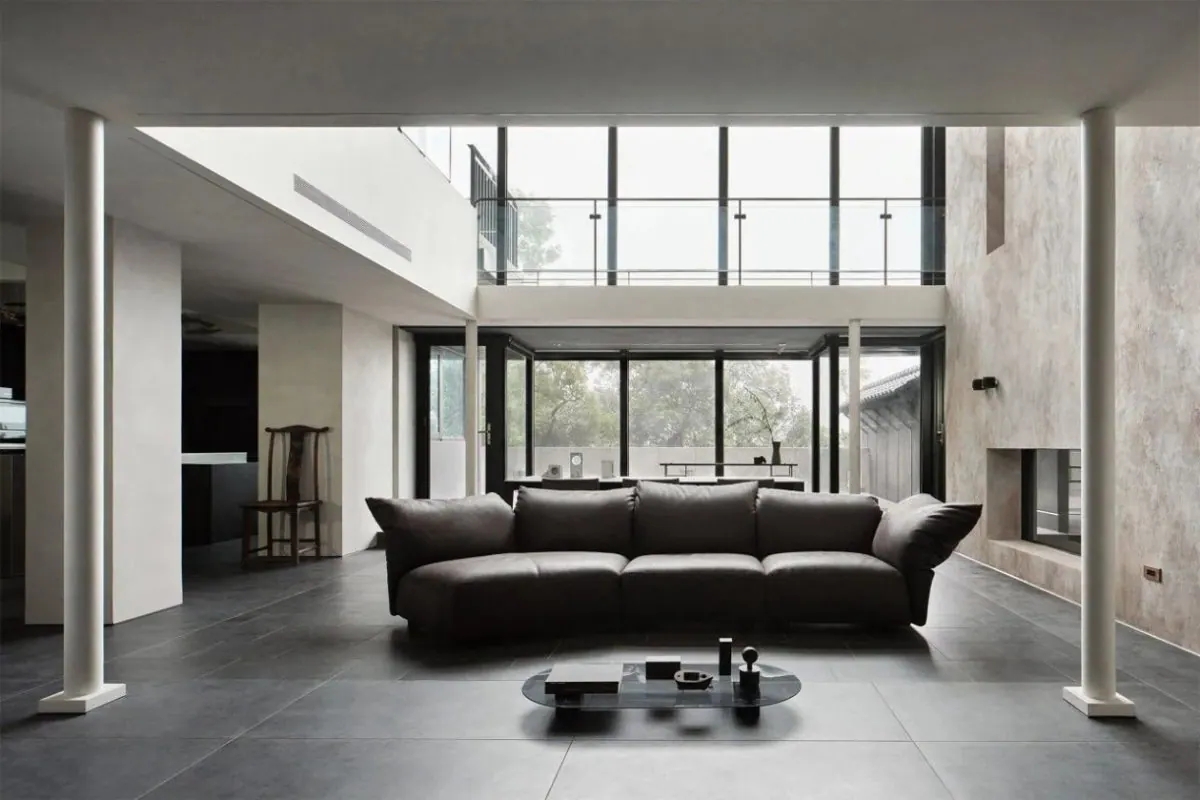
Villa living rooms that open onto terraces, resort restaurants that want the sea breeze without the salt, and apartment blocks where wind load drives the whole spec.
From brief to site, documented.
Openings are unforgiving of site improvisation, so dimensions are confirmed on paper before a profile is cut.
Survey & Schedule
We issue survey sheets against your drawings, confirm structural openings and wind exposure, and return a door and window schedule with system, glazing and hardware per opening.
Sample & Spec
Profile cross-sections and hardware samples go out for approval, so you can see the thermal break and the handle action before production, not after delivery.
Production & Ship
Units are fabricated to the confirmed schedule, glazed, hardware-fitted and checked against the schedule, then packed with sills and flashings for the same container.
Why buy doors and windows through INDECO
Systems chosen by exposure, hardware chosen by distance from the sea, and units that arrive already the right size.
Spec By Exposure
Coastal, desert, highland or storm-belt: the system, glazing and hardware grade follow your site conditions, which we confirm before quoting rather than assume.
Made To Size
Fabricated to confirmed dimensions at plus or minus 1 mm, with sills and flashings cut to match, so installation is assembly instead of adjustment.
One Shipment
Doors and windows consolidate with tiles, sanitary and joinery, and the container sequence is planned so openings arrive before the wet trades need them.
Opening specification guides
Written by the INDECO team for projects in hot, humid and storm-exposed climates.
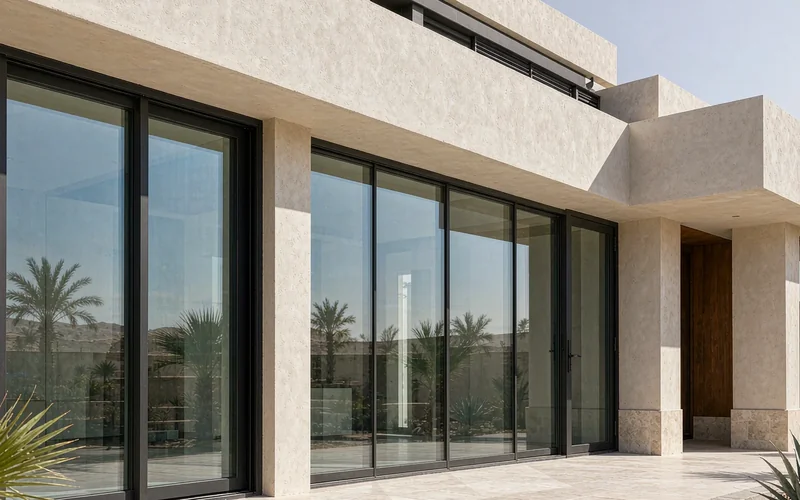
Aluminium Windows & Doors
Thermal-break profiles, low-E glazing and hardware that lasts.
Read Guide →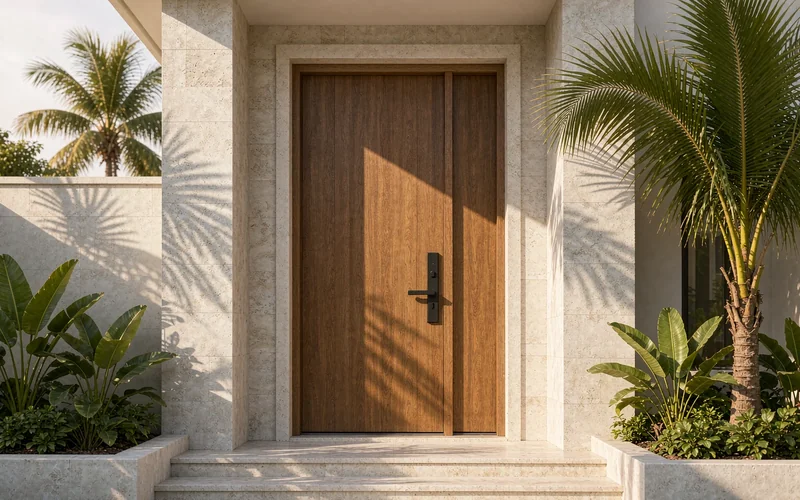
Doors for Hot, Humid Climates
WPC, aluminium and steel compared on swelling and corrosion.
Read Guide →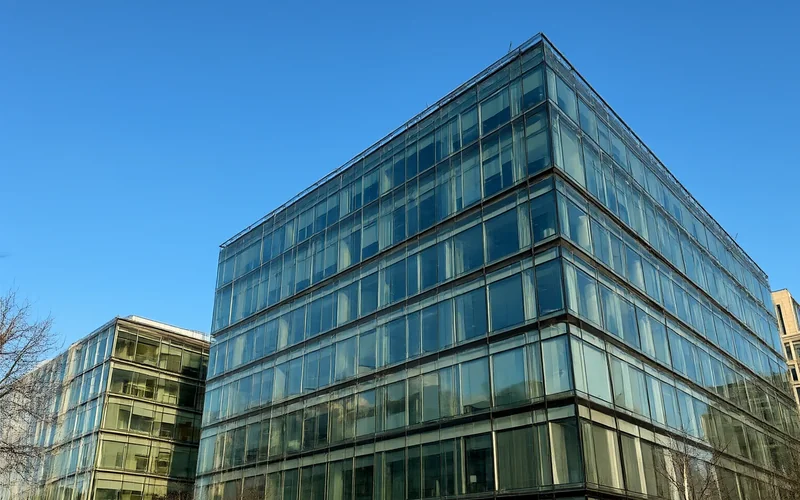
Glass & Glazing for Hot Climates
SHGC, low-E coatings and safety glass, decided by orientation.
Read Guide →Door and window questions
The five questions clients ask most before ordering openings for a hot-climate project.
Aluminium or uPVC, and where?
Thermal-break aluminium carries large spans, bi-fold doors and coastal exposure. uPVC and WPC suit interior wet doors, service areas and housing where budget is the constraint. We split the schedule by opening rather than forcing one system across the whole building.
What hardware do you use near the coast?
316 stainless within a few kilometres of salt spray, 304 further inland. Chrome-plated steel looks identical in the showroom and pits within two seasons on a coastal facade, which is why the grade is stated on the schedule.
Is the glazing tempered?
Where size, position or safety rules require it, yes, and we flag those units in the schedule. Elsewhere we use standard annealed or low-E sealed units to keep the price sane without breaking the spec.
Are units made to our measurements?
Yes. We issue survey sheets, confirm structural openings with your site team, and fabricate to those dimensions at plus or minus 1 mm. Sills and flashings are cut to the same schedule.
What is the lead time?
Thermal-break aluminium runs 4–6 weeks from confirmed dimensions, including glazing and hardware fitting. Stock uPVC doors ship in 2–3 weeks. We schedule openings early in the container plan so they land before the wet trades start.
Request a door and window schedule.
Send your elevations or a list of openings and we will return a priced schedule with systems, glazing, hardware grades, lead times and FOB/CIF options for your port.