 INDECO material

Building Materials Supplier: A Nine-Point Audit Before You Order
Published: November 27, 2026 · By Mr.Jankin
Nine checks, three hold points and one purchase order, from the first sample board to the loading bay.
SHORT ANSWER
A building materials supplier earns a single purchase order when it controls four things: the specification sheet, the quality gate, the export packing and the document set. Audit nine points, hold three sign-offs, then consolidate.
SPECIFICATION FACTS
- 9 audit points before the first order
- 3 hold points: sample, 30 percent, pre-shipment
- AQL 2.5 major defect level per lot
- 8 to 12 percent wastage on stone and large tiles
- 68 cubic metres in a 40HQ container
- 45 to 60 days production for a mixed package
A building materials supplier is judged long before the first container leaves Foshan. The price on a quotation tells you what a vendor wants. The audit, the sample tray and the loading photographs tell you what will arrive. We buy stone, tiles, joinery, wall panels, glazing and lighting for projects in East Africa and the Gulf, so the checks below come from orders that went wrong and orders that did not. Nine points, three hold points, one purchase order. That is the whole method.
1. What a Building Materials Supplier Should Own
A supplier is worth a single purchase order only when it controls four things: the specification, the quality gate, the packing and the documents. A trader that buys from six factories can still do this well. A factory that makes one product cannot, unless it holds the schedule for the rest. Ask which of the two you are talking to before you discuss price, because the answer changes who is responsible when a crate arrives short.
The categories that travel together on our projects are stone, porcelain and sintered tiles, joinery and cabinetry, wall panels, aluminium and glazing, and lighting with sanitary ware. Each one fails in a different way. Stone chips at the edge, tiles shade between batches, joinery swells at the base, panels fade on a west wall, glazing arrives with a scratched coating and lighting shows a colour shift across a room. A whole-house material package is only cheaper than six separate orders when one party inspects all six against one schedule.
Set the scope in writing during the first call. Give the supplier the room list, the finish intent and the target container. Ask for a written list of what it makes, what it sources and what it will not touch. That list is the honest part of the introduction, and it saves a month later. A supplier that claims every category is either a large group or is planning to sub-contract without telling you.

2. The Nine-Point Audit
Run the audit before the sample stage. Nine checks take about a week and answer most of the questions a first order raises. None of them needs a consultant. Each one produces a document you can put in the project file.
| Check | What to ask for | Pass mark |
|---|---|---|
| Legal entity | Business licence and customs registration number | Name on the licence matches the invoice and the bank account |
| Factory proof | Address on the licence, production line video, unannounced call | Machine running at the licensed address |
| Test reports | Fire, slip, water absorption, coating, by named standard | Report names the product and the test house |
| Quality control | Inspector count, AQL level, sample report | AQL 2.5 major, written report per lot |
| Packing | Carton grade, foam thickness, pallet type, barrier film | Spec on paper with a photograph of a packed pallet |
| References | Two projects in a similar climate band | A client you can call, not a logo wall |
The remaining three checks sit in the contract rather than the audit sheet. Loading supervision with photographs at four fill levels. A document set agreed by name, including the certificate of origin and the insurance certificate. A warranty written by product class, with the exclusions spelled out. If a supplier resists any of these three, the price is not the problem.
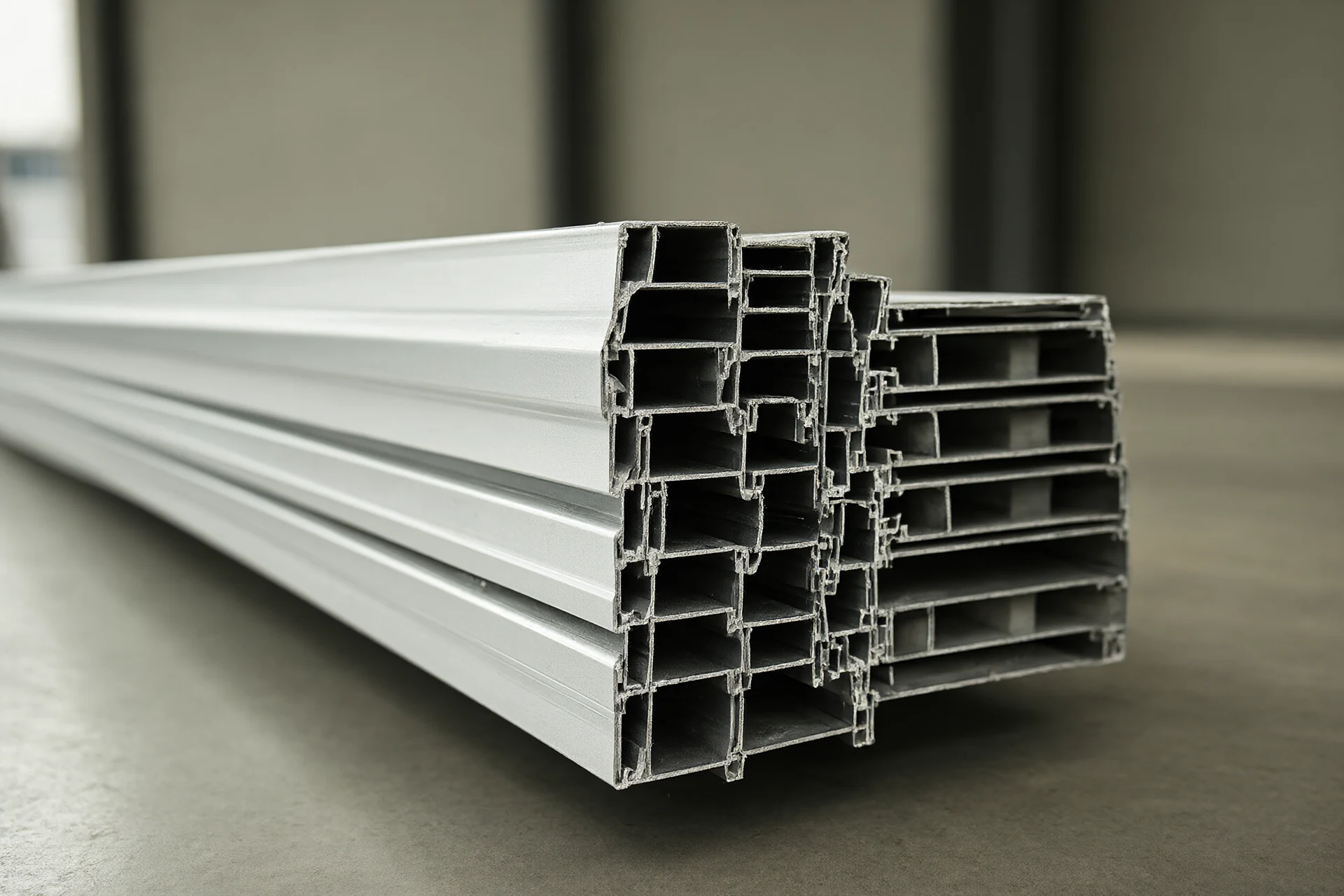
Profile thickness is a good test of how a factory answers questions. A 2.0 mm aluminium wall is not the same product as a 1.4 mm wall, even when both carry the same finish name. Put the caliper on the section during the audit and photograph the reading. On glazing, ask for the spacer width and the desiccant fill, not just the glass make-up. The answers separate a supplier that specifies from one that repeats a catalogue line.
3. Normalise the Price, Then Consolidate
Three quotations rarely describe the same thing. One includes crates, one does not. One quotes FOB Foshan, another CIF Mombasa, a third delivers to site with the duty excluded. Before any comparison, rebuild every quote into three lines: material, logistics and service. Material carries grade, thickness, finish code and wastage. Logistics carries the Incoterms rule, the port and the volume. Service carries inspection, loading supervision, documents and spare material.
Wastage is where a low quote hides. Stone and large-format tiles need 8 to 12 percent on a room with returns and mitres. A quote priced at zero wastage is a quote that will be re-issued after the first cutting list. Ask for the wastage line to be shown, then compare cost per square metre installed across the whole room, including the offcut you will never use.
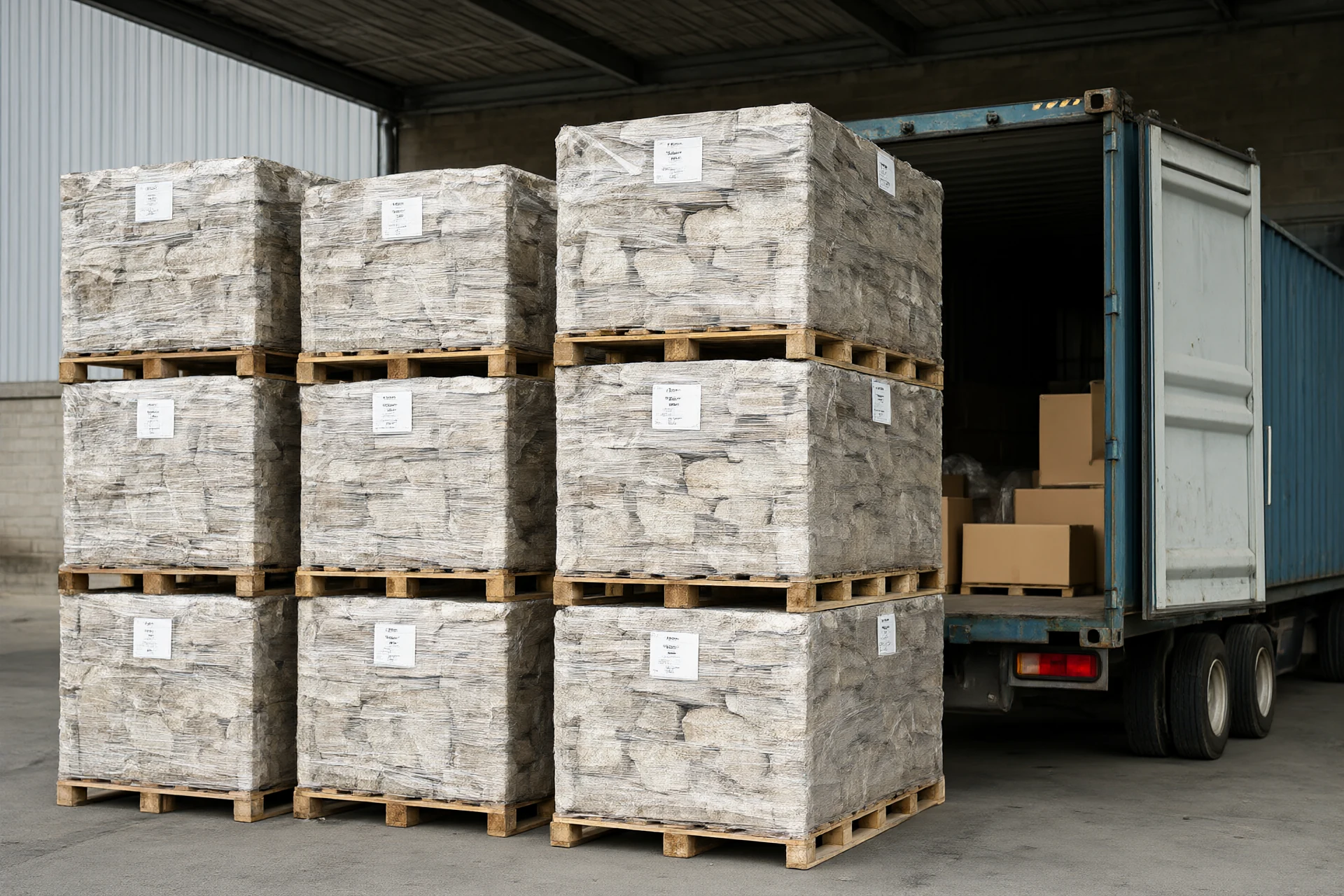
Container arithmetic settles most arguments. A 40HQ holds about 68 cubic metres and carries roughly 27 tonnes. Stone and tiles load to weight before they fill the box, so a mixed order is planned from the heavy end. Joinery and lighting fill the space above. Brass and glass travel last and stay away from the doors. When the packing list is written by room and by weight, the quote-to-order gap closes, because the buyer and the loader are working from one document.
4. Hold Points and the Mock-Up Room
Three hold points cover a normal order. The first is the signed sample board, before production. The second is at 30 percent of production, when the first finished lot is packed and photographed. The third is pre-shipment, with the container half loaded. Nothing moves to the next stage until the previous one is signed. This is slower on paper and faster in practice, because a fault found at 30 percent costs a carton, while the same fault found at destination costs a container.
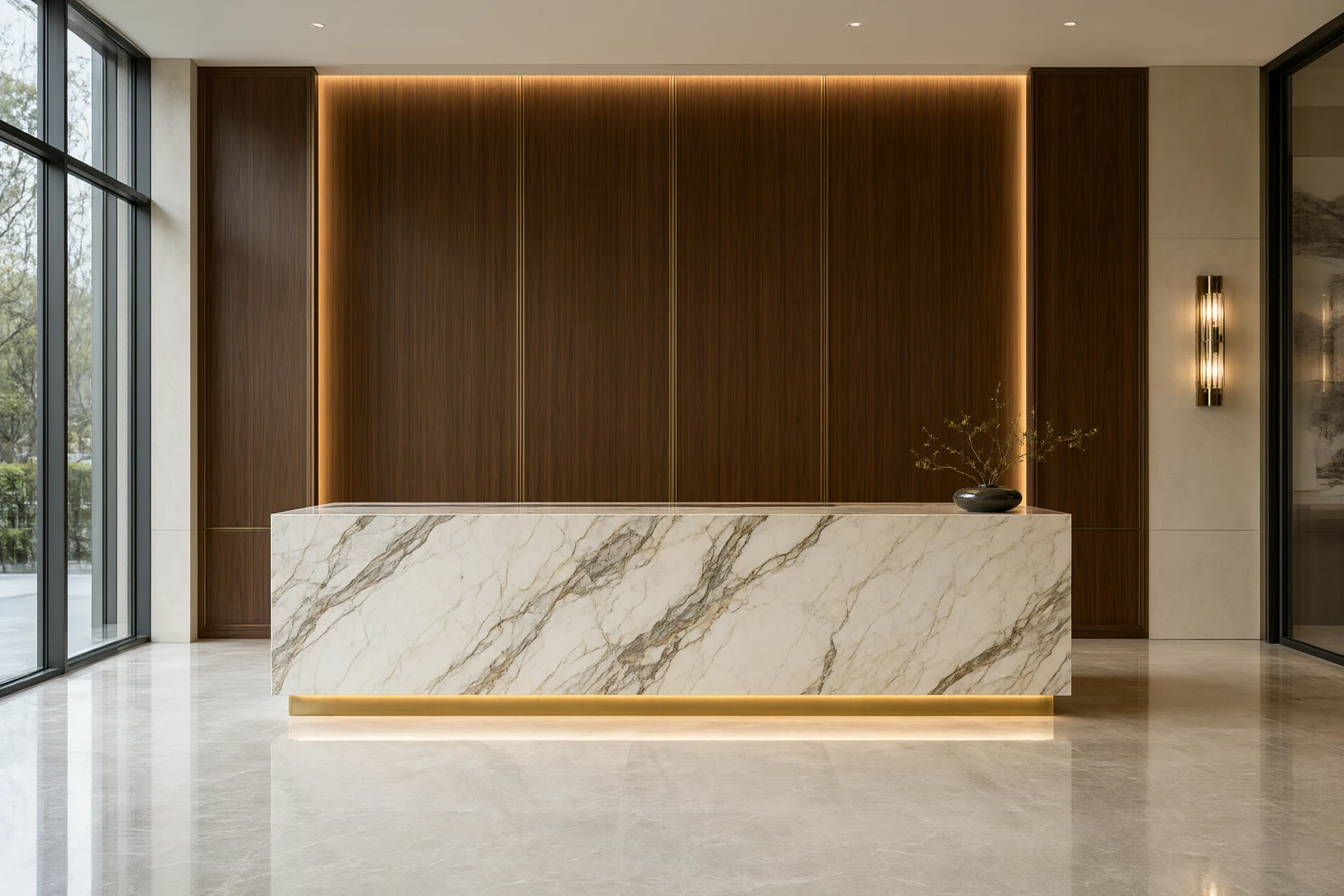
On a hotel or a large villa, build one room first. A mock-up takes about four weeks and settles a dozen details that drawings never show: the joint between stone and timber, the shadow gap at the skirting, the colour of the brass against the walnut, the light temperature on the wall. Approve it once, photograph it, and keep the photographs with the batch numbers. Our hotel material schedule treats the mock-up as a contract document for exactly this reason.
The mock-up also exposes sequence problems. If the stone arrives after the joinery is fixed, the skirting has to come off. If the lighting circuit is set before the panel layout, the cove lands in the wrong place. Walking through one finished room with the installer and the supplier is the cheapest design review available.

5. Packing, Documents and the Delays That Happen
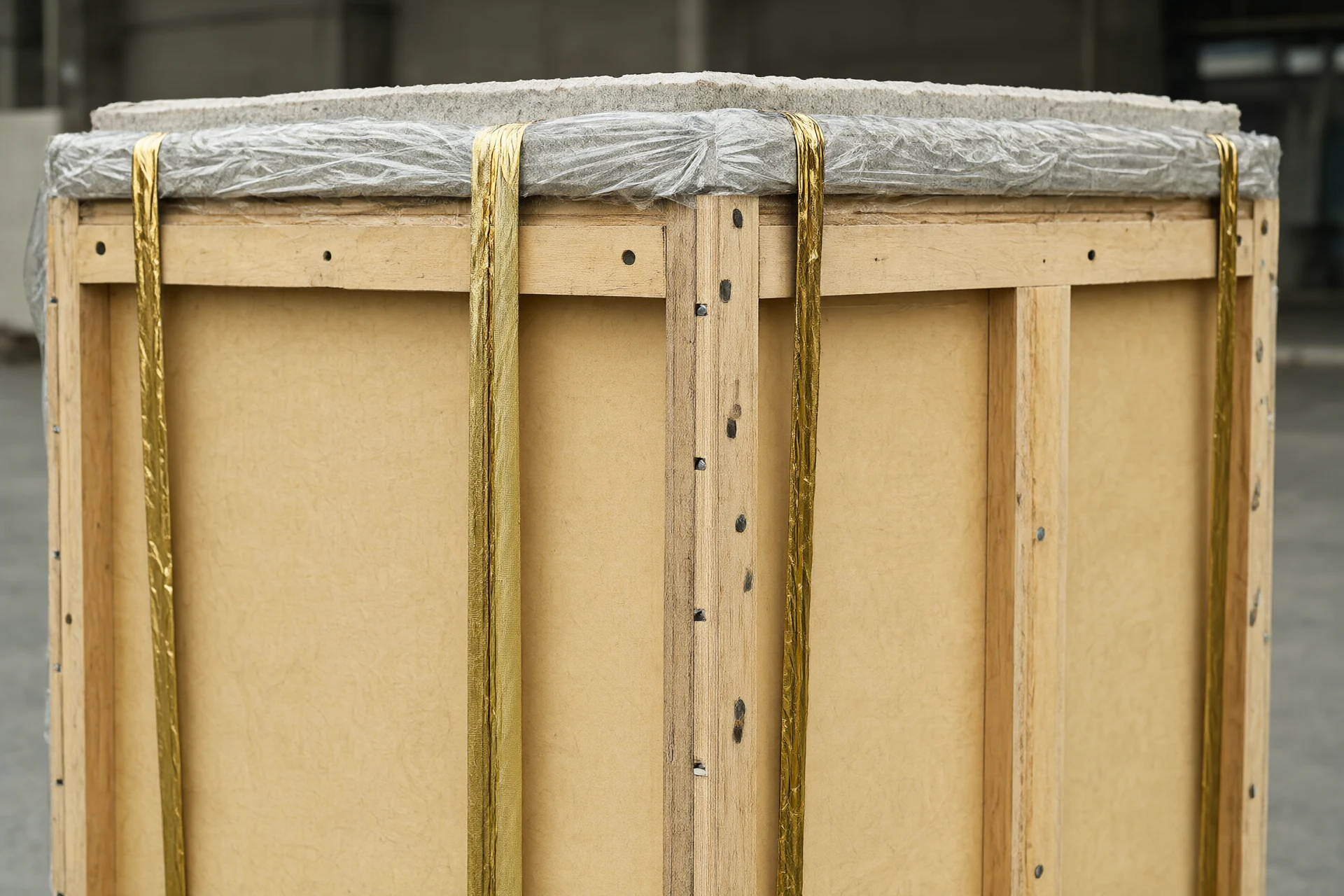
Packing is a specification, not a habit. Write it down. Stone slabs ship in plywood crates with 10 mm foam on every edge and a strap at 600 mm centres. Tiles travel on a pallet with a moisture barrier and a corner board. Brass is wrapped separately, because a strap across a brushed surface leaves a mark that never polishes out. Glass carries an edge protector and a this-side-up label in two languages.
Documents decide how long the container sits at the port. The set is short and every item has a failure mode: commercial invoice and packing list that disagree on quantity, a certificate of origin with the wrong HS code, an insurance certificate issued after the bill of lading, a test report that names a different product. Check the set against the letter of credit before loading, not after. A five-market specification review catches most of these because the document requirements differ by destination.
Delays come from four places. Drawing approval runs long when the finish is still open. Sample rounds repeat when nobody signs. A public holiday stops a factory for two to three weeks and the vessel space is gone. Peak season takes the container slot you assumed. Production of 45 to 60 days plus 25 to 35 days at sea is realistic for East Africa when the drawings are closed. The dates that matter are sample sign-off, production start and loading, and all three belong in the contract.
6. From Sample Board to Handover
Keep one carton of every panel, one stone slab and one length of each trim. Store them dry and label them with the batch number. The spare is not for the first repair. It is for the repair in year three, when the batch is gone and a new production run has a different undertone. A supplier that refuses to hold a reserve quantity is telling you how it handles a claim.
The year-one inspection is a short list. Look at the joints in daylight, at the bottom of every joinery unit, at the brass edges and at the wall behind the cooker. A joint that has opened by more than 2 mm points to a fixing problem. A darkened panel base points to water from the floor. Photograph what you find and send it with the batch number. Most defects are cheap to fix in year one and expensive in year three.
A supplier that documents the schedule, the samples and the loading is easier to audit on the second order, and that is the real return. The people who specify materials on these projects rarely change factory between phases. They change when a delivery goes wrong. Our 596 enquiry review shows the same pattern from the other side: buyers return to the supplier that answered the awkward question before the order.
- Licence and customs number match the invoice and the bank account.
- Factory at the licensed address, seen on a live call.
- Test reports by named standard, with the product on the page.
- AQL 2.5 major and a written inspection report per lot.
- Packing specification on paper, with a photograph of a packed pallet.
- Two references in a similar climate, with a contact.
- Loading photographs at four fill levels.
- Document set agreed by name before production.
- Warranty by product class, exclusions written.
Sourcing a full material package?
Send the room schedule, the finish intent and the target container. You will get a scope list with what we make and what we source, a normalised quotation in three lines, the hold points and a loading plan from Foshan.
Request a Supplier Audit Pack →Frequently asked questions
How do I compare quotes from Chinese suppliers for an apartment fairly?
Put every quote on the same sheet before you look at the total. Fix the material grade, thickness, surface finish, wastage allowance, packing and Incoterm. Ask each supplier for FOB and CIF on that identical line, then add the local clearing cost yourself. A quote that leaves out crates, foam or a spare carton is not cheaper, it is incomplete. Compare cost per square metre installed, not per sheet, and keep the two lowest quotes in the running until the sample boards arrive.
How do I consolidate many suppliers into one PO for a hospital?
Name one party as the consolidator and give it the full schedule with room numbers. That party issues one purchase order, one packing list and one bill of lading, and it holds the QC gate for every category it did not make. Fix the delivery window to the container, not to each factory. Heavy stone and tiles go to the floor of the container, joinery and lighting above, and the loading sequence is photographed at four stages. One PO also gives you one claim channel if a carton arrives short.
Can a third party inspect goods at the Foshan factory for a hospital?
Yes. Book the inspection at least ten working days before the loading date and send the inspector the approved sample board and the packing drawing. A useful inspection covers quantity by room, surface and edge condition, hardware and profile counts, carton grade, moisture barrier and the labels on each pallet. Ask for a photo of every opened carton and a signed report with the AQL level written on it. Third-party fees are small next to the cost of re-shipping a wrong finish.
What delays shipments for an office from China most?
Drawing approval and sample rounds cause more delay than production does. A finish that is approved in week six pushes a forty-five day production run into the next vessel window. The other common causes are a public holiday shutdown, a late container booking in peak season and a document error caught at the port. Set three dates in the contract: sample sign-off, production start and loading. Then book vessel space when production starts, not when it ends.
How do I lock pricing for a multi-phase hospital development?
Lock the specification first and the price second. A supplier can hold a unit rate when the grade, thickness and finish code are frozen and the annual volume is stated in the agreement. Most factories will hold a rate for ninety days, and longer if you commit to a schedule of releases. Write the material index clause into the contract so a steel or resin movement is shared on a stated formula. A price held without a frozen spec is only a price for a different product.
Can a supplier provide local service teams for a restaurant abroad?
Rarely with its own staff, often through a trained local partner. Ask for the partner name, the projects it has fitted and the number of crews. The contract should state who attends site, the response time in working days, what the visit covers and who pays for travel. Remote support works for setting out and detail questions when drawings and photographs are clear. Installation labour and site conditions stay with the local team, so the split of responsibility belongs in writing.