 INDECO material
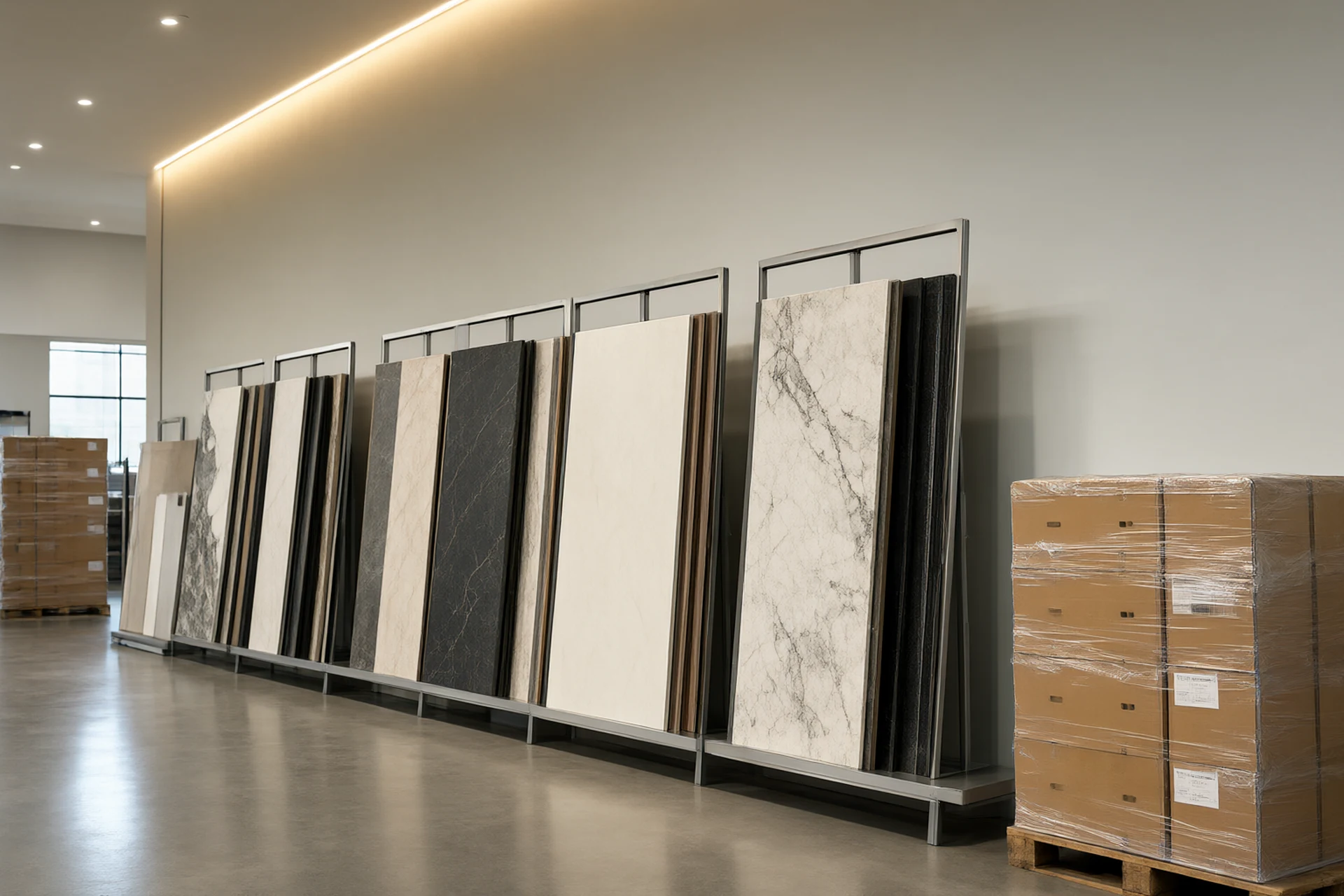
Factory Direct Supply vs Trading Company
Published: · By Mr.Jankin
A factory-direct manufacturer makes the material and controls the line; a trading company buys from several makers and resells the margin. Both can deliver a container to Mombasa — what differs is who owns the quality, the price and the fix when something goes wrong.
SHORT ANSWER
For project-sized orders, factory direct supply wins: the maker controls the price line, the QC gate and the fix after shipment, and the same specification lands 35 to 55 percent below local retail. A trading company is the better route only for small mixed lots under one pallet, where no single factory meets the MOQ. See 596 East African Enquiries: The Material Specifying Pattern for the checkpoints that matter here.
SPECIFICATION FACTS
- 35–55% factory-direct gap vs local retail, same specification
- 55–65 m³ in one 40 ft high-cube container
- +USD 2,800–4,200 freight cost when one order splits into three shipments
- 18–28 days port-to-port transit to East Africa; 12–20 days to the Gulf
- 70–90% RH coastal air that punishes loose QC passes
- 1 PO, 1 packing list, 1 responsible party on a factory-direct order
| Factor | Factory direct supply | Trading company |
|---|---|---|
| Price basis | FOB Foshan ex-works; no resale layer in the invoice | Factory price plus a trading margin stacked on every line |
| QC ownership | The maker runs the line and holds the tolerance; third-party inspection happens at the factory | Inspector arrives at a plant the trader does not control; rework loops back through an agent |
| Specification changes | Engineering answers in days — profiles, finishes and packing are in-house | Questions relayed to the maker; answers come back translated twice |
| Category breadth | Deep in one family (flooring, panels, aluminium); partners cover the rest | Broad catalogue, shallow ownership of any single product |
| Container loading | Loaded and inspected at the making plant; one packing list, one responsible party | Goods collected from several plants; mixed liability when a carton fails |
| After-shipment fixes | Spare profiles, matching trims and replacement boards cut from the same batch | Replacement depends on the original maker still accepting the trader's order |
| Best fit | Project-sized orders of flooring, wall panels, aluminium and furniture packages | Small mixed orders under one pallet where no single factory meets MOQ |
1. What does factory direct supply save on price?
On the same specification the factory-direct gap against local retail runs roughly 35 to 55 percent — a three-seater sofa that retails at USD 980 to 1,400 in Nairobi leaves our Foshan factory at USD 390 to 720 in one-container quantities. A trading company sits somewhere inside that spread: it pays the factory, adds its margin, and hands you a price that can look like factory pricing without the factory behind it. The honest comparison is quote normalisation: same material grade, same finish, same packing standard, FOB Foshan, one consolidated container. Ranges are figures we have actually quoted, not market averages — see the cost guide for the full table.
2. Where does the quality check actually happen?
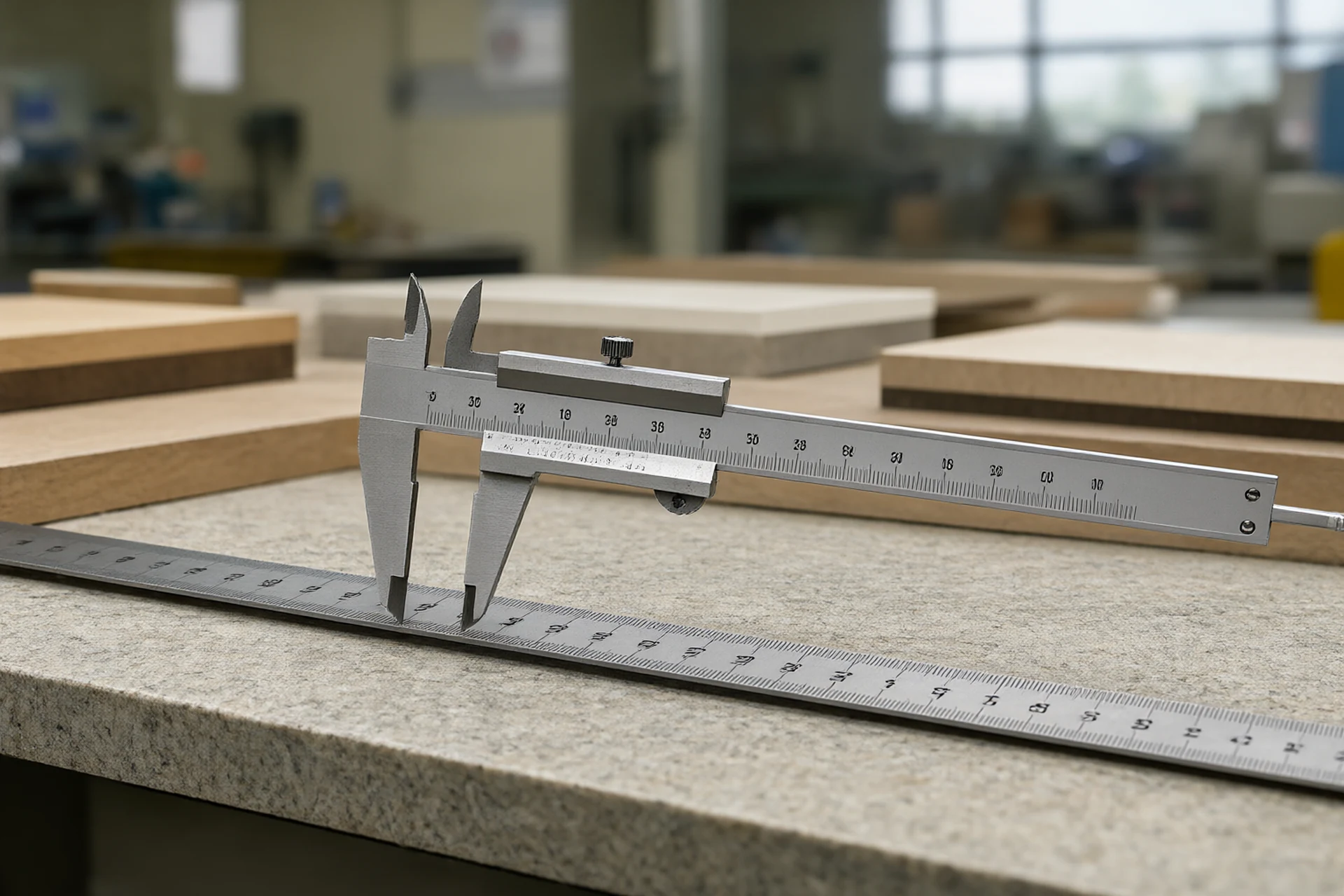
Factory direct supply puts inspection at the point of manufacture. Calipers on the aluminium profile, moisture readings on the SPC core, finish checks against the approved sample — all at the plant, before packing, with a third-party inspector welcome on the floor. A trading company can book the same inspector, but the plant answers to the trader, not to you: rework instructions travel through an extra layer, and the fix depends on the maker's spare capacity that week. Coastal East Africa punishes this difference — air at 70–90% RH finds every unsealed edge a loose QC pass missed. See Specifying Interior Materials Across Five Markets for the checkpoints that matter here.
3. One PO or three shipments: what does consolidation save?
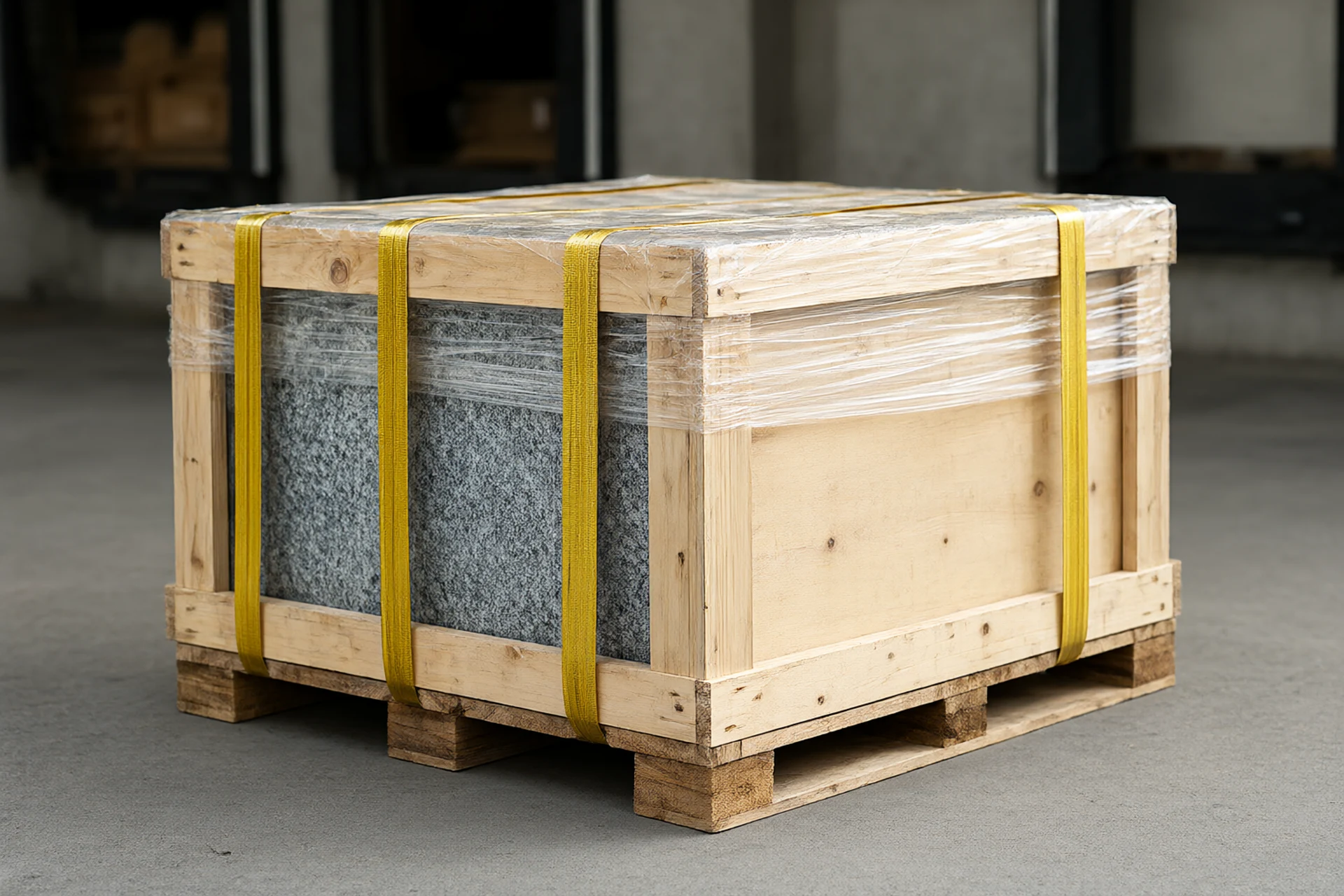
A single 40-foot high cube carries roughly 55 to 65 m³ — enough to mix flooring, wall panels, cabinetry and furniture for one villa in one loading, loaded and inspected at the plants that made them. Splitting the same order into three shipments adds USD 2,800 to 4,200 in freight alone and lands the joinery on site before the stone. Port-to-port transit runs 18 to 28 days to East Africa, 25 to 35 days to West Africa and 12 to 20 days to the Gulf. Factory-direct consolidation keeps one packing list and one responsible party across that whole chain; a trader's mixed container carries mixed liability. See Who Specifies Materials in East Africa: 596 Enquiries for the checkpoints that matter here.
4. Africa versus the Gulf: the route changes the risk
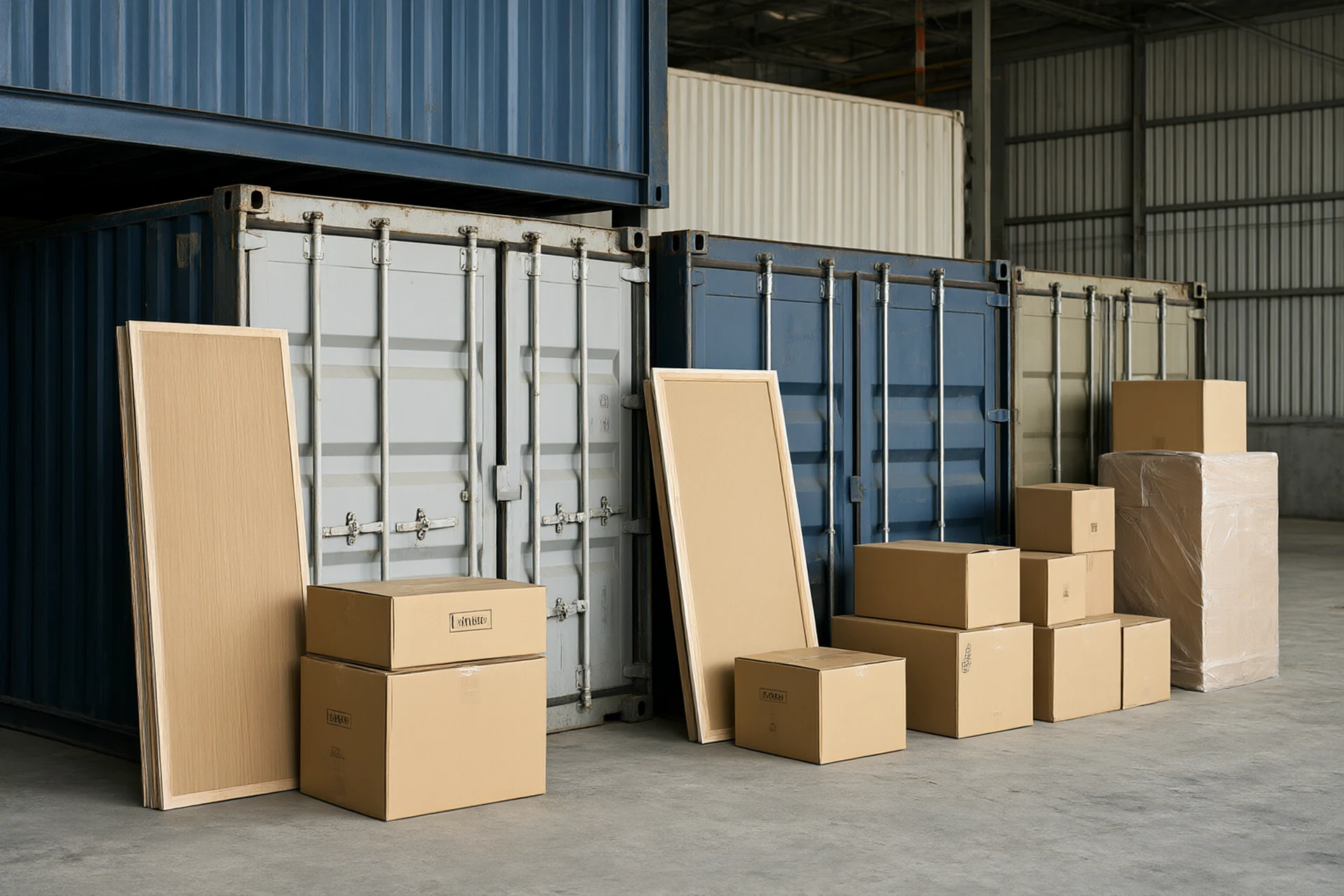
In coastal East Africa the risk is moisture and handling: goods cross two ports and a truck leg before installation, so crate quality, corner protection and batch-matched spares matter more than a five percent cheaper invoice. Factory-direct packing is set by the plant's export standard; a trading company's packing is set by whichever freight forwarder wins that week. In the Gulf the risk is specification drift: towers and hotels approve one finish, and only the maker can hold that finish across repeat batches — a trader rebuying from the open market cannot guarantee batch continuity on anodized aluminium or glazed porcelain.

5. Three mistakes buyers make when choosing the route
First, comparing invoices instead of specifications: a trading quote on cheaper material grade beats factory pricing on the spec you actually asked for only on paper. Second, assuming the trader's inspection equals factory inspection — book the third party at the making plant either way. Third, ordering one-pallet mixed lots factory-direct: below a project-sized quantity, no single factory meets the MOQ and the consolidated route through a qualified building materials supplier is the honest answer.

6. So which route should the project buy through?
Project-sized orders of flooring, wall panels, aluminium systems and furniture packages: factory direct supply, one PO, one container, QC at the making plant. Small mixed lots under a pallet with no dominant category: a trading company is a legitimate consolidator — price it against the freight saving, not the unit price. Multi-category whole-house packages sit in between: a one-stop supplier that owns factory partners and holds the PO works better than either pure route; see how a turnkey interior contract handles that boundary. See Whole-House Material Packages: What 63 Enquiries Ask For for the checkpoints that matter here.
- Normalise every quote: same grade, finish, packing, FOB Foshan, one container.
- Book third-party inspection at the making plant, before crating.
- Consolidate: one 40 ft high cube carries 55–65 m³ of mixed material.
- Check batch continuity on anodized aluminium and glazed porcelain by name.
- Match the route to the load: factory-direct for project sizes, trading for sub-pallet lots.
Frequently asked questions
Is factory direct supply always cheaper than a trading company?
On the same specification, yes on the invoice line: the trading layer adds a margin the factory does not carry. The real comparison is normalised quotes — same grade, finish and packing — because a trading quote on cheaper material can look lower while delivering less.
How do I compare quotes from Chinese suppliers fairly?
Normalise every quote to the same basis: material grade, finish, packing standard, FOB Foshan and one consolidated container. Then compare line by line; the spread left is the margin and the risk you are buying.
Can a third party inspect goods at the factory before shipment?
Yes. Factory direct supply welcomes third-party inspection at the making plant, before crating. With a trading company the same inspection is possible, but the plant answers to the trader, so rework instructions travel through an extra layer.
How much does splitting an order into several shipments cost?
Splitting one order into three shipments adds USD 2,800 to 4,200 in freight alone and breaks the install sequence on site. A single 40-foot high cube carries roughly 55 to 65 cubic metres of mixed material.
Can one Chinese supplier handle a whole hotel's materials?
Yes. A one-stop factory-direct supplier consolidates flooring, wall panels, cabinetry, furniture and fixtures into one PO with one packing list, inspected at the making plants and shipped as a single consolidated container.
When is a trading company the better choice?
Small mixed orders under one pallet, where no single factory meets the MOQ. Price the trading route against the freight saving it consolidates, not against a factory invoice it cannot match.
Send the BOQ, get factory-direct pricing
Send your room list, BOQ or drawings and we return factory-direct pricing per zone, an export packing plan and a consolidation layout for the container — typically within one working day. Read the nine-point supplier audit or see the cost guide for quoted package ranges.
Source reference: ICC Incoterms 2020 rules — the FOB basis quoted throughout.